


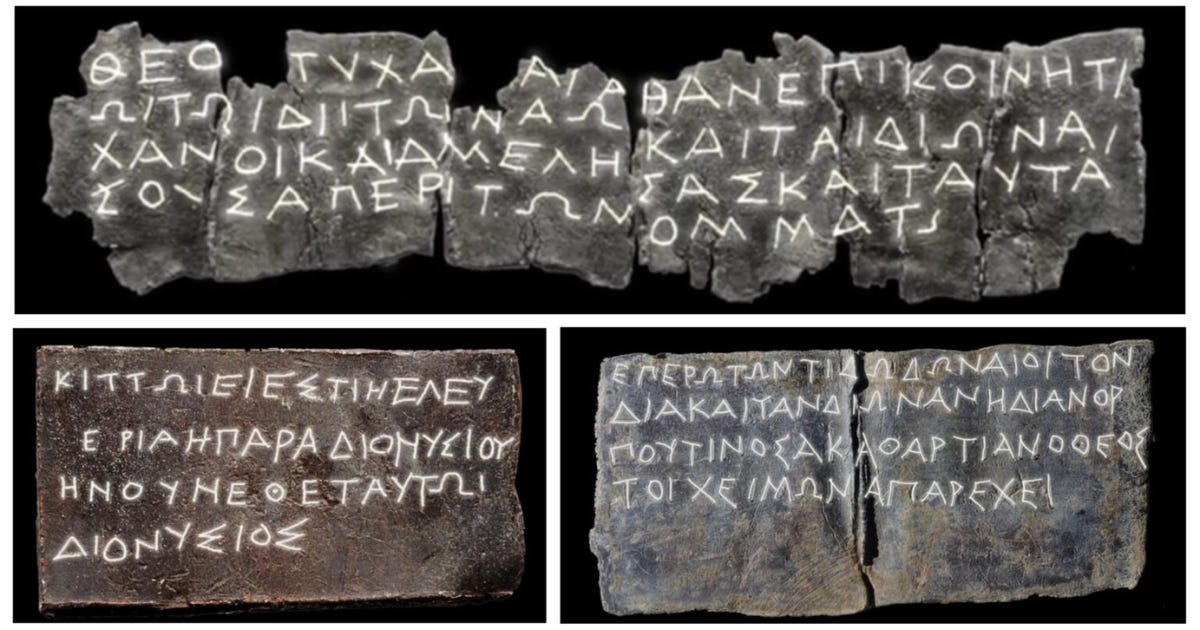
Lead tablets from Dodona carrying questions to Zeus Naios and Dione. At lower left, the slave Kittos asks whether his master Dionysios will set him free as he promised. The tablet dates to the mid-fourth century BCE. Credit: Photo via Greek News Agenda. Tablets from Dodona, Hellenic Ministry of Culture and Sports, Ephorate of Antiquities of Ioannina.
Between about 550 and 167 BCE, visitors to the sanctuary of Zeus at Dodona in Epirus scratched questions onto small strips of lead, and more than 4,000 inscriptions survive. Writers ask whether to marry, whether a slave will be freed and whether a voyage to Carthage will end safely. UNESCO added the tablets to its Memory of the World Register in 2023, and a 2026 Cambridge volume reports that written answers are rare.
Ancient Content, November 11, 2026
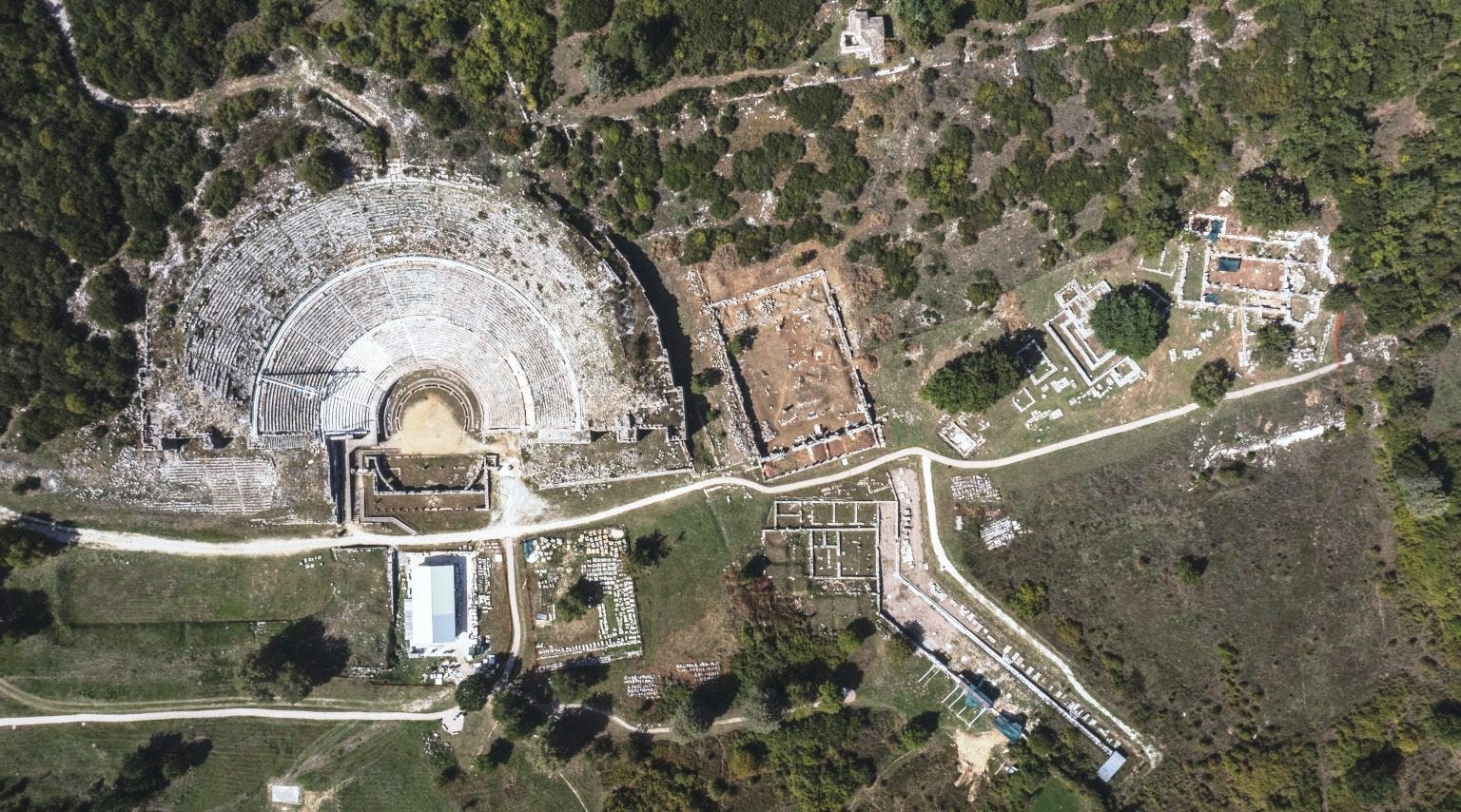
Aerial view of the archaeological site of Dodona Credit: Ephorate of Antiquities of Ioannina
Pilgrims wrote their questions on lead strips
UNESCO describes the tablets as small lead strips of up to about 13.2 centimetres in length and 6.7 in width, found scattered within the sacred precinct at Dodona. Erica Angliker gives the typical size as about 4 by 1.25 inches and adds that a few tablets are bronze. Writers cut their letters with a stylus, and the fresh letters stood out against the grey, oxidised surface. Some tablets carry writing on both sides, and others are palimpsests with texts cut one after another on the same face.
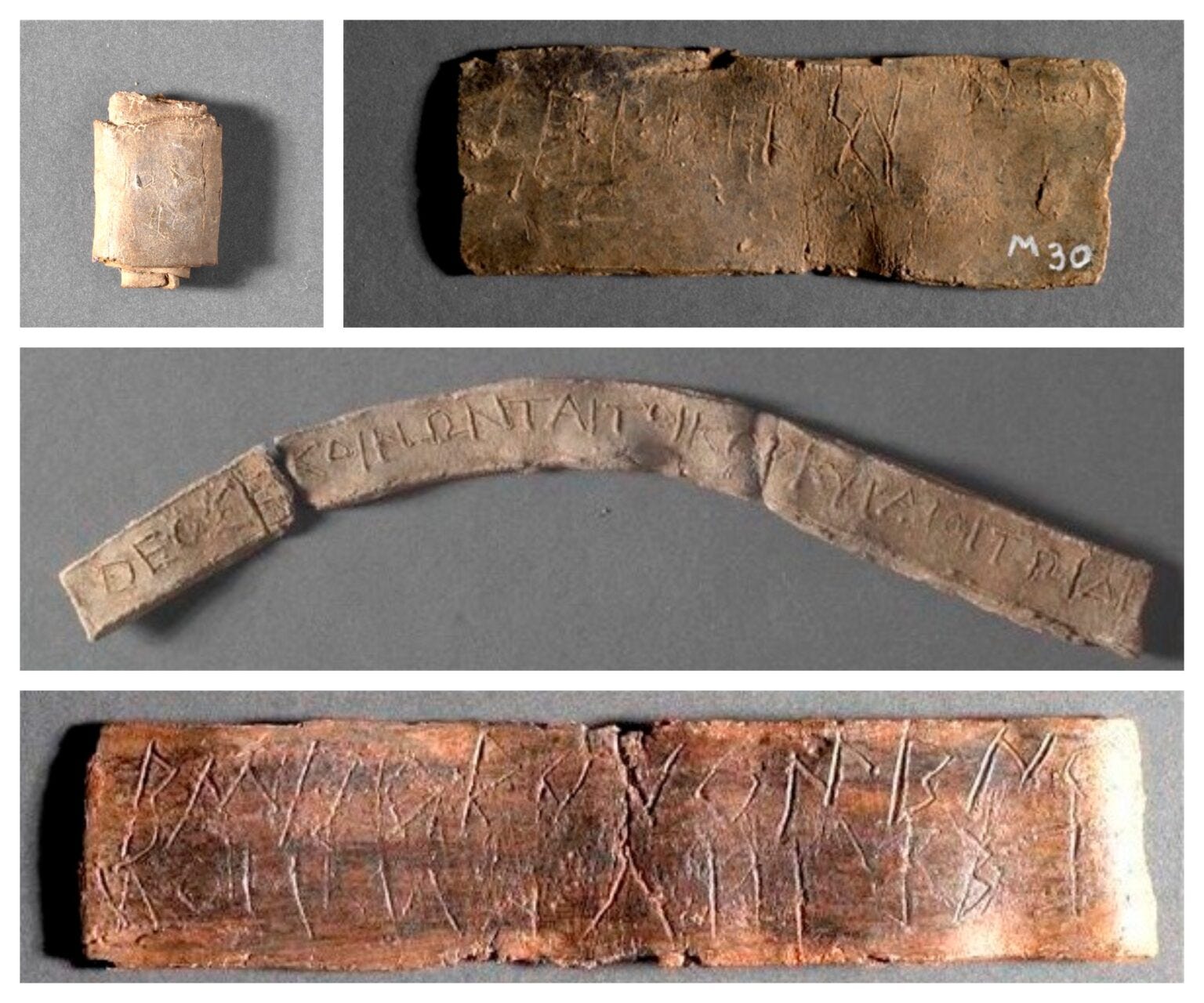
A folded lead tablet and lead tablets M30, MI 1724 and MI 11477 from Dodona, Archaeological Museum of Ioannina. Credit: Photo via Greek News Agenda. Ephorate of Antiquities of Ioannina.
Questions went to Zeus alone or to Zeus and his cult partner Dione, according to UNESCO. Many address “Zeus Naios and Dione.” Wikipedia describes Naios as the god of the spring below the oak.
The lead itself travelled. Angliker reports that chemical analysis of three Dodona tablets pointed to the Laurion mines in Attica, and she names Kythnos and Siphnos as other sources of lead in the Archaic and Classical periods.
Paid subscribers can read the full report. The next sections introduce the pilgrims by name, including Kittos, a slave who asked Zeus whether his master would keep a promise of freedom. Upgrade to continue reading.
