


The Third Dynasty of Ur ruled southern Mesopotamia from 2112 to 2004 BC and left one of the densest paper trails of the ancient world. Its provincial archives at Umma and Girsu track grain, labour and canal work in minute detail. A new study of fifteen clay tablets in the Iraq Museum shows some of that economy ran through royal estates outside the provincial offices, with scribes who did not write the way the state trained them to.
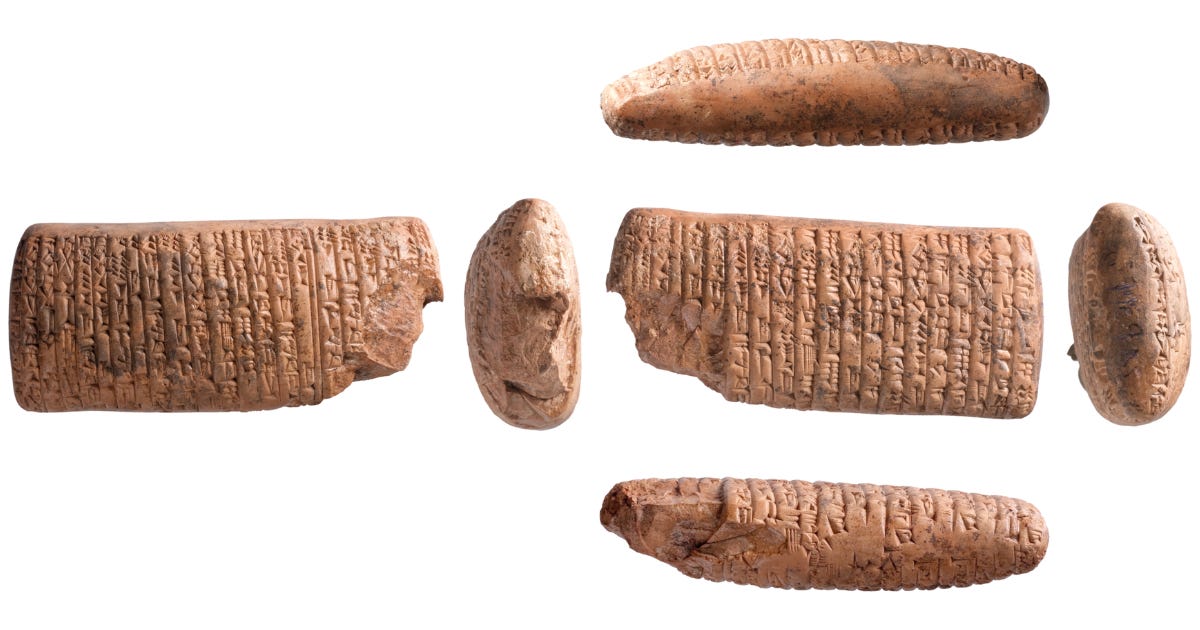
The tablets are published in the journal Iraq by Abather Rahi Saadoon of Kerbala University, Noemi Borrelli of the University of Naples L’Orientale and Maurizio Viano of the University of Turin.
The tablets reached the Iraq Museum between 2005 and 2008
The tablets came to Baghdad through the Iraqi National Intelligence Service and the Ministry of Interior, which recover antiquities found inside Iraq or seized abroad with foreign authorities. All arrived between 2005 and 2008. Saadoon’s archival research dated each batch. One group was confiscated by the museum’s Technical Committee in 2006, others arrived in 2005 and 2007, and a final group was returned by the Jordanian authorities in 2008.
With no excavation record, the team placed each tablet by internal evidence such as names, month names and terminology. Two belong to the archives of Irisaĝrig, one comes from either Ur or Girsu, and the remaining twelve come from the Umma region.
Dating them is also difficult. Most carry ambiguous year names such as “the year Simurrum was destroyed” or “the year Ḫaršum was destroyed”, which could refer to several different years under the kings Šulgi and Ibbi-Suen.
A note to free subscribers: Your support helps keep Ancient Content independent and focused on original research. Upgrade for just a few dollars a month to unlock every long-form article, short documentary, and the complete archive. Cancel anytime
