


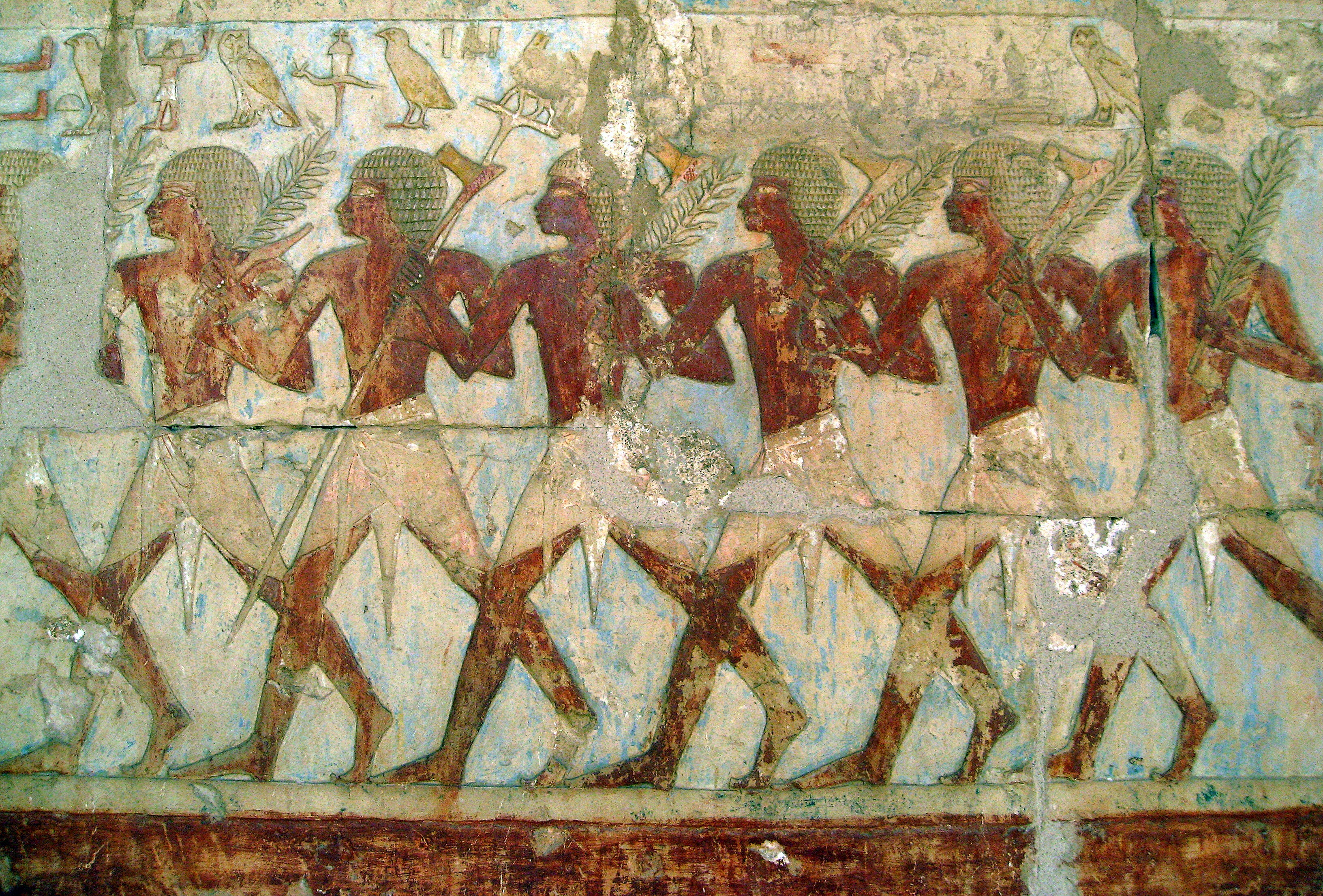
Egyptian soldiers carrying incense trees back from Punt, from the temple of Hatshepsut at Deir el-Bahari, around 1470 BC. Credit: Σταύρος, CC BY 2.0 via Wikimedia Commons
The lost continents of the last piece were invented in the nineteenth century, by a zoologist, a misread codex and a novelist’s imagination. Ancient writing is full of fabulous places too, lands of gods, eternal life and impossible wealth, and most of them have stayed on the page.
A few have not. Dilmun, Punt and Troy were each treated for a long time as places of legend, and each has since been found, or traced, on the map.
Dilmun was a paradise where no lion killed and no one fell ill
In the Sumerian myth of Enki and Ninhursag, Dilmun is a pure land at the beginning of things. The raven does not cry, the lion does not kill, the wolf does not take the lamb, and no one complains of a sick eye or an aching head. Enki, god of fresh water, makes sweet water rise from the ground to bring it to life.
In the Sumerian flood story the gods grant the survivor, Ziusudra, eternal life and settle him in the land of Dilmun, where the sun rises. For a Sumerian reader, Dilmun was where the world was new and where death could not reach.
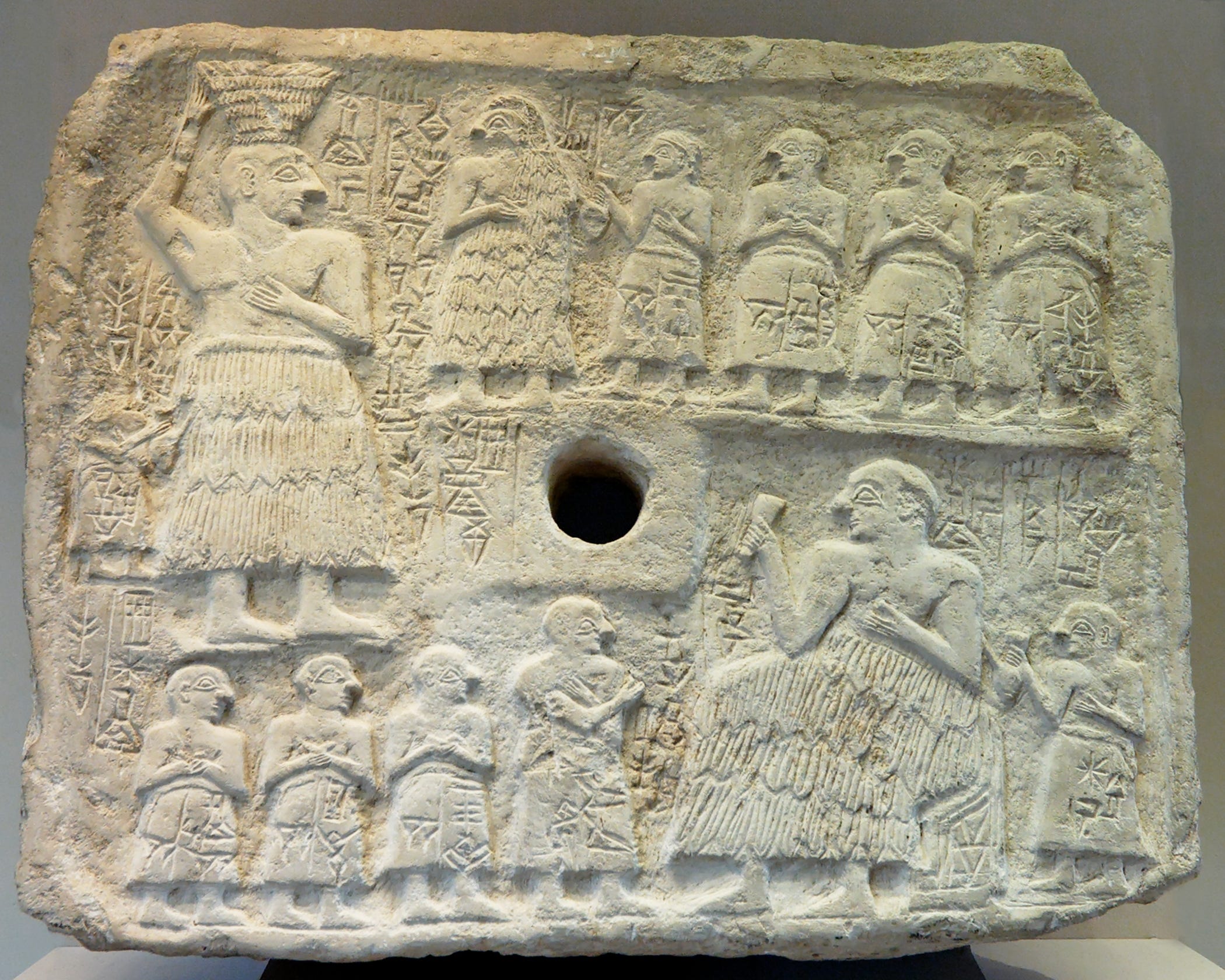
It was also a place you could sail to. Around 2500 BC Ur-Nanshe, king of Lagash, recorded that ships of Dilmun brought him timber from foreign lands. Two centuries later Sargon of Akkad boasted that ships from Dilmun, Magan and Meluhha moored at the quay of his capital. Merchants’ archives from Ur list copper, pearls and goods bought through Dilmun’s traders.
Bahrain fits the myth down to its springs
In 1879 a British officer, Captain Edward Durand, found a basalt stone in a mosque on Bahrain carrying a cuneiform inscription that named Inzak, a god known from Mesopotamian texts as the lord of Dilmun. Henry Rawlinson, who had helped decipher cuneiform, identified Dilmun with Bahrain the following year.
The proof came with a Danish expedition that began work in 1953, led by P. V. Glob with Geoffrey Bibby, who told the story in Looking for Dilmun. They excavated the great tell at Qal’at al-Bahrain, a temple at Barbar, and hundreds of stamp seals in a distinctive local style.
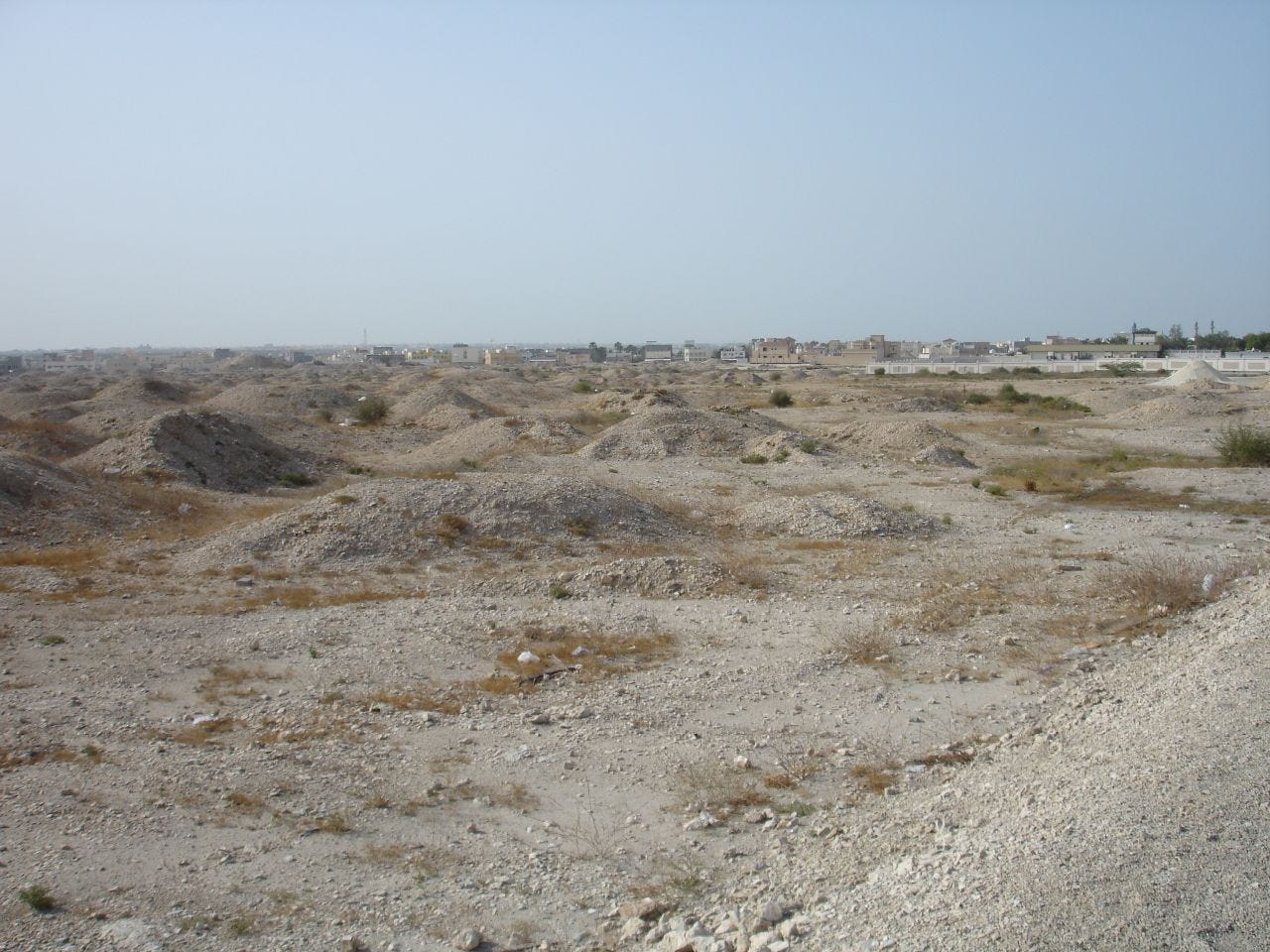
Then there are the tombs. Between about 2200 and 1750 BC the island’s inhabitants built burial mounds on a scale found almost nowhere else. The 21 sites inscribed by UNESCO in 2019 hold some 11,774 of them, and the original total ran far higher. Among the largest are the royal mounds of A’ali, where inscribed stone vessels name a king, Yagli-El, servant of Inzak.
The geography even explains the theology. Bahrain is an island of fresh water in a salt sea, with springs that rise from the seabed offshore, and its Arabic name means two seas. A land where sweet water wells up from beneath the salt was a natural home for Enki’s paradise.
Punt was the Egyptian land of incense and gods
Punt appears in Egyptian records from the Old Kingdom onward. The Palermo Stone records an expedition under the pharaoh Sahure, around 2480 BC, that brought back tens of thousands of measures of myrrh. Egyptians sometimes called it Ta Netjer, the land of the god.
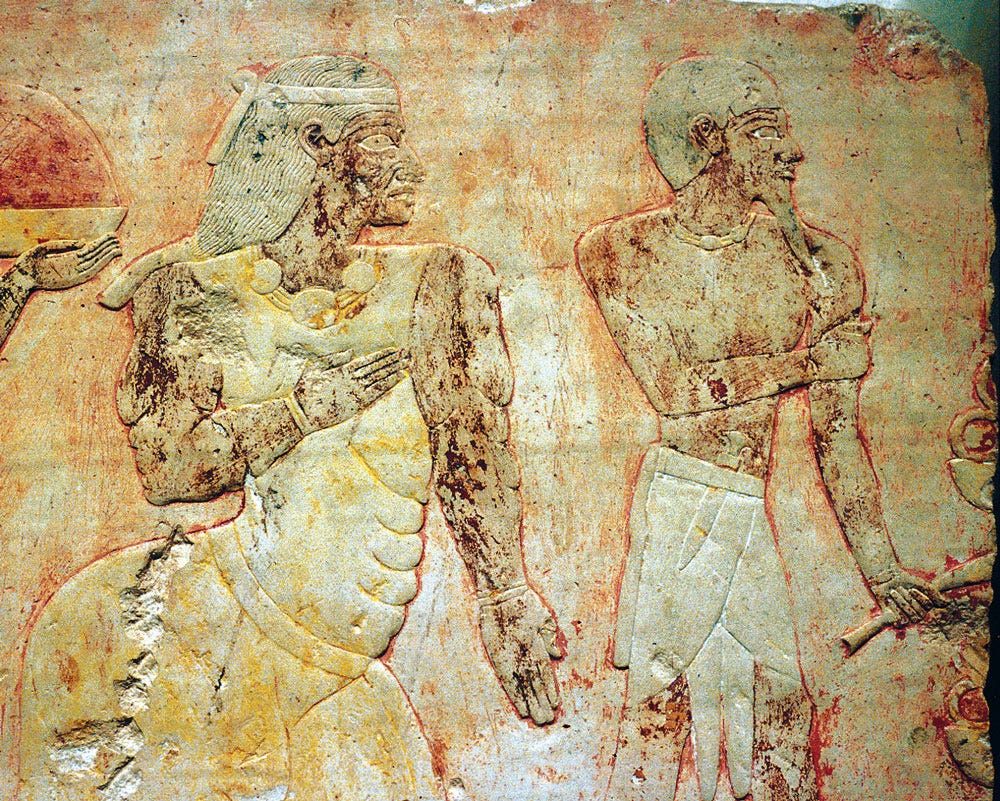
The most famous voyage belongs to Hatshepsut, around 1470 BC. Five ships sailed for Punt, and the reliefs in her temple at Deir el-Bahari show what they found. Houses raised on stilts among palm trees, incense trees dug up whole and carried in baskets to be replanted in Egypt, cattle, ebony, gold, panther skins and baboons. The ruler of Punt is named as Parahu, beside his wife Ati, carved with an unusually heavy body that has made her one of the most recognisable figures in Egyptian art.
For centuries the question was where any of this was. Proposals ranged from Arabia to Somalia to India.
A note to free subscribers : Your support keeps this work independent. Upgrade for a few dollars a month to unlock every long read, the short documentaries and the full archive. Cancel anytime.
