


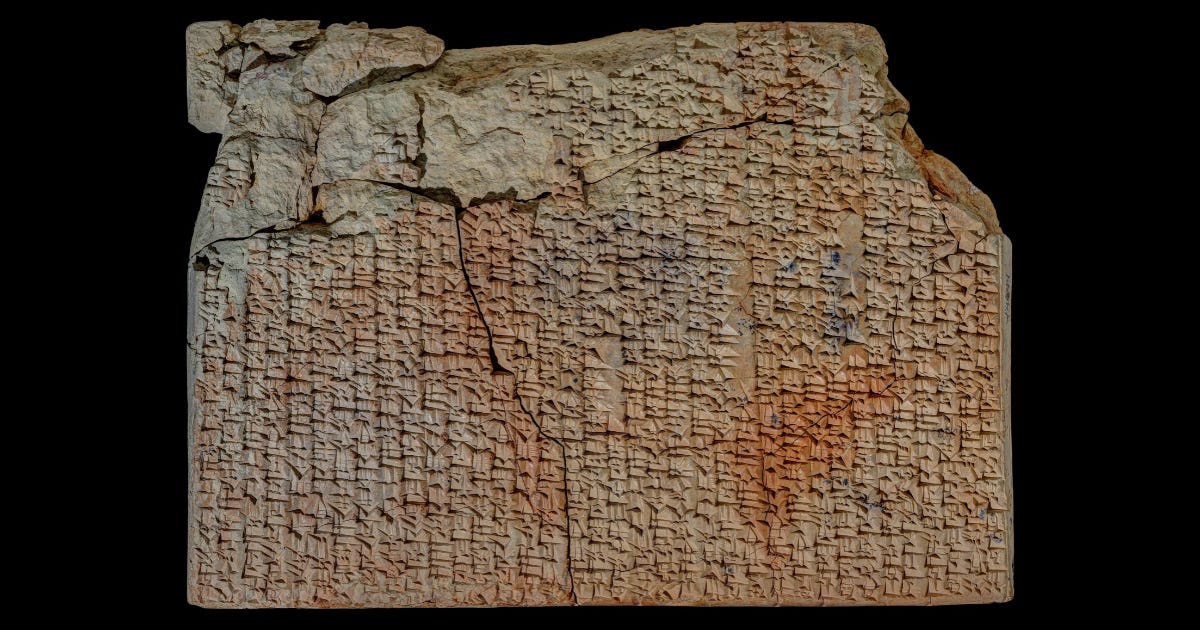
Tablet YBC 4644, the best preserved of the Yale culinary tablets. Written in Akkadian cuneiform in the Old Babylonian period, no later than about 1730 BCE, it lists 25 recipes for stews and broths. Credit: Kwag1980 - Wikipedia, CC BY-SA 4.0
Four clay tablets in the Yale Babylonian Collection preserve the oldest surviving recipes, written in Akkadian cuneiform. Three date to the Old Babylonian period, no later than about 1730 BC, and they record dozens of stews and broths cooked about 3,700 years ago. Yale acquired them in 1911 as medical texts, and scholars needed most of a century to recognize them as cookery.
Ancient Content, October 25, 2026
Yale acquired the tablets in 1911 as medical texts
The tablets reached Yale in 1911 as part of a purchase of therapeutic and pharmaceutical texts. Their exact origin is unknown, though they are believed to come from southern Mesopotamia. In 1933 the curator Ferris Stephens read them as medicine recipes. In the 1940s the Assyriologist Mary Inda Hussey suspected they held more than medicine, but colleagues largely dismissed the idea.
The turn came in the 1980s. The French Assyriologist Jean Bottéro had been asked to write an encyclopedia article on ancient cooking, and he examined the tablets at Yale and confirmed that they were recipes. He published “The Culinary Tablets at Yale” in the Journal of the American Oriental Society in 1987 and followed it with a full edition, Textes culinaires mésopotamiens, in 1995.
One tablet lists 25 stews and gives no measurements
Three tablets belong to the Old Babylonian period. The fourth is Neo-Babylonian and more than a thousand years younger. Yale’s team reports that three different scribal hands wrote the older tablets and that clay analysis points to at least two sources.
