


“The beer bread I made for you has become too old.”
Taram-Kubi wrote that line to her husband almost 4,000 years ago. She had baked the bread for his homecoming. Then she waited. The loaves hardened. He did not come.
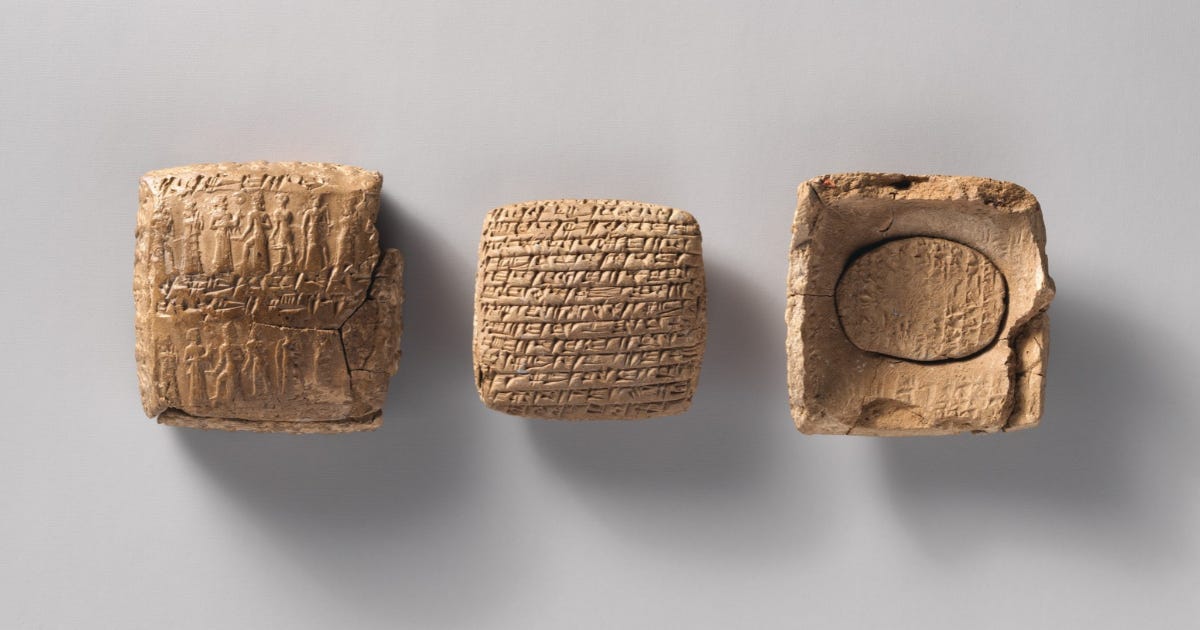
Letter on clay from Kanesh, sent to a wife named Kunanniya, with a small second tablet added when the writer ran out of space. ca. 20th–19th century BCE. Credit: The Met, 1983.135.4a, b.
Innaya was a merchant in Kanesh, in central Anatolia, roughly a thousand kilometres from their home in the city of Assur. Taram-Kubi stayed behind. She ran a household of about a dozen people, wove textiles for export, and sent him instructions about money in the same breath as her loneliness. She told him she wanted to see him in person.
Her letter survives on a clay tablet. So do hundreds more written by women of her world, the wives, sisters and daughters of the Assyrian merchants who built a trade network across the ancient Near East.
They did not sit quietly at home. They lent silver, invested in caravans, argued over prices, scolded their husbands and wrote to their fathers in anger.
Innaya never gave her what she asked for. He was later placed under house arrest for tax evasion and died in Kanesh without returning to Assur.
Taram-Kubi’s tablet is still here.
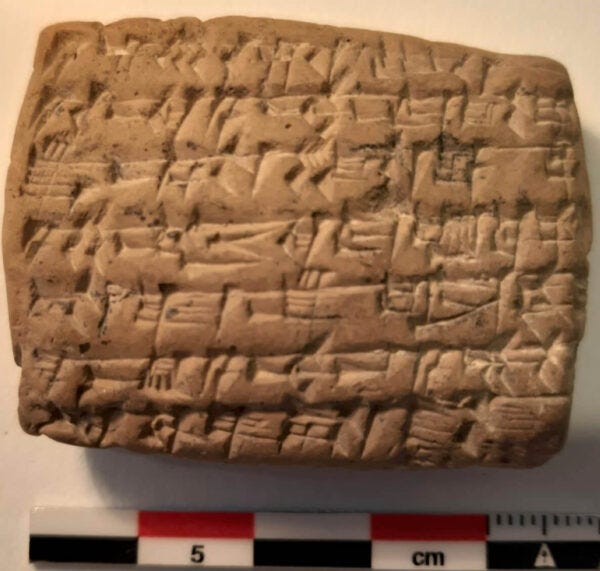
A trade empire run by post
Picture a donkey caravan leaving Assur, on the Tigris, loaded with tin and woollen textiles. It crosses roughly a thousand kilometres of mountains and plains. It arrives at Kanesh, today’s Kültepe near Kayseri in Turkey, where the goods turn into silver and gold.
Taram-Kubi’s stale bread is only the beginning. Below are a weaver’s angry reply, a furious father and a 4,000-year-old divorce contract. Paid subscribers, keep reading. Free readers, upgrade to unlock the rest.
