


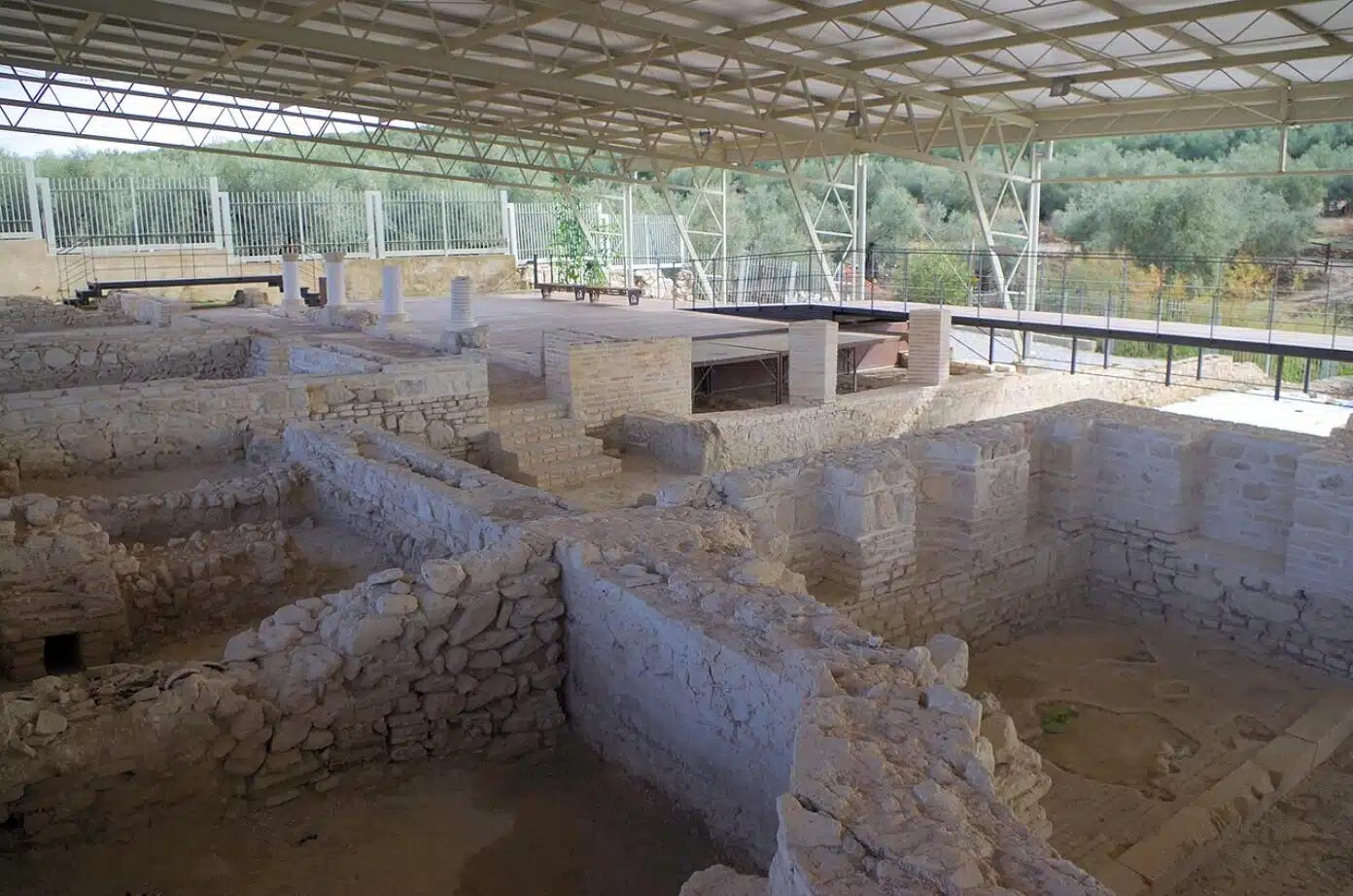
For years, Room 10 at the Roman villa of Fuente Álamo in Puente Genil, Córdoba province, was read as a mithraeum. The long apsed hall with niches along its walls looked like the sort of space where initiates of Mithras gathered. A new study in the Journal of Mediterranean Archaeology argues it was something else: a private library, the oldest documented on the Iberian Peninsula and the westernmost known anywhere in the Roman Empire.
_(15743154402).jpg)
Roman libraries are notoriously hard to identify. The books were papyrus and parchment, the shelving was wood, and both rot away completely. What survives is an empty shell with no obvious signature.
So Antonio López García, Javier Martínez Jiménez and Eduardo Cerrato Casado, working out of the universities of Granada and Córdoba, applied shape grammar, a computational method adapted to Roman library architecture by Myrsini Mamoli. It breaks a room into minimal architectural units and tests whether their arrangement is coherent enough to read as a library. At Fuente Álamo the pattern held: an apse, rectangular niches sized for shelving, semicircular niches, a raised podium, and adjoining rooms suited to storage or scribal work.
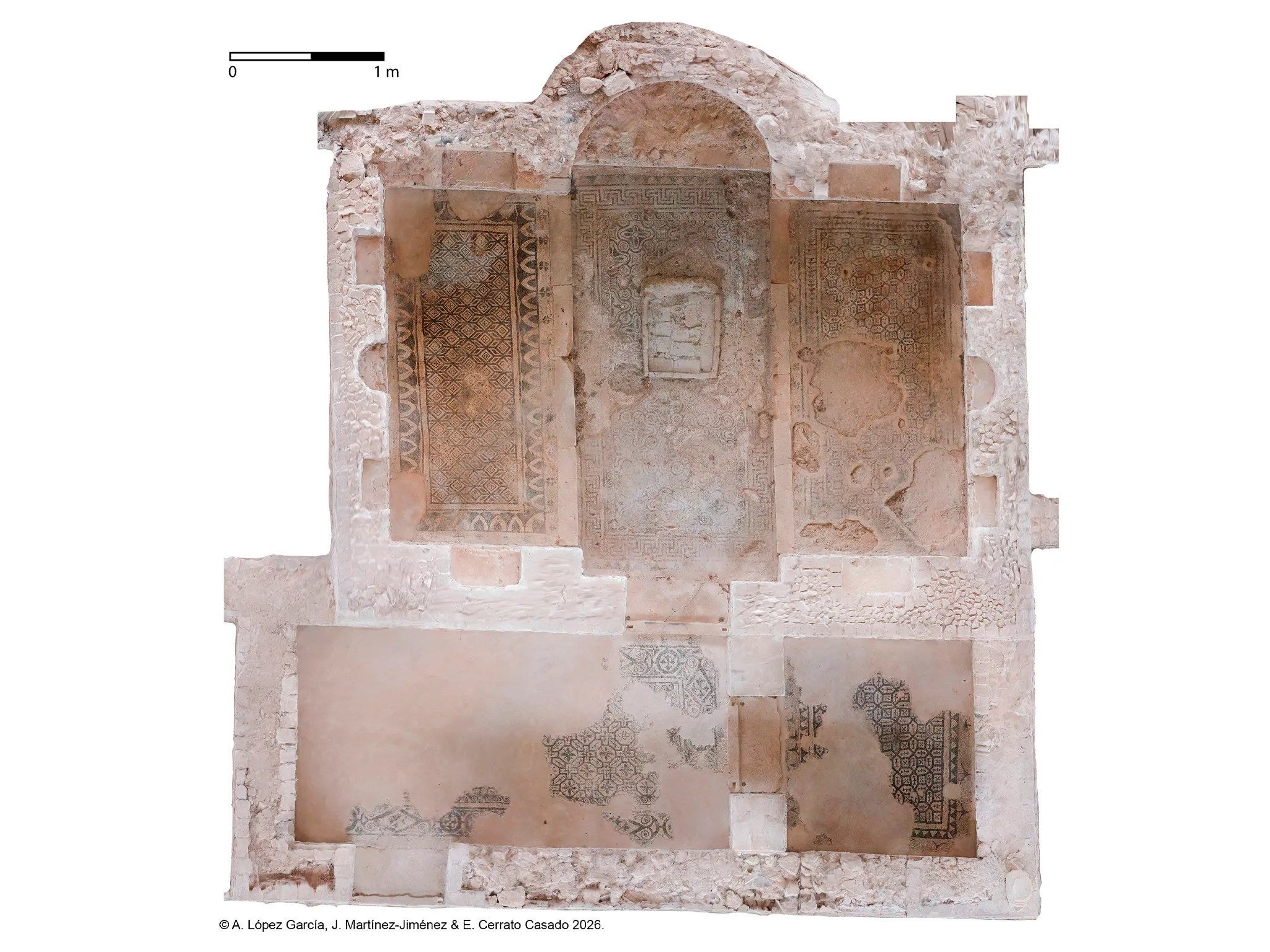
The site began as a bathing complex in the 1st century BC, was rebuilt as a luxury villa around the 3rd century AD, reached its peak over the two centuries that followed, and was remodelled again in the 6th.
There is a neat inversion here with Herculaneum. The Villa of the Papyri preserved the books but not the room that held them. Fuente Álamo preserves the room but not a single book.
The paper also covers a second site: Room 7 in the so-called Theodosian Palace at Stobi, capital of Macedonia Salutaris, tested with the same method. Most coverage has dropped that half of the study.
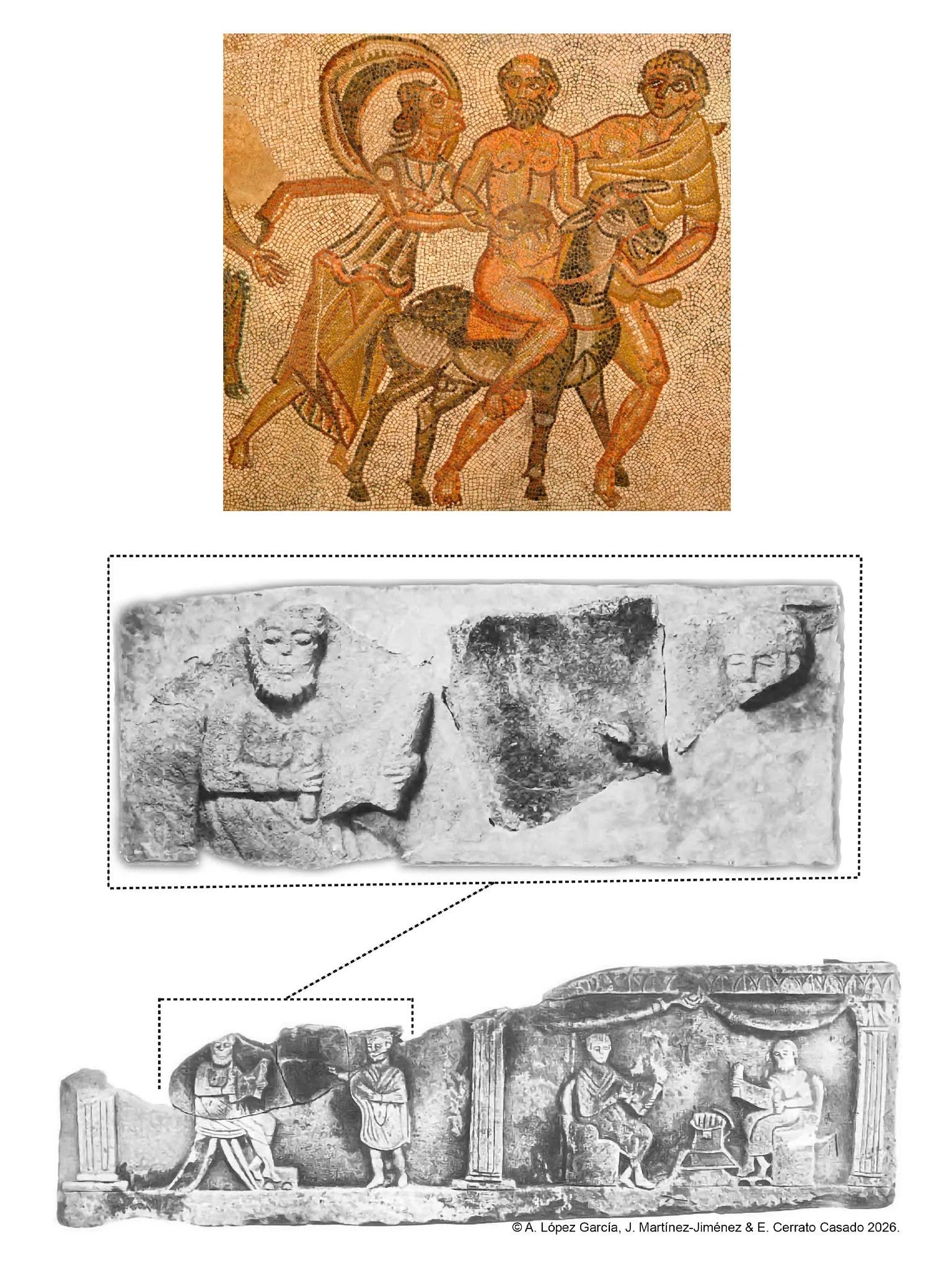
Two caveats worth keeping. First, this is a reinterpretation rather than a fresh find. The room was excavated between the 1980s and early 2000s, and a 2018 study had already described it as an office or library. Second, the authors link the room to the Declamatio sarcophagus, found in the 19th century near the villa and now in the Museum of Málaga. They read its seated bearded figure as holding a scroll in one hand and an open codex in the other, a fitting emblem for the 4th century shift between formats, and note his resemblance to a figure in the villa’s mosaic thought to be the owner. Brent Nongbri has since pointed out that the figure may simply be unrolling a single scroll held at both ends, exactly as Manuel Rodríguez de Berlanga described it in 1903.
Even with the caveats, the picture is a good one. A landowner in the rural interior of Baetica, far from Rome, built a room for books and wanted to be remembered for it.
Sources:
López García, A., Martínez Jiménez, J., and Cerrato Casado, E. (2026). “New Approaches to Identifying Roman Libraries: Two Late Antique Examples from Stobi (North Macedonia) and Fuente Álamo (Spain).” Journal of Mediterranean Archaeology 39. doi.org/10.1558/jma.35930 — https://journal.equinoxpub.com/JMA/article/view/35930
Cosana, C. et al. (2018). “Análisis de los morteros y pinturas murales de la villa romana de Fuente Álamo.” Antiquitas 30, 79–88. The earlier “office or library” reading.
Nongbri, B. “A Roman Library in Spain and the declamatio sarcophagus.” Variant Readings, 31 July 2026 — https://brentnongbri.com/2026/07/31/a-roman-library-in-spain-and-the-declamatio-sarcophagus/
Rodríguez de Berlanga, M. (1903). Catálogo del Museo Loringiano, 99–101. The 1903 reading of the sarcophagus figure.
Maybe it was a school.