


In a cavernous room at the back of the British Museum, wooden drawers hold glass-topped boxes of clay tablets from ancient Mesopotamia, around 130,000 of them. One of these tablets is small enough to sit in the palm of a hand. About ten lines of cuneiform survive on one side. The other side looks blank. When light falls across it at the right angle, two figures appear.
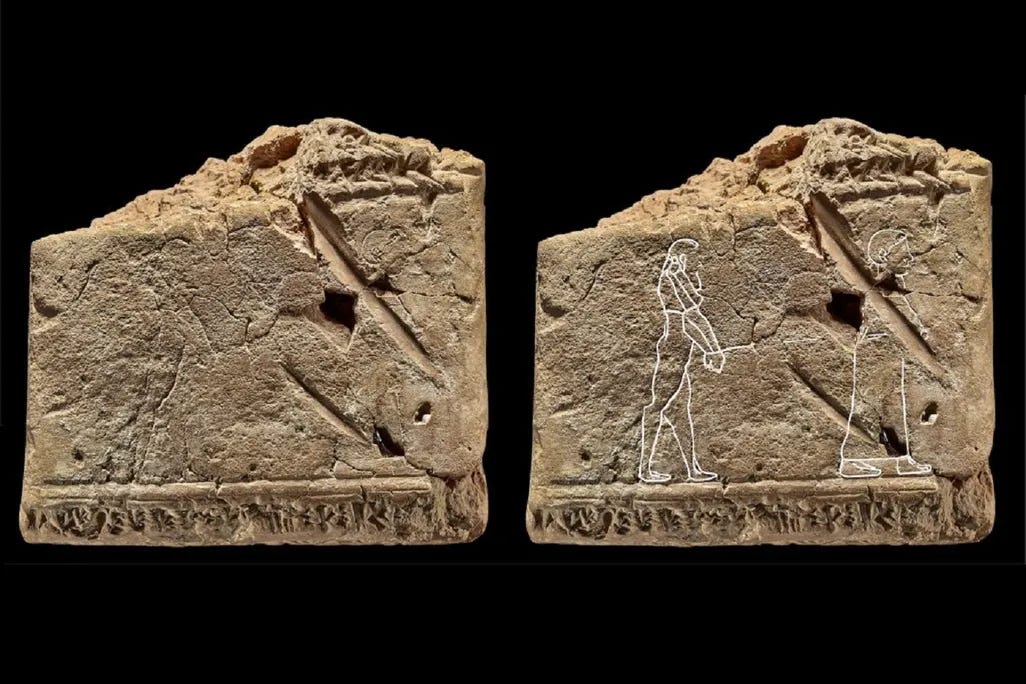
On the left stands a man with a long beard, his shackled hands held in front of him and tied to a rope. On the right, a woman in a smock holds the other end. Irving Finkel, the museum’s cuneiform curator, recognized the man as a ghost. The tablet is a manual for getting rid of one.
A note to free subscribers : Your support keeps this work independent. Upgrade for a few dollars a month to unlock every long read, the short documentaries and the full archive. Cancel anytime.
