


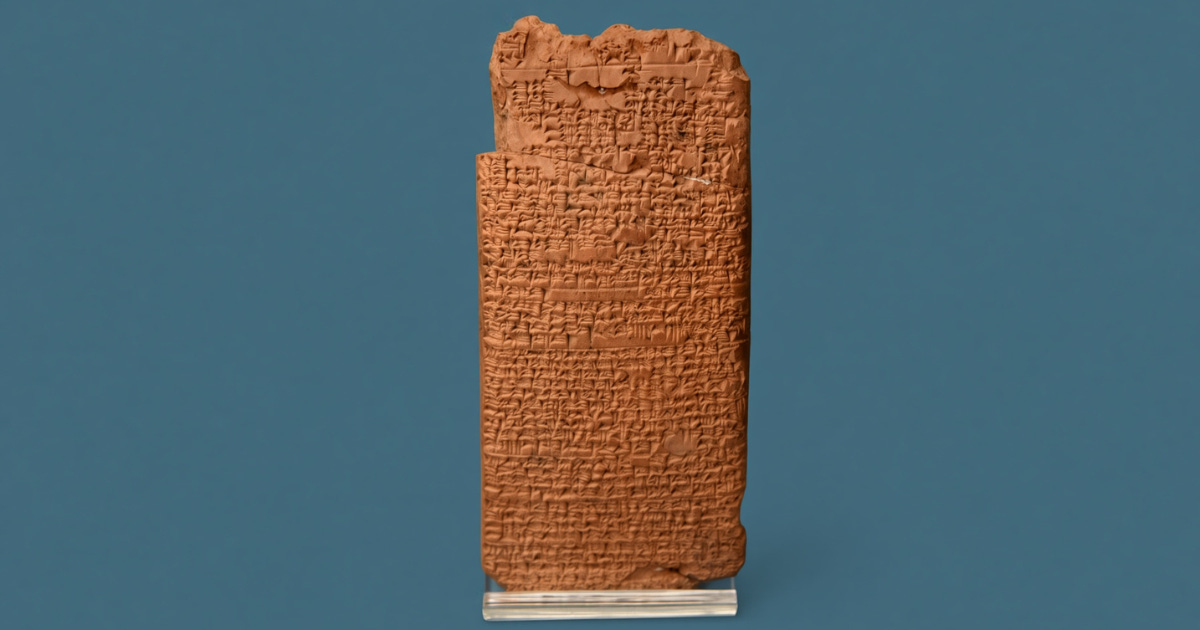
Inscribed in Nippur around 1800 BC, this terracotta slab pairs eight botanical prescriptions for acute poisoning with ritual exorcisms. Ancient Babylonian practitioners treated plant-based remedies and spiritual defense as inseparable parts of the same cure. Image credit: Dr. Osama Shukir Muhammed Amin / Museum of the Ancient Orient, Istanbul (CC BY-SA 4.0)
A dense slab of baked terracotta sits in the Museum of the Ancient Orient in Istanbul, inscribed with minute Cuneiform signs in Old Babylonian Akkadian. Excavated from the sacred city of Nippur in modern Iraq, the tablet dates back roughly 3,800 years. It details a systematic response to one of the ancient world’s most terrifying hazards: acute poisoning.
