


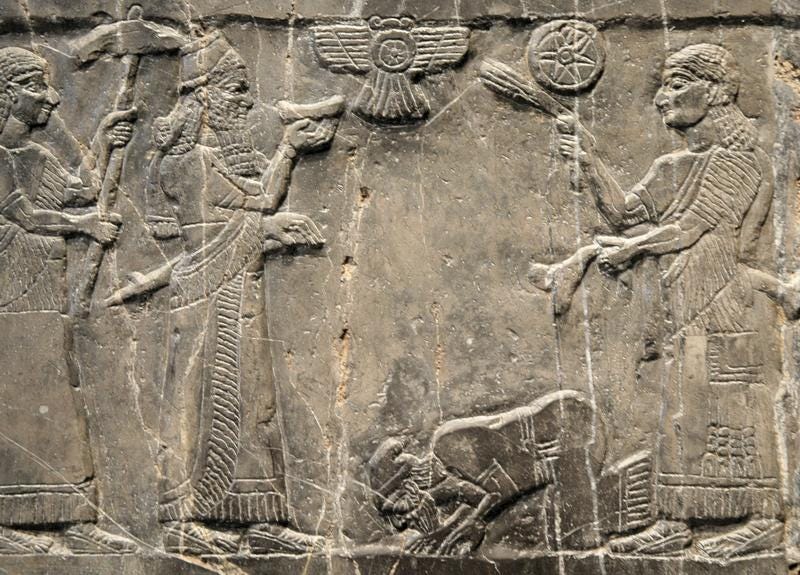
A panel of the Black Obelisk of Shalmaneser III, set up at Nimrud about 825 BC. The figure bowing at right is generally read as Jehu of Israel or his envoy, and the cuneiform above reads “tribute of Jehu, son of Omri.” British Museum. Credit: Marco Prins, Livius.org, CC0.
In July 1993 Gila Cook, the architect on Avraham Biran’s excavation at Tel Dan in northern Israel, noticed a block of black basalt with writing on it in the rubble of a later wall near the city gate. Two smaller pieces turned up the next year and fitted. Together they are part of an Aramaic victory inscription, most likely set up by Hazael of Damascus in the ninth century BC. The king claims to have killed Joram son of Ahab, king of Israel, and Ahaziah son of Joram, of the House of David.
Two details matter more than the famous phrase. The author was an enemy of both kingdoms. And his account disagrees with the Bible, which has Jehu kill both kings in 2 Kings 9, while Hazael takes the credit himself. A text written to flatter the biblical story would not look like that. A few scholars have argued for other readings of “House of David”, and the majority reading has held.
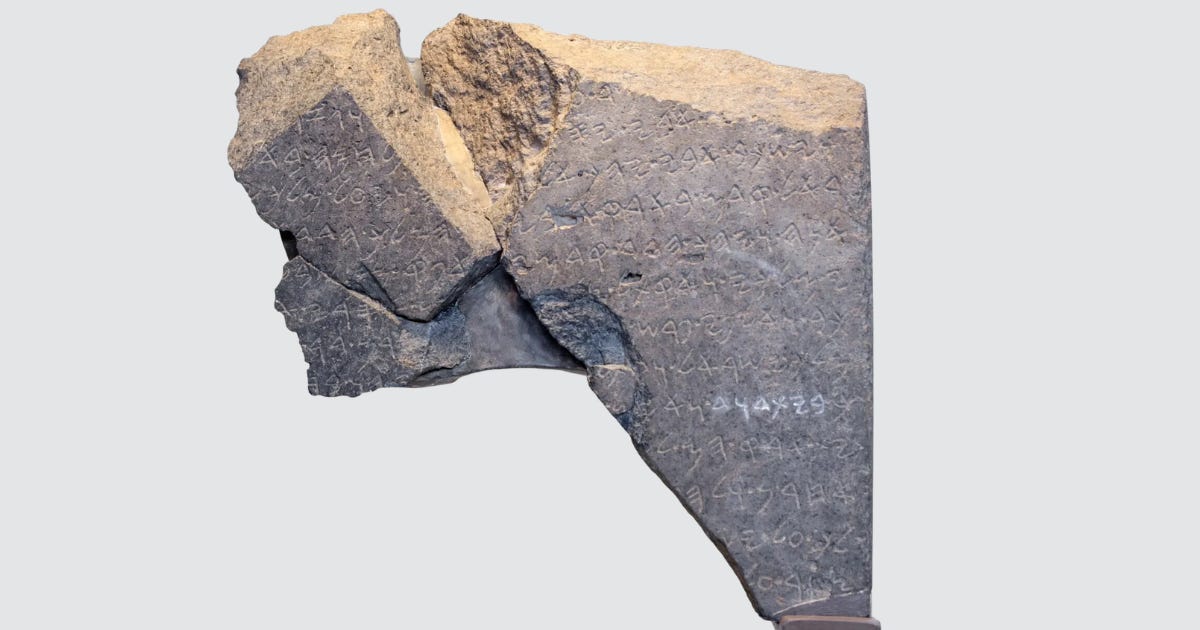
Tel Dan Stele,Israel Museum. Highlighted in white: the sequence B Y T D W D. Credit: Oren Rozen CC BY-SA 4.0
Most of the strongest evidence for the people of the Bible has this shape. The kings of Israel and Judah survive in the records of Egypt, Assyria, Babylon, Moab and Aram, written by rulers who had no stake in the Bible and no idea it would exist. What follows takes the best of those finds, then the New Testament people and places that have turned up in stone, then the large things that have not been found.
Israel appears first in an Egyptian victory hymn, and Egypt files it under people rather than cities
Flinders Petrie found the Merneptah Stele in 1896 in the pharaoh’s mortuary temple at Thebes. The black granite slab, now in the Egyptian Museum in Cairo, dates to the fifth year of Merneptah, about 1208 BC. It boasts of a campaign in Canaan. Ashkelon is carried off, Gezer seized, Yanoam made as though it never was, and then comes the line “Israel is laid waste, his seed is not.”
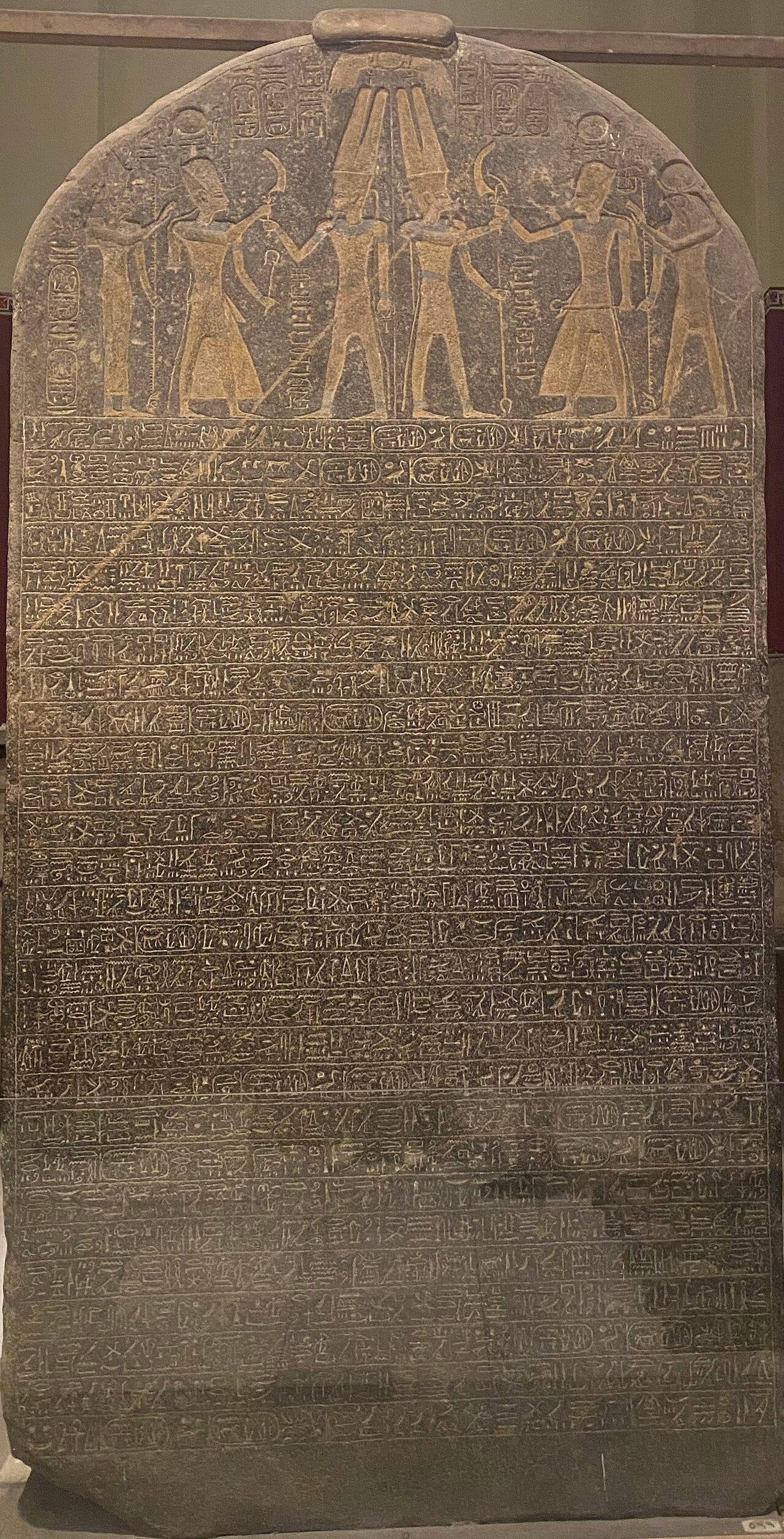
The stele in 2023. Image credit: By 𐰇𐱅𐰚𐰤 - CC BY-SA 4.0
The scribe marked the first three names with the hieroglyph for a city. Israel gets the sign for a people, a seated man and woman over three strokes. So by 1208 BC Egypt knew of a group called Israel in Canaan, without a city or a state to name. The stele says nothing about slavery in Egypt, and the claim of annihilation is the usual boast. A possible earlier mention on a pedestal in Berlin, proposed by Manfred Görg in 2001, remains contested.
Ahab, Omri and Jehu appear in Assyrian and Moabite texts, and Jehu is shown bowing to the Assyrian king
The Kurkh Monolith was found in 1861 at Kurkh, in what is now southeastern Turkey, and is in the British Museum. It records Shalmaneser III’s battle at Qarqar in 853 BC against a coalition of western kings. Among them is “Ahab the Israelite”, credited with 2,000 chariots and 10,000 men. The Bible never mentions Qarqar. The numbers are probably inflated.
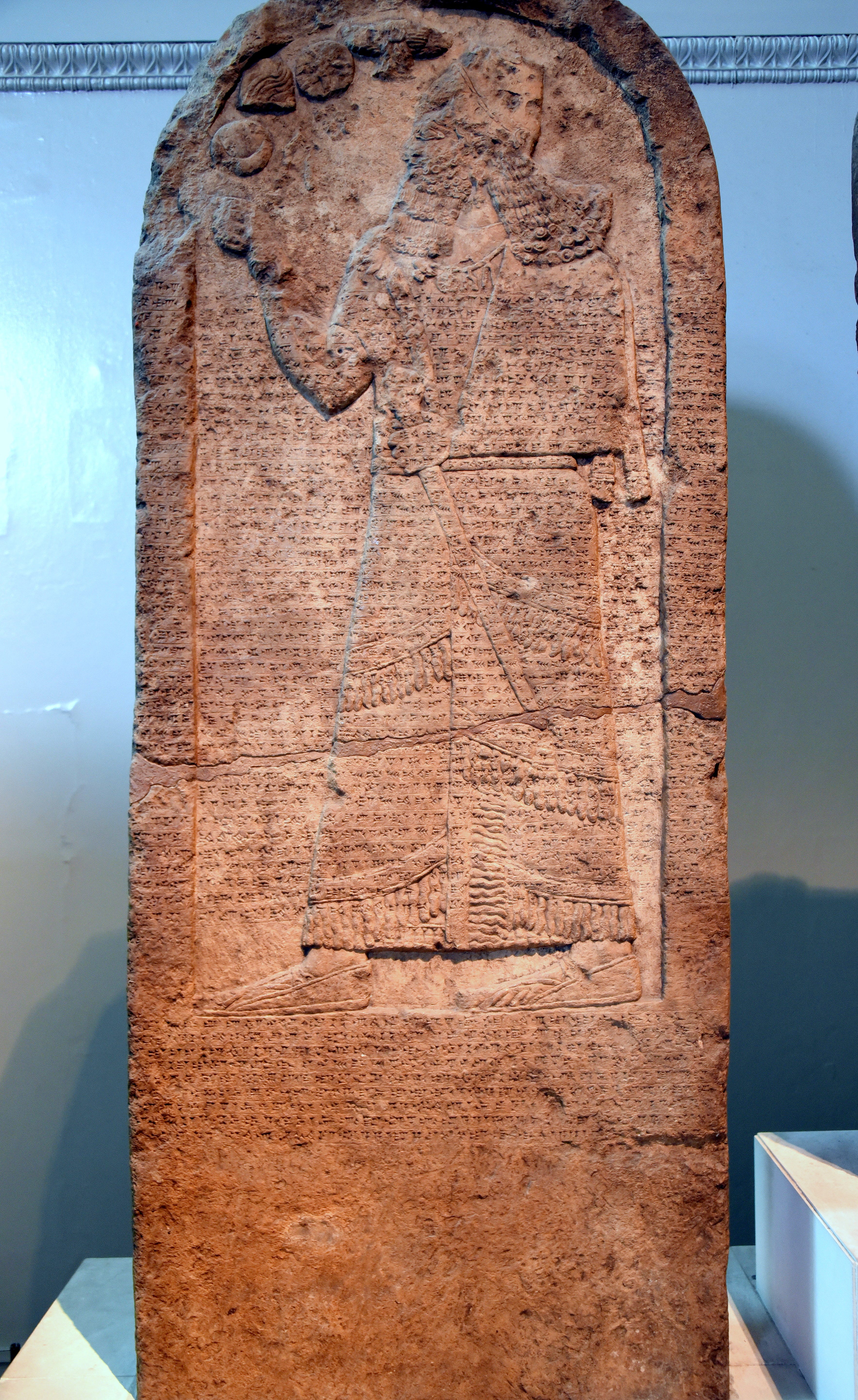
The Kurkh Monolith of Shalmaneser III. Courtesy Osama Shukir Muhammed Amin FRCP(Glasg), CC BY-SA 4.0, via Wikimedia Commons.
The Black Obelisk, set up at Nimrud around 825 BC, records tribute in 841 BC from “Jehu, son of Omri”. Jehu was no son of Omri. He seized the throne in a coup. The Assyrians simply named the kingdom after Omri’s dynasty. A kneeling figure on the obelisk is generally read as Jehu or his envoy.
Keep reading. Subscribe for a few dollars a month. Cancel anytime.

