


Genesis gives Enoch a handful of verses. He is the seventh name in the line from Adam to Noah, he lives 365 years, he walks with God, and then he is gone, because God took him. Everyone else in that genealogy dies. Enoch simply stops appearing.
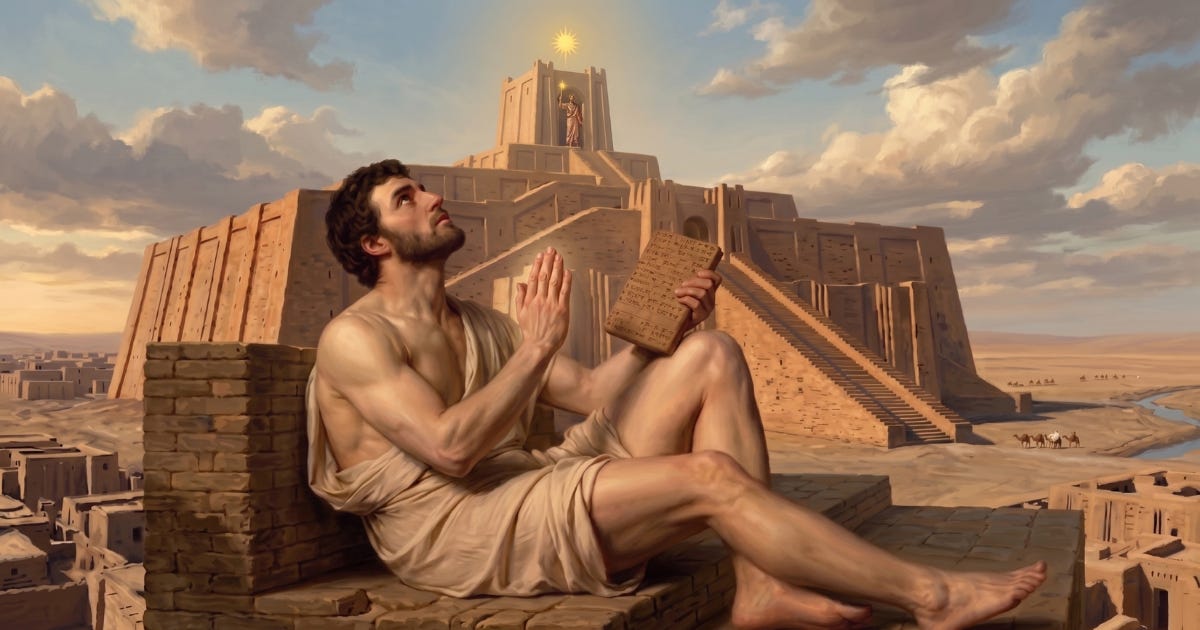
Those few lines grew into one of the largest bodies of literature attached to any biblical figure, and over the past century scholars have traced where much of it came from. The trail leads to Babylon, to a king who ruled the city of the sun god before the flood.
A whole library grew out of four verses
By the third century BC a substantial collection of writings had formed around Enoch, now known as 1 Enoch. In its opening section, the Book of the Watchers, two hundred angels descend on Mount Hermon, take human wives, and teach metalworking, weapons, cosmetics, sorcery and the reading of the stars. Their offspring are giants, the earth fills with violence, and the flood follows. Enoch stands in the middle as the man the fallen angels ask to plead for them.
Another early section, the Astronomical Book, lays out the movements of the sun, moon and stars and argues for a calendar of 364 days. The Book of Jubilees, from the second century BC, calls Enoch the first human to learn writing.
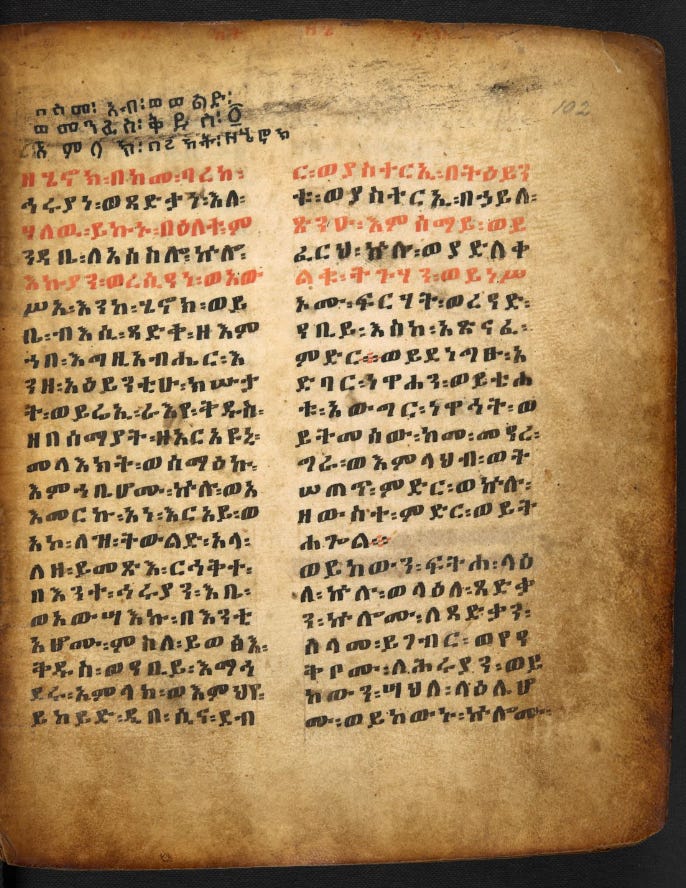
The collection survived complete only in Ge’ez, the classical language of Ethiopia, where it remains part of the Ethiopian Orthodox canon. Europe learned of it when the Scottish traveler James Bruce brought manuscripts home in 1773. It was never entirely forgotten elsewhere, since the New Testament letter of Jude quotes it directly. In 1976 the scholar Józef Milik published Aramaic fragments of Enoch from Qumran Cave 4, and they confirmed the oldest sections go back at least to the third century BC.

In Jewish mysticism he becomes Metatron
Later tradition went further still. In the work known as 3 Enoch, Enoch is carried up to heaven, his body turned to fire, and he becomes Metatron, the highest of the angels, even called the lesser YHWH.
