


Egypt's Ministry of Tourism and Antiquities announced today that a mission of the Supreme Council of Antiquities has found a cemetery at Kafr al-Hattaba, in Dakahlia governorate in the eastern Nile Delta, with burials running from the Predynastic period through to Greek and Roman times. Alongside it is a residential area of the Second Intermediate Period. Digging is still under way.
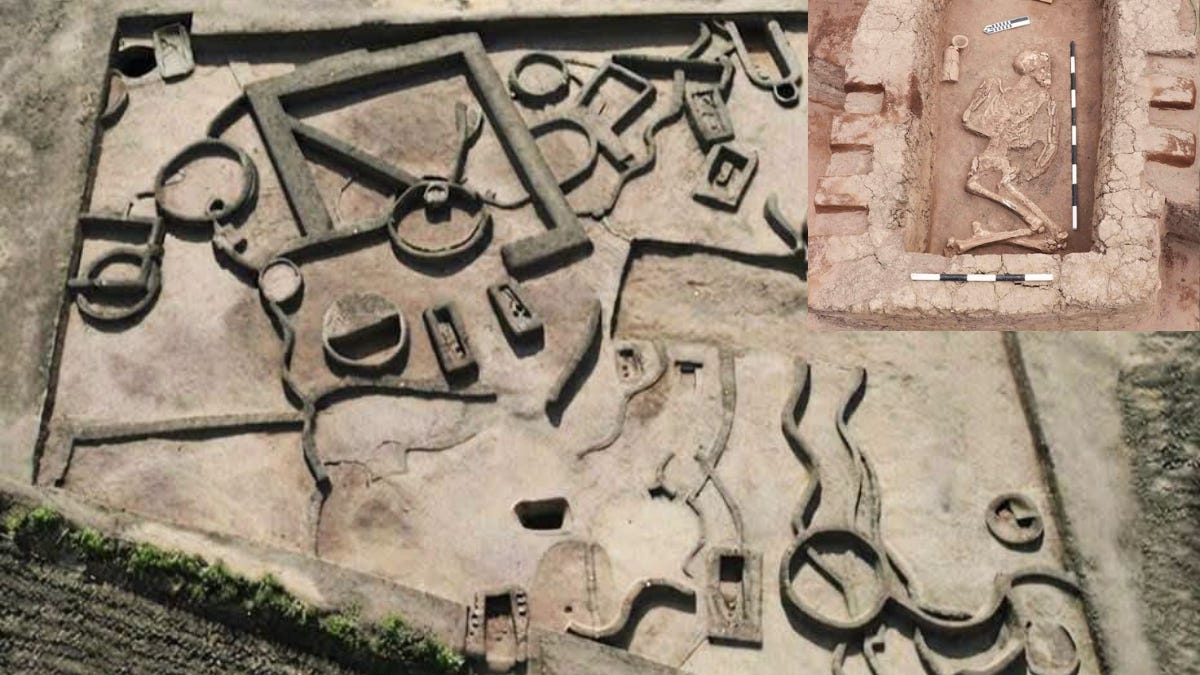
The most crucial graves for the eastern Delta area pertain to the central period from four millennia ago. The Ministry reports they date to the Fifthteenth Dynasty, Seventeenth Dynasty and the dawn of the New Kingdom, which is within the period of the occupation by Hyksos of Lower Egypt where Avaris was their capital. The site is located north east of a short distance.
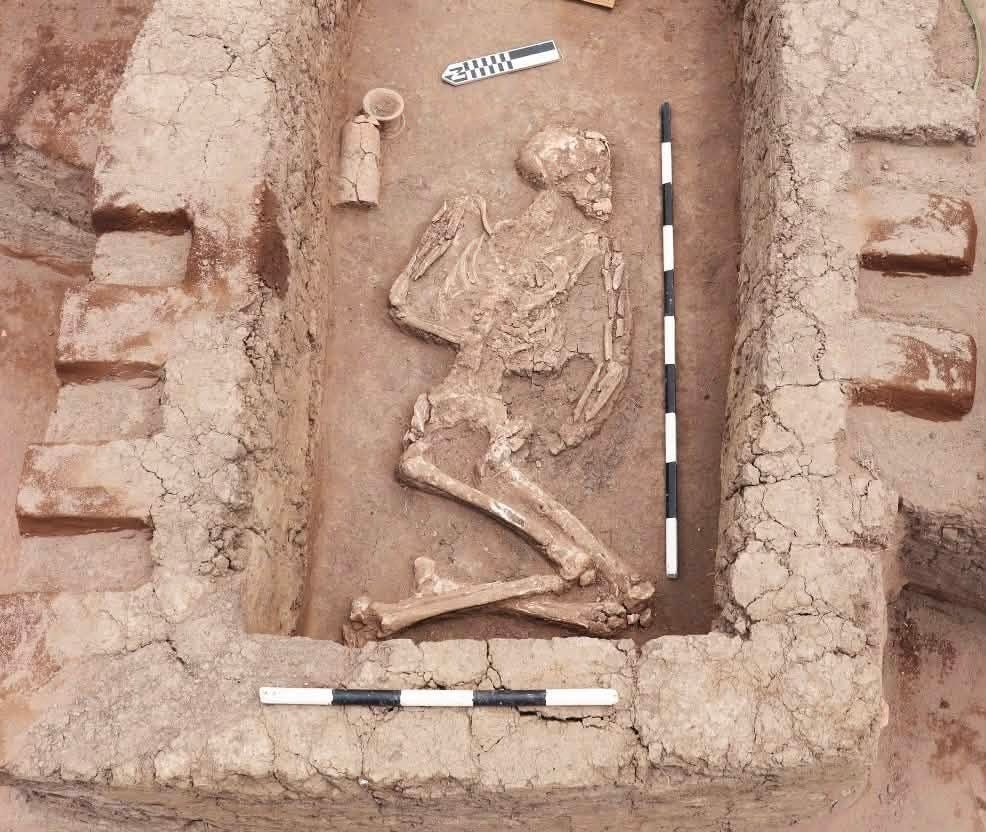
Hisham Hussein-head of Administration of lower Egypt antiquities stated that the type of domes for the dead tombs at Avaris is also existent here, that a stone construction style adopted by Canaan and not the native Egyptians for tombs but even by Canaan. Another indicative factor made by Mr. Hussein is the existence of the graves located inside a village occupied by residents. The pottery discovered bears markings indicating existence of an occupation and settlement by people from levant.
As found in other ancient Egyptian digs along levant.
The tombs revealed brass swords and tools
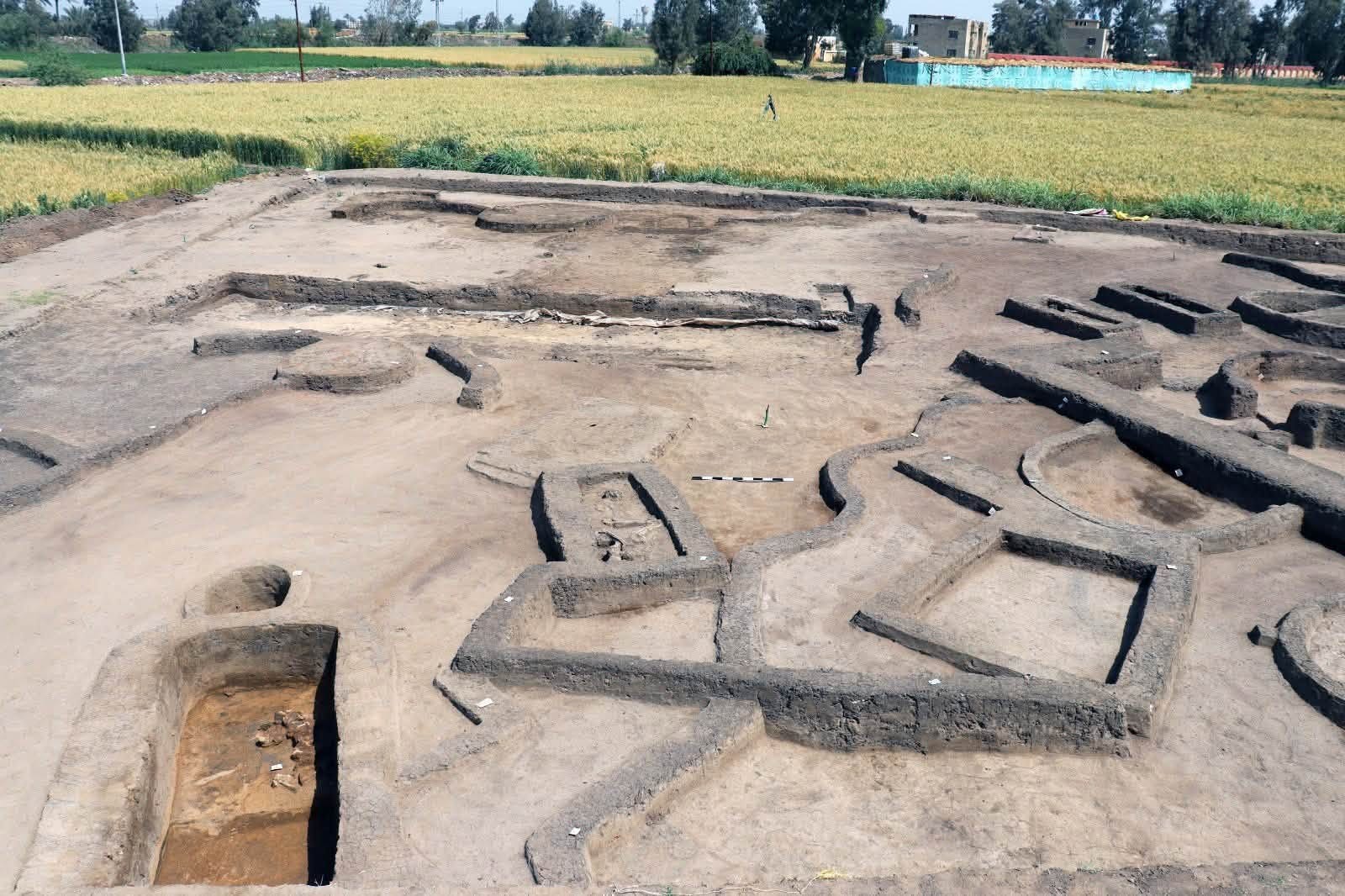
As for the village houses it was made of mudbrick and until the start of the New Kingdom it remained functioning, and excavations found grain silos, stoves and places where fires were ignited; the remains of walls, in an Arabic wavy pattern unique to the eastern Nile Delta and covering both human beings tombs and villages also discovered fish, bird and animal remains along with ceramics and stone instruments.
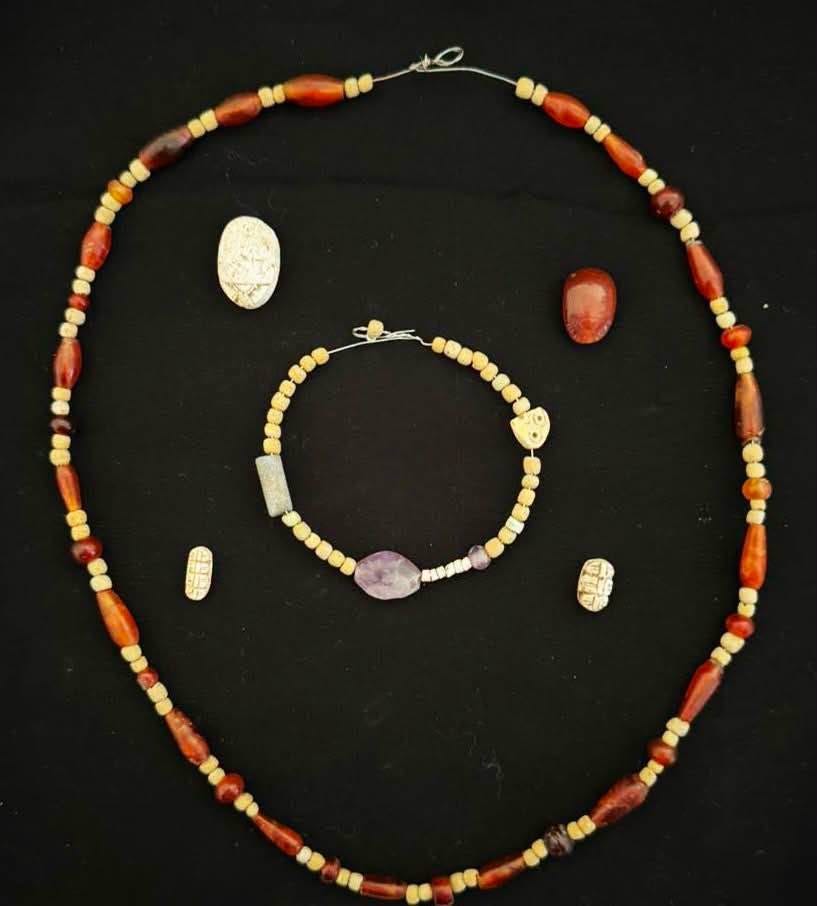
Earlier than the previous graves which are found beneath there, were those that dates back to the Early and Late Egypt in Lower Predynastic at periods referred to to in archaeology as “Buto1” & Buto2” located in the middle of the4th century B.C and built by a round shape excavation in the soil of sand . People’s body was buried inside it with bodies put in different ways, where no things were found except only a small Pottery set of pots or dishes, and stone or flint Tools, as well as animal, plant and other types of species from marine origin, which is evidence for a population that inhabited there and occupied the place more than a thousand years ago before the emergence of Avaris as a city.
The furthest point in terms of history from earliest to latest are Greek and Roman tombs which contained simple holes wherein people were placed inside pottery jars as kids for example which did not belong to a particular era and some Amphora, re-utilized as receptacles for the deceased, which is one discovery.
Hisham El-Leithy, Secretary General of the Supreme Council of Antiquities, called Kafr al-Hattaba one of the few sites in the eastern Delta with a continuous record running from prehistory through to the Greek and Roman periods.
Source: Ministry of Tourism and Antiquities of Egypt