


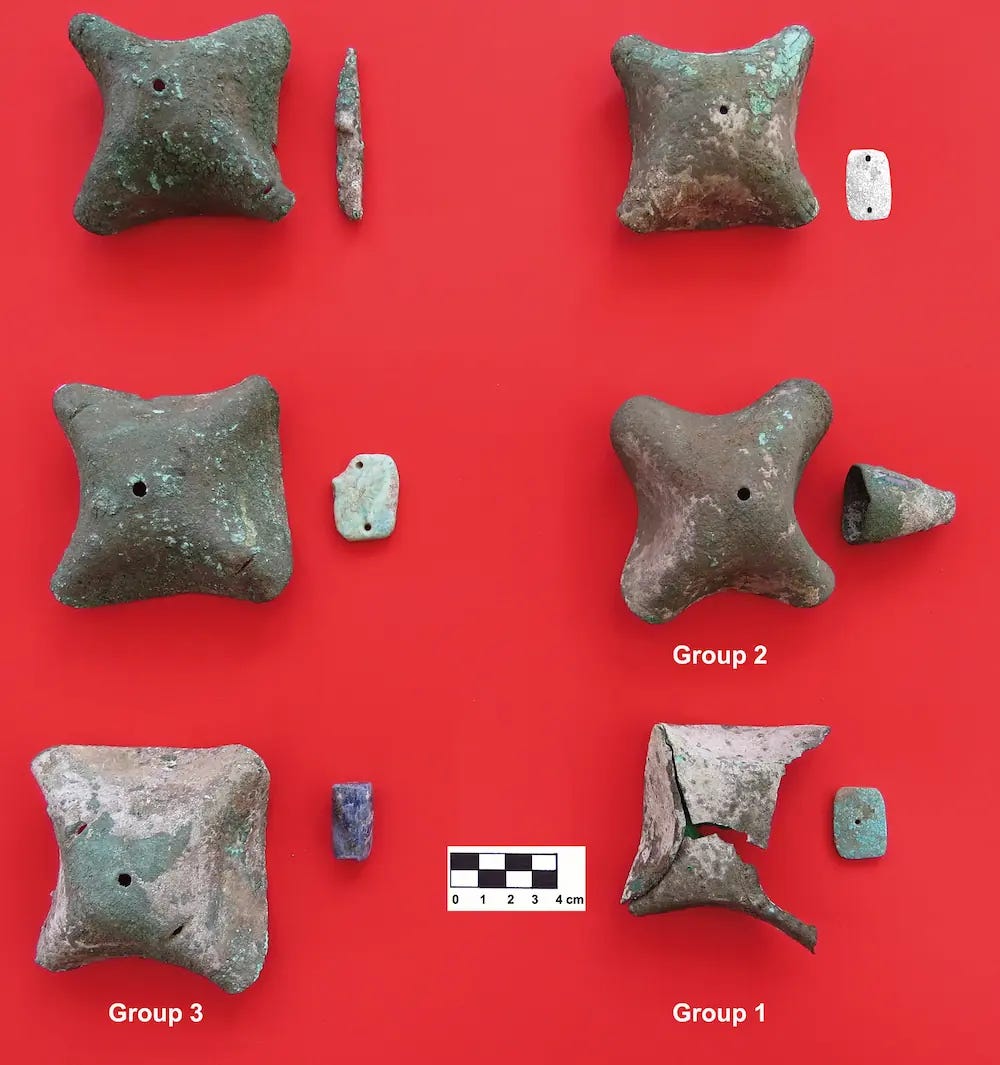
A bundle of six pyramid-shaped copper bells was found inside a circular stone storehouse at Yoroma, a Yampara settlement in the Oroncota Valley of southern Bolivia. Each bell has a different clapper, made variously of copper, shell or semiprecious stone, so each one sounded different, from bright and sharp to soft and low.
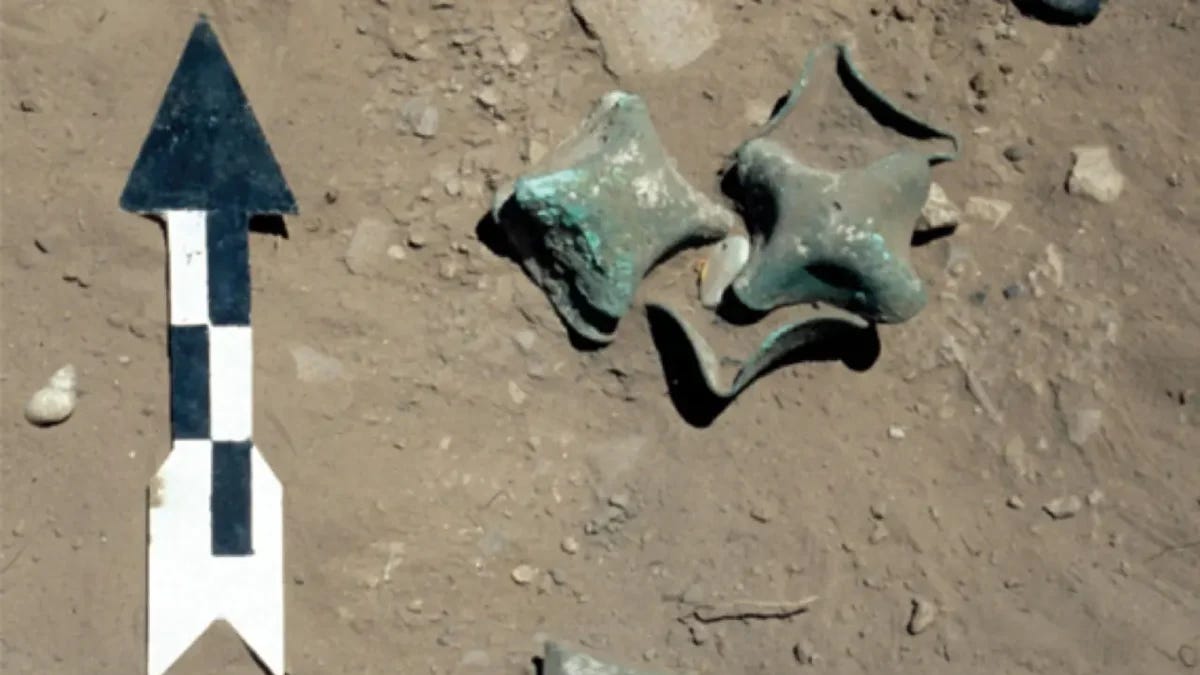
The study is by Sonia Alconini of the University of Virginia and Walter Sánchez-Canedo of the Universidad Mayor de San Simón, published in the Cambridge Archaeological Journal. The deposit dates to somewhere between AD 1300 and 1536.
The context is a grain store, not a temple
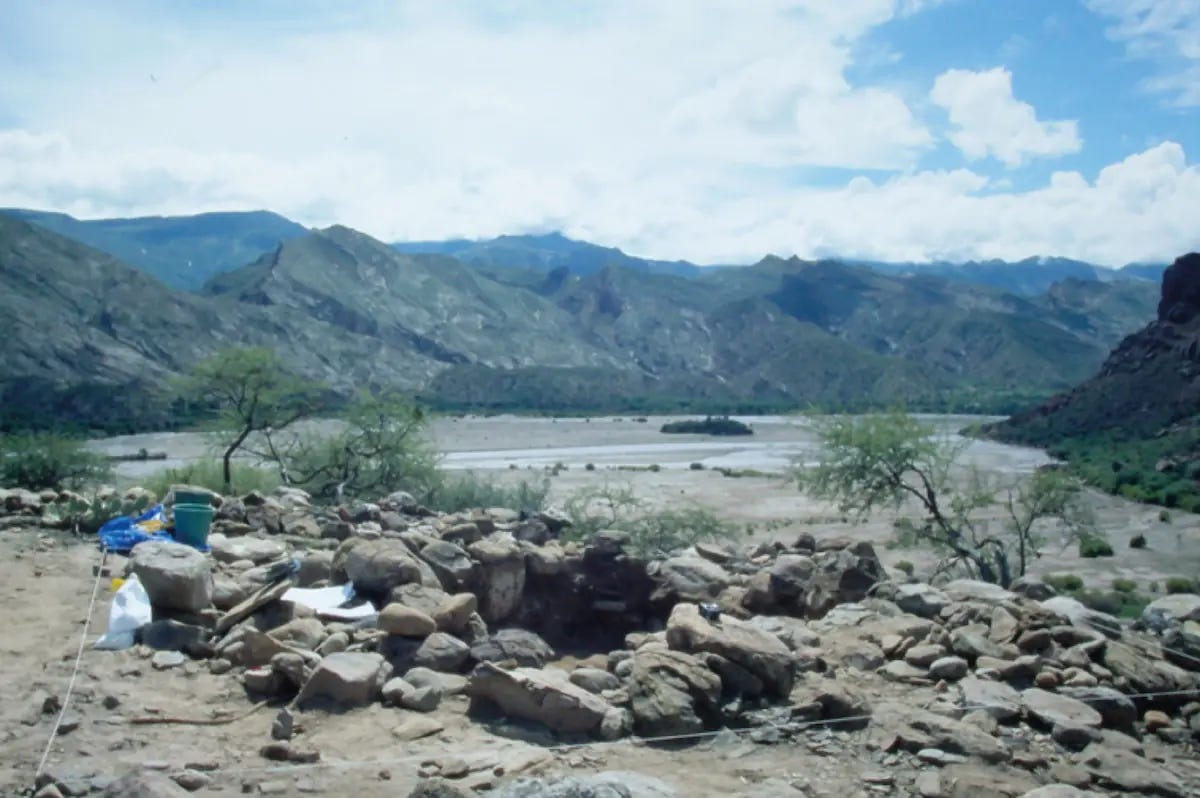
The building is a qollqa, the circular stone structure used across the Andes for storing crops. That placement matters, because the bells were not alone in it.
They were deposited alongside a small stone carving of an ear of maize, a polished stone, a land snail shell and a stone axe. Taken together, this reads as a deliberate offering rather than a stored object or something mislaid, and the maize carving points at what the offering concerned.
The clappers were chosen to sound different
The variation is the striking part. Six bells of similar form, each fitted with a clapper of a different material, gives a set of distinct tones rather than a uniform chime.
That is a design decision. Copper, shell and stone ring differently against the same body, and whoever assembled this bundle wanted a range of sounds rather than one sound repeated. It suggests the bells were meant to be heard together, and that the differences between them carried meaning.
The comparison Alconini and Sánchez-Canedo draw is with living practice
Dancers in the modern Jalqa and Tarabuco communities of the Sucre region wear bells and spurs, and the metallic sound they make is associated with welcoming a good harvest.
The authors propose that the Yoroma bells worked in a comparable way. Bells, a carved maize cob and a grain store belong to the same set of concerns, and the ethnographic parallel gives a plausible reading of what the sound was for.
The distance between the two is roughly five hundred years, which is a long time for a practice to persist, and the analogy is an argument rather than a demonstration. But the Jalqa and Tarabuco are the descendants of this region’s population, not an unrelated comparison drawn from elsewhere.
Oroncota was a frontier
The valley sits on the eastern slopes of the Andes, along the Pilcomayo River at about two thousand metres. The Yampara had been the principal population there for well over a thousand years when the Inka took the area under Topa Inca Yupanqui, sometime between 1471 and 1493, and turned it into a defensive outpost on the empire’s eastern edge.
Beyond that edge were the Chiriguano, Guaraní-speaking groups who attacked the region heavily during the last years of Inka rule and eventually took control of it.
So this is a provincial site in a contested zone rather than a centre of imperial power, which is Alconini’s long-standing research interest. She has published extensively on how the Inka governed their southeastern frontier, and on what happened to Yampara identity and material culture before and after the conquest.
What the bells say about exchange
Copper bells of this kind circulated over long distances in the ancient Andes, and the paper’s title places them within networks of exchange as much as ritual.
An object that carries both a sound and a source has two things to tell you. Where the metal came from indicates who the community was connected to. What it was used for indicates what those connections were understood to mean locally. At Yoroma the answer to the second question appears to involve the harvest, buried in the building where the harvest was kept.
Sources: Alconini, S., and Sánchez-Canedo, W. (2026). "Sacred Sounds, Exchange, and Copper Bells in the Ancient Southeastern Andes, The Yamparas and Inka Empire." Cambridge Archaeological Journal, 1 to 18. doi.org/10.1017/S095977432610064X.