


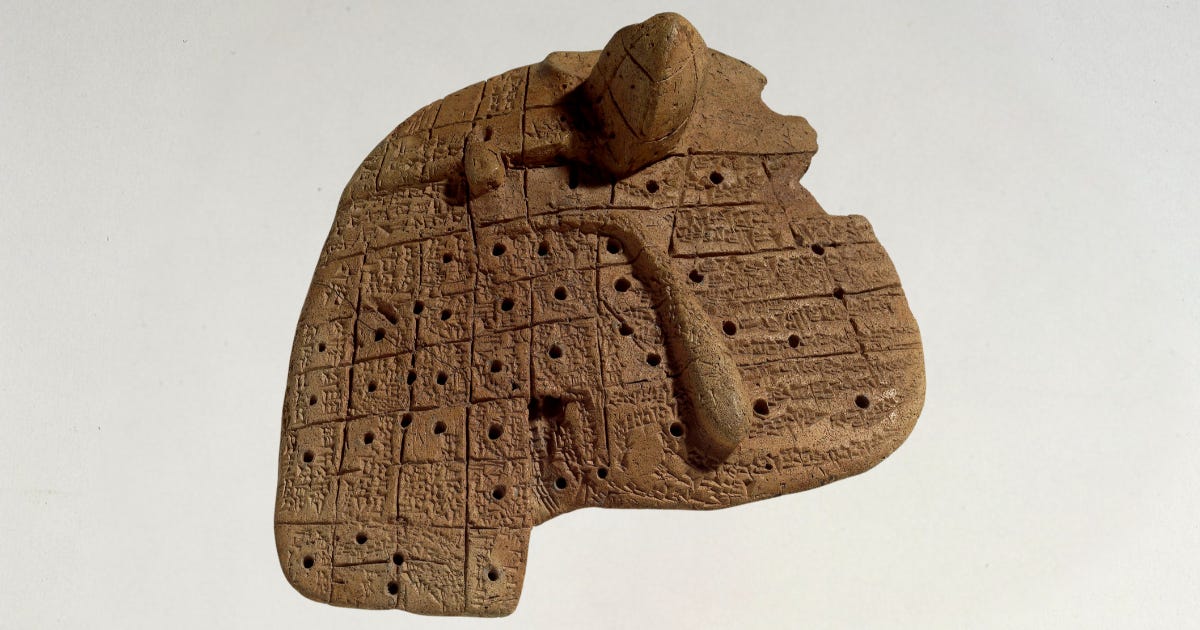
Clay model of a sheep’s liver used in divination, Old Babylonian period, about 1900 to 1600 BCE. British Museum, London. Image via World History Encyclopedia, courtesy of the Trustees of the British Museum.
Rulers across the ancient Near East asked the gods for answers by reading sheep livers, the moon, the stars and unusual births. Liver manuals of about 100 tablets, 353 queries to the sun god Shamash, clay liver models from Mari and Hattusa, and a sky omen series of nearly 70 tablets show a technical craft that advised kings from Babylonia to Anatolia, and a similar practice appears among the Etruscans. Researchers describe a shared craft and continue to debate how its branches connect.
Ancient Content, November 16, 2026
Babylonian diviners wrote a manual for the liver
Wikipedia describes the Bārûtu, “the art of the diviner,” as a compendium of about 100 cuneiform tablets on extispicy, the reading of sacrificial animals’ entrails. It was assembled in the Neo-Assyrian and Babylonian periods from earlier versions, and its predecessors reach back to the Old Babylonian period. The page estimates about 8,000 omens, most of them concerning royal and military affairs.
The diviner, called a bārû, began with ritual purity, washing hands and mouth, putting on fresh clothing, placing tamarisk and cedar in the ears, and undergoing anointing and fumigation with sulfur. The examination then followed a counter-clockwise order from the liver to the lungs, breastbone, vertebrae, ribs, colon and heart, and the liver received the most attention. Revisions to the series involved senior diviners, and Wikipedia names Marduk-šumu-uṣur, Naṣiru and Tabni as advisers to Esarhaddon. The same page reports that in 647 BCE at least 135 writing boards were taken from private collections after a Babylonian revolt, and that captive scribes worked on the material at the Assyrian capital.
Clay models formed part of the craft. A British Museum model from the Old Babylonian period, dated to 1900 to 1600 BCE and linked to Sippar, carries written records. World History Encyclopedia says they may represent signs on the organ and were probably used to improve divination.
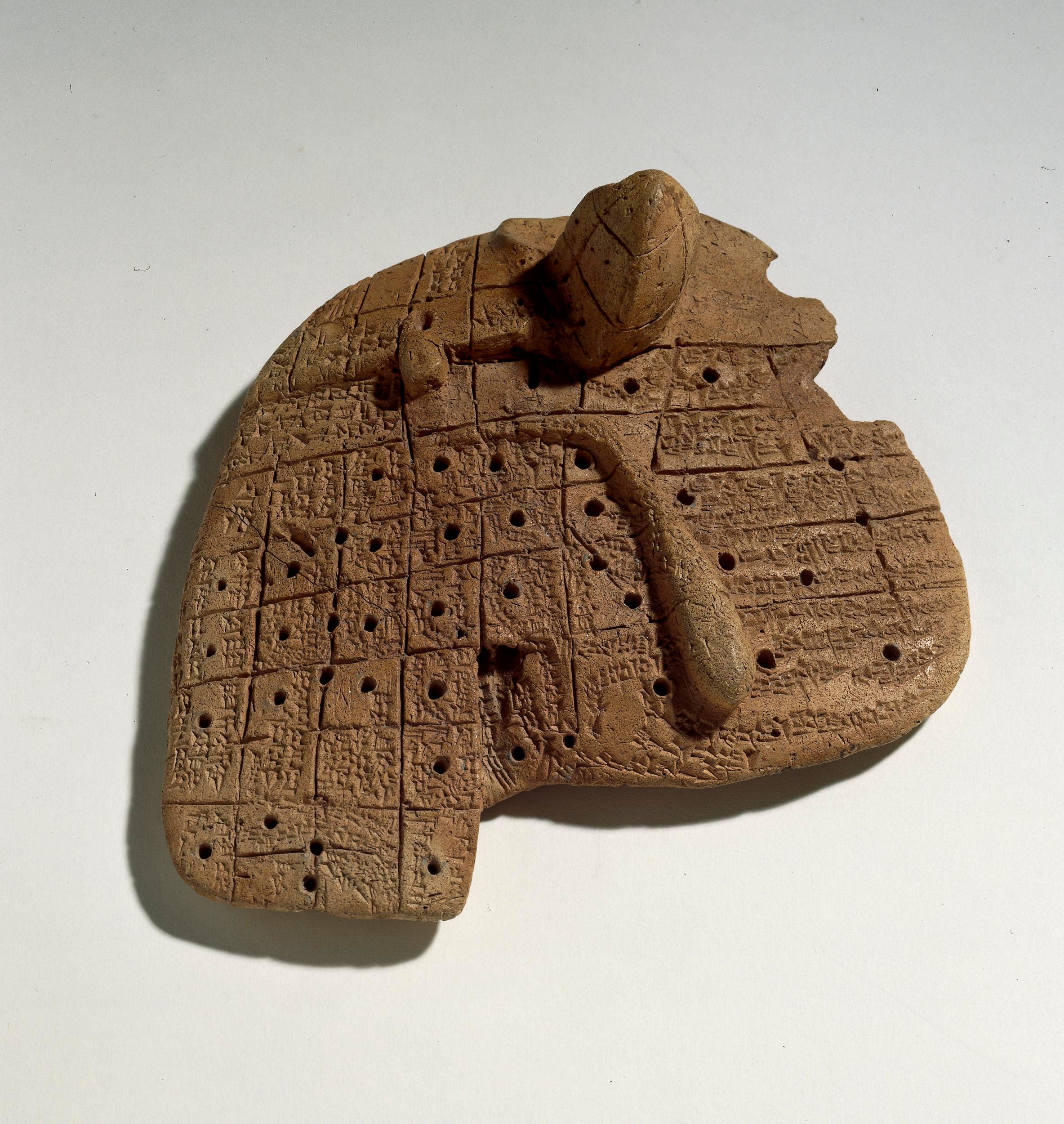
A clay model of a sheep’s liver from the Old Babylonian period, about 1900 to 1600 BCE, probably from Sippar. The written records on such models may represent signs seen on the organ. British Museum, London. Credit: Image via World History Encyclopedia, courtesy of the Trustees of the British Museum
Assyrian kings put questions to the sun god
Neo-Assyrian rulers put specific questions to Shamash and read the answer in a sheep’s liver. Ivan Starr’s 1990 edition, Queries to the Sungod, presents 353 of these queries, and the State Archives of Assyria Online hosts a searchable edition by Mikko Luukko.
