


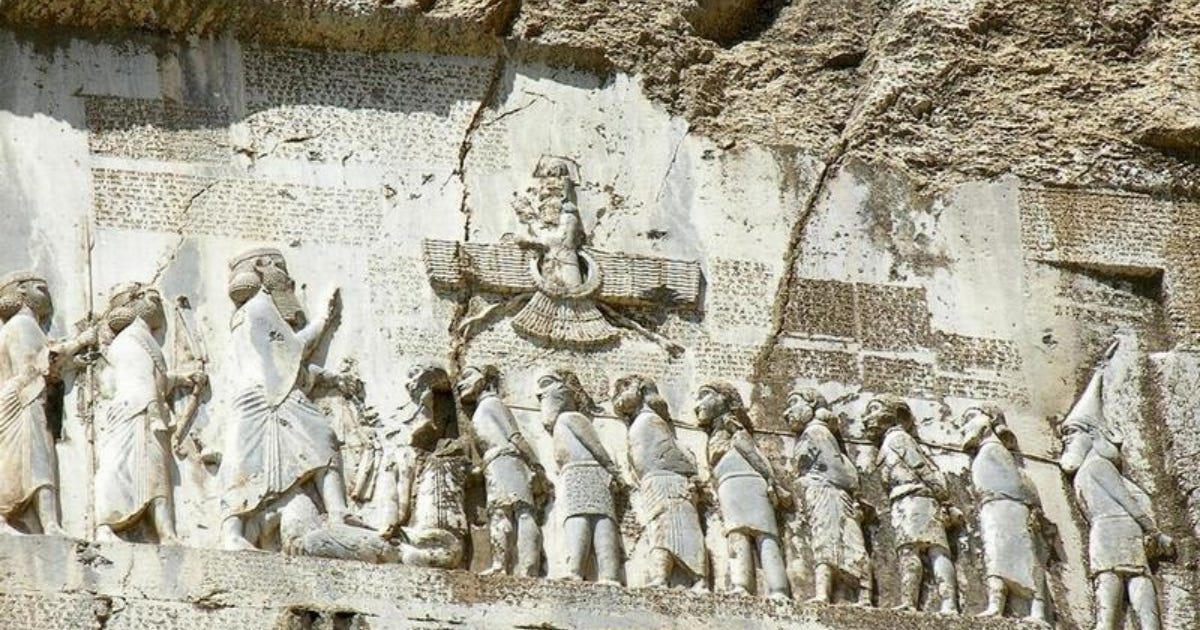
Darius I and the bound rebel kings on the Behistun relief, Iran, around 520 BCE.
Darius I described one of his own punishments on the cliff at Behistun. When the Median rebel Fravartiš was captured at Rhagae, Darius says he cut off his nose, ears and tongue and put out one eye. Fravartiš was kept in fetters at the palace entrance where all the people could see him, and was then impaled at Ecbatana. Muzaffer Duran of Süleyman Demirel University in Isparta has gathered this and dozens of other cases in a new study of physical punishment in Achaemenid law. It appears in the Journal of Penal Law and Criminology (volume 14, issue 1, 2026). Duran argues that the punishments expressed the will of the king, protected royal authority and served as public warnings. The evidence he works from is mostly Greek, and specialists treat much of it with caution.
Darius recorded mutilation and impalement in his own inscription
The Behistun inscription is the only Achaemenid royal text that describes these punishments in detail. In the section after Fravartiš, Darius gives the same treatment to Tritantaechmes, a Sagartian who claimed kingship. He was mutilated, displayed bound at the palace entrance and impaled at Arbela. On Fravartiš’s leading followers at Ecbatana, the 1907 translation by King and Thompson says Darius flayed them and hung up their hides stuffed with straw.
The Old Persian phrase for Darius’s sentence means to put on a stake. The Greek verbs that later writers used can mean either impaling or crucifying, which is why English translations vary. Herodotus reports that when Darius retook Babylon, he pulled down its walls and impaled about 3,000 of its leading men.
Impalement and flaying were well-established penalties before the Persians. Karen Radner’s 2015 study of impalement in Assyrian warfare and legal practice shows that it served Assyria both on campaign and in its courts.
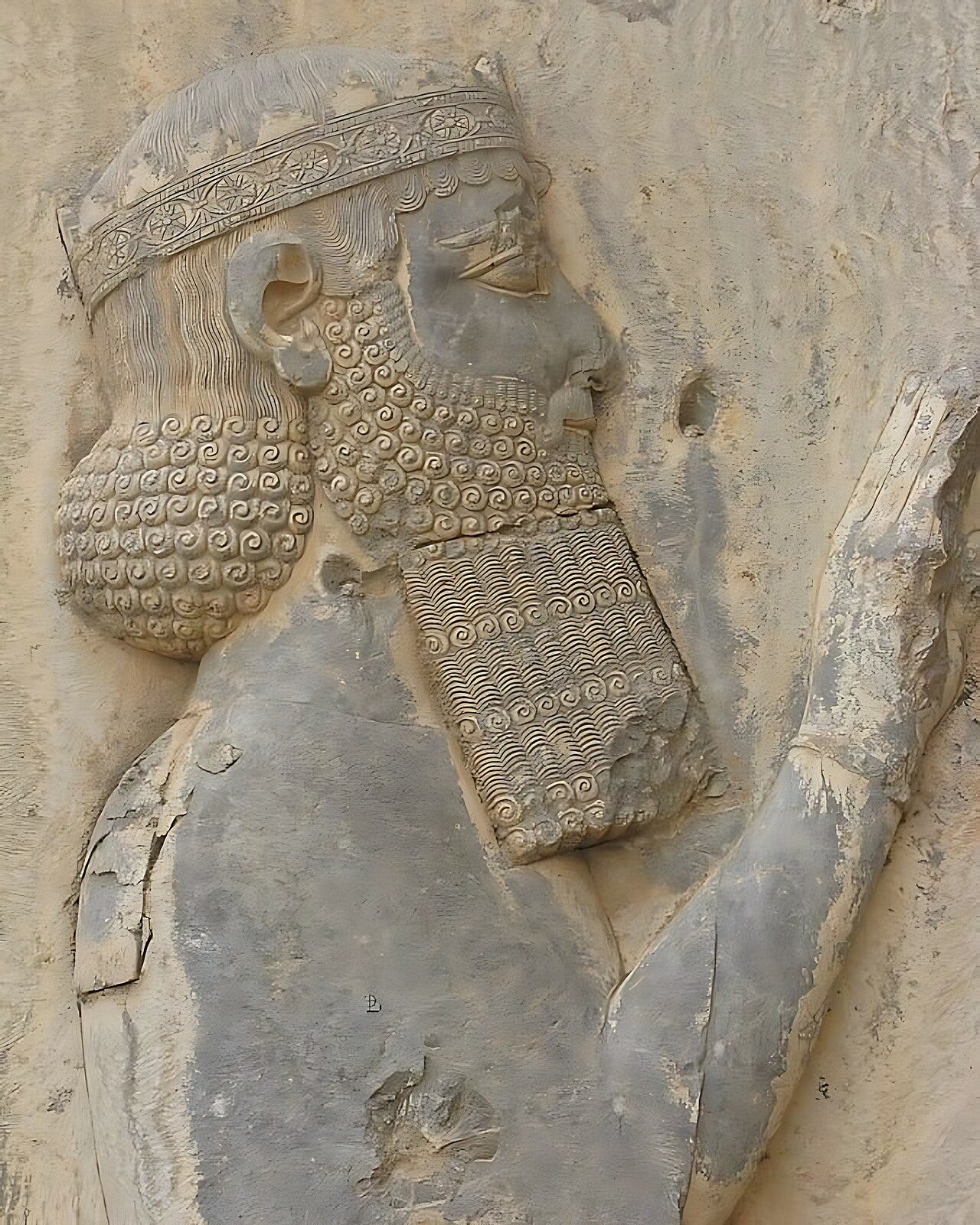
The relief stone of Darius the Great in the Behistun inscription
The king’s law gave royal decrees the force of law
The Old Persian word for law is dāta. In his Behistun inscription Darius says that the lands obeyed his law. Xerxes, in his so-called daiva inscription, urges obedience to the law set down by Ahuramazda. Rüdiger Schmitt notes in the Encyclopaedia Iranica that the word was borrowed into Elamite, Babylonian, Aramaic and Hebrew. The phrase “law of the king” appears in Babylonian documents only from Darius’s reign onward. No Achaemenid law code survives, and the evidence points to royal decrees carrying the force of law.
Greek writers describe royal judges. Herodotus says they held office for life unless found guilty of wrongdoing. When Cambyses asked them whether any law allowed him to marry his sister, the judges said they found none. They added that they had found another law, that the king of Persia could do whatever he wished.
