


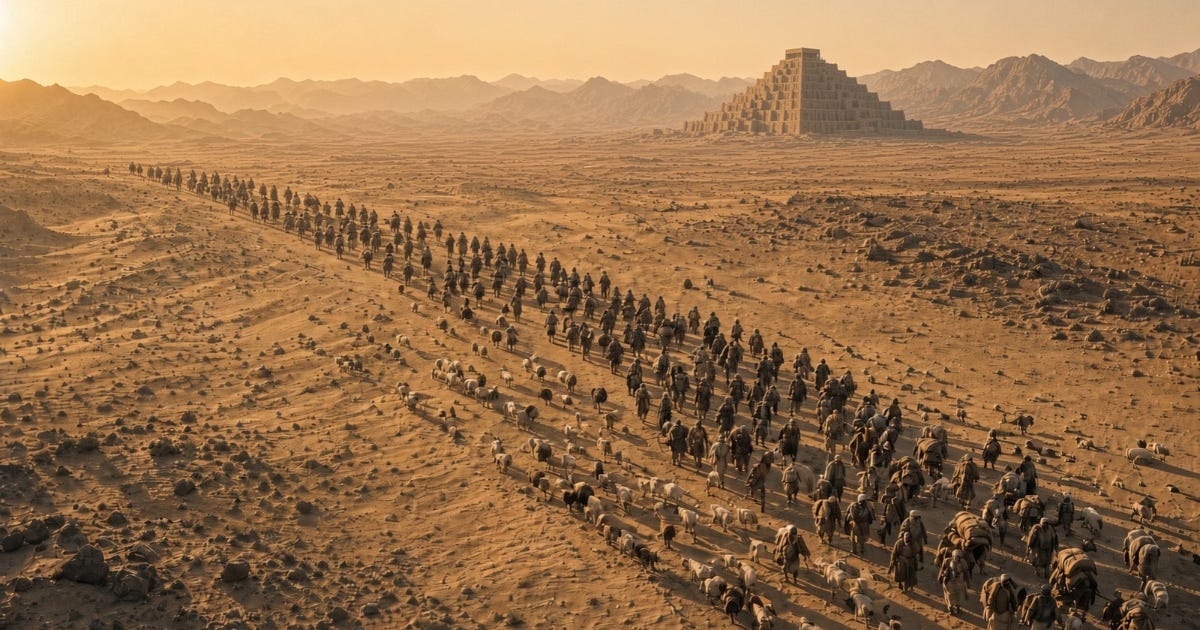
A study published on June 30, 2026 in the Turkish journal Dini Araştırmalar argues that the Jewish concept of the Promised Land carries traces of Mesopotamian royal ideology, in which a god grants land to a chosen king. Mehmet Mustafa Erkal and Huzme Gülek Gültekin compare royal inscriptions from Lagash, Uruk, Akkad, Babylon and Assyria with covenant passages in the Hebrew Bible. They propose that deportations and the exile in Babylon carried the idea to Judah, and they describe the Jewish concept as keeping its own theological framework.
Ancient Content, November 13, 2026
A 2026 study compares Sumerian kings with the biblical promise
The article, titled in English “The Origins of the Promised Land, Traces of the Divine Promise from the Sumerians to the Jews”, appears in issue 71 of Dini Araştırmalar (Religious Studies), pages 131 to 166, under the DOI 10.15745/da.1880511. DergiPark lists it as a research article in Turkish with an English abstract, submitted on February 2, 2026 and accepted on June 2, 2026. The metadata places Gültekin at the Faculty of Theology of Sivas Cumhuriyet University, while the page lists Erkal’s country, Türkiye, and omits an institution.
The abstract describes a historical-comparative study based on primary sources. It reports that Sumerian texts treat land as a divine gift tied to human duties, and that land granted to kings stands at the centre of royal ideology. In the Hebrew Bible, the abstract says, the promise to Abraham and his descendants links land to a covenant, and prosperity depends on obedience.
The paper rests on royal inscriptions
According to the PDF, the analysis draws mainly on royal inscriptions, many of them from the Royal Inscriptions of Mesopotamia series edited by Douglas Frayne, rather than on a close reading of Sumerian literary texts. The authors begin with Late Uruk tablets from the late fourth millennium BCE that record temple-held land and offerings to the city god, and they treat these as the earliest evidence linking a god to land. They then follow the theme through the Early Dynastic, Akkadian, Old Babylonian, Kassite, Assyrian and Neo-Babylonian periods.
Enlil and Ningirsu grant land in early texts
The paper notes that Enlil carries the title “king of all lands” and that Nippur served as the place where kingship gained legitimacy. The Cuneiform Digital Library Initiative confirms the title in the text of Lugalzagesi, where Enlil is called “king of all the lands.”
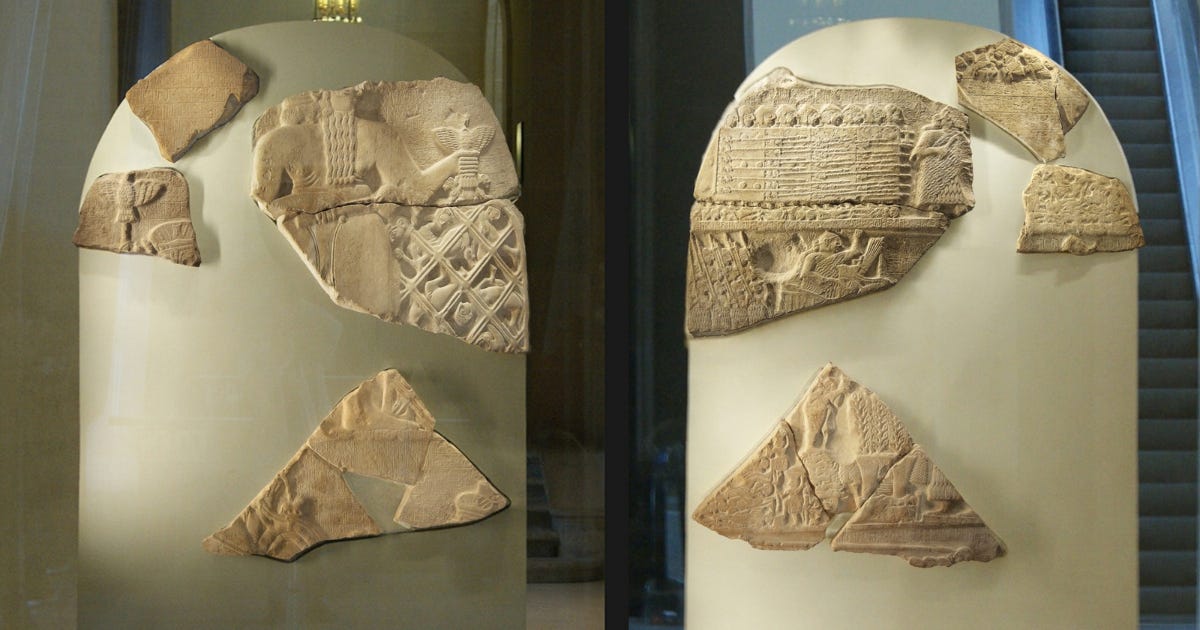
The Stele of the Vultures in the Louvre Museum, front and back. Eannatum of Lagash commissioned the monument, and fragments were found at Tello, ancient Girsu. Background by Kikuyu3, elements by Eric Gaba (Sting), composite by पाटलिपुत्र, via Wikimedia Commons, CC BY-SA 4.0.
The paper’s examples from Lagash include Eannatum, whose texts credit the god Ningirsu with power over foreign lands. The Stele of the Vultures, now in the Louvre, belongs to the same setting. Wikipedia describes it as a monument commissioned by Eannatum, ruler of Lagash, to celebrate a victory over Umma in a dispute over the farmland of Gu-Edin, and it dates the monument to the Early Dynastic IIIb period. Ernest de Sarzec found fragments at Tello, ancient Girsu, in the 1880s, and the inscription calls Eannatum “beloved of the god Ningirsu.”
