


Around 5,500 years ago, a small community of hunter-gatherers on the Angara River in southern Siberia buried its dead in a burst of shared graves. Many of the dead were children between seven and eleven. Archaeologists working at the cemetery of Ust'-Ida I have puzzled over those graves since the 1990s. Ancient DNA now points to the cause. The children carried Yersinia pestis, the bacterium behind plague, in the oldest outbreaks of the disease identified so far.
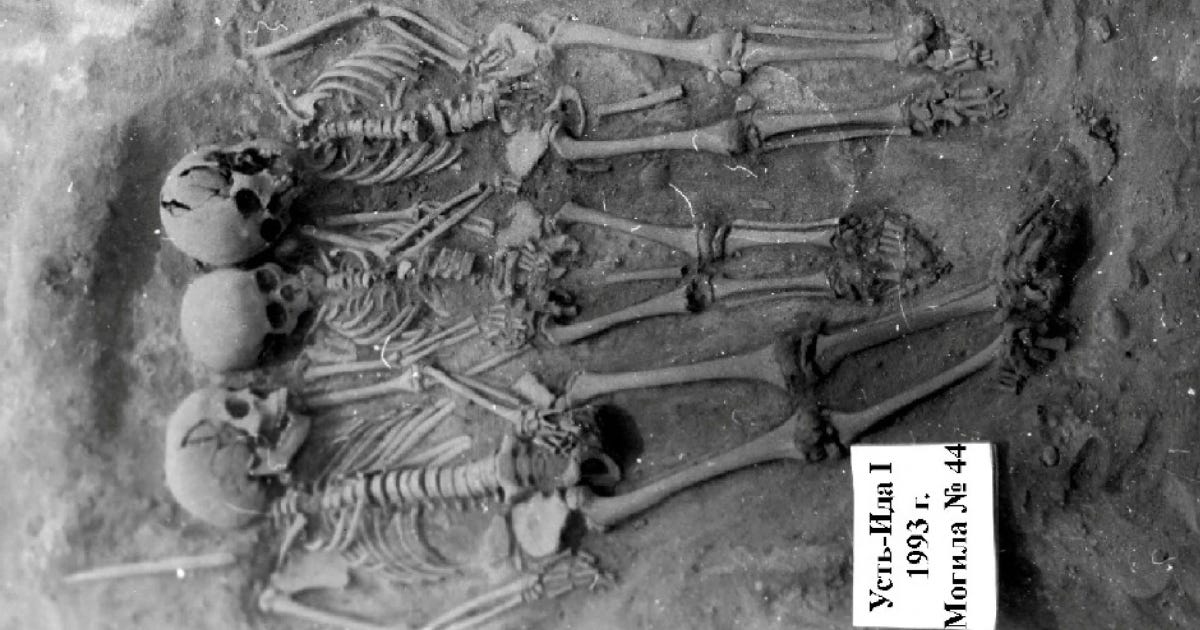
One of the graves at the Ust-Ida I burial site. Buried here are two half-sisters, ages 5-6 and 9-10, along with a boy aged 11-12, in whose remains researchers found the plague pathogen.Vladimiri Bazaliiskii / Reuters / Scanpix / LETA
A note to free subscribers: Your support helps keep Ancient Content independent and focused on original research. Upgrade for just a few dollars a month to unlock every long-form article, short documentary, and the complete archive. Cancel anytime.
