


Across thousands of years, they have appeared as gardens, mountains, fields, underworlds, courts of judgment, rivers of fire, halls of light, and states of peace or torment. They belong to religion, but they also belong to mythology, art, philosophy, psychology, politics, and literature.
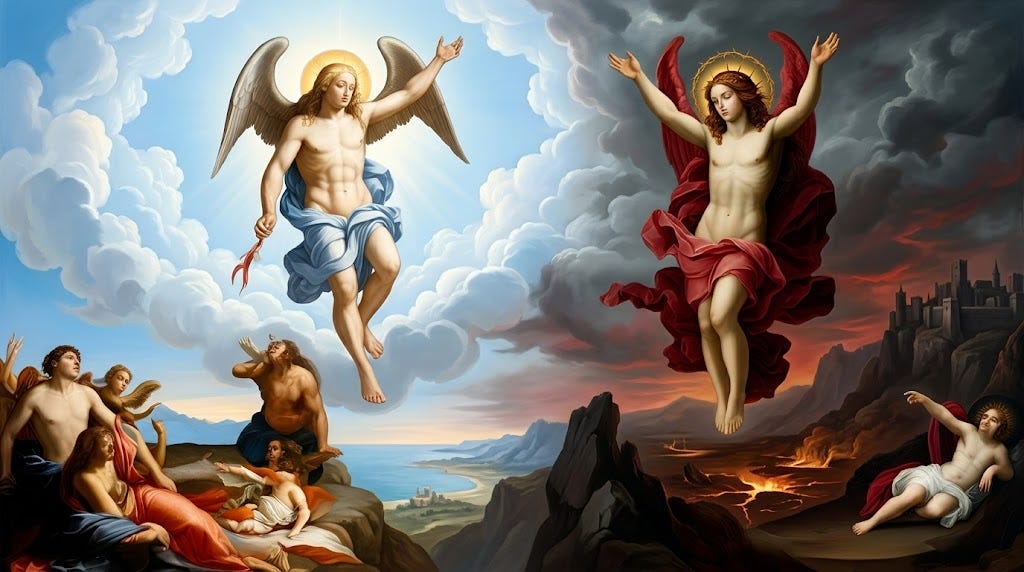
A Renaissance-style painting split into two contrasting halves, featuring identical angelic figures in the heavens of light and the abyss of darkness, both subtitled 'Myth, Belief, and Reality'
At their simplest, heaven and hell answer a question that every culture has faced: what happens after death?
But their meaning goes much deeper. Heaven often represents order, peace, justice, reunion, divine presence, and the hope that suffering is not the final word. Hell represents fear, punishment, chaos, separation, guilt, moral consequence, and the possibility that human actions leave a mark beyond life.
The earliest visions of the afterlife were not always divided into reward and punishment. Many ancient peoples imagined the dead entering a shadowy world, a distant land, or a continuation of earthly existence. Over time, moral judgment became more central. The dead were weighed, tested, purified, punished, or welcomed.
The story of heaven and hell is therefore not one story. It is a long human history of trying to understand death, justice, memory, fear, and hope.
Gardens before heaven
One of the oldest images of paradise comes from Mesopotamia.
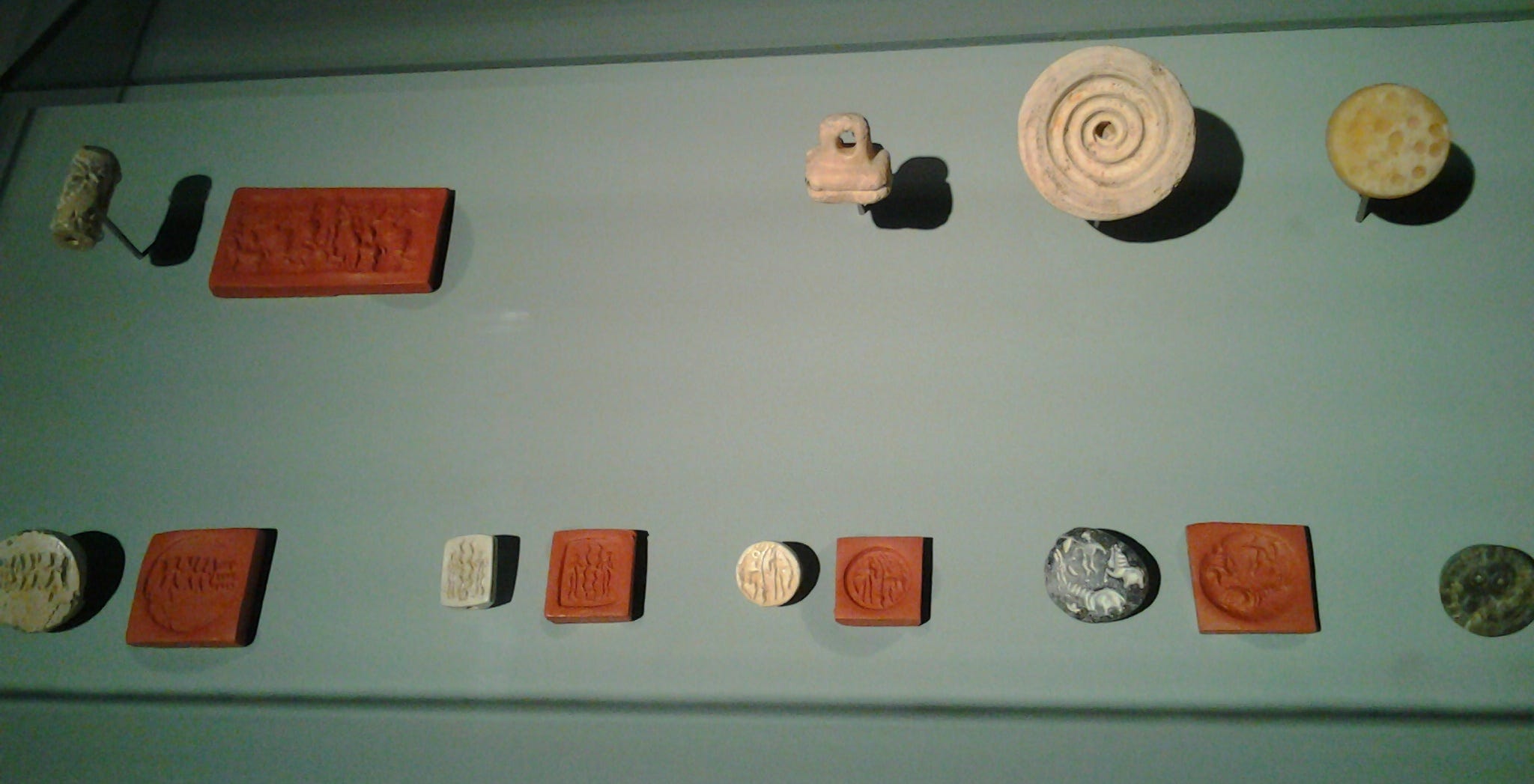
Early Dilmun seals from the Bahrain National Museum. This fits the Dilmun section and gives the article a real ancient Mesopotamian/Gulf visual anchor. Credit: Ciacho5 / Wikimedia Commons / Bahrain National Museum.
In Sumerian literature, Dilmun appears as a pure and radiant land associated with divine life. In the myth of Enki and Ninhursag, Dilmun is described as a place without violence, predation, disease, and old age. Birds do not cry out in distress, lions do not kill, wolves do not carry off lambs, and people do not complain of sickness.
This was not heaven in the later Christian or Islamic sense. It was a sacred land, a place of divine order and abundance. It was imagined as clean, fertile, and untouched by the ordinary suffering of the human world.
Dilmun also existed as a real place in the ancient trade networks of the Persian Gulf, closely associated with Bahrain and nearby regions. Mesopotamian texts describe it as a source and transit point for valuable goods. This double identity is important: Dilmun was both a geographical reality and a symbolic landscape.
That mixture of real geography and sacred imagination would become a recurring feature in later paradise traditions.
The biblical Garden of Eden has often been compared with Mesopotamian garden imagery. Genesis describes Eden as a planted garden watered by rivers, including the Tigris and Euphrates. Scholars still debate its literary origins and geographical imagination, but the comparison shows how ancient peoples used fertile landscapes to think about divine blessing.
Paradise begins, again and again, as a garden.
The Mesopotamian house of the dead
Mesopotamian afterlife beliefs also contained a much darker vision.
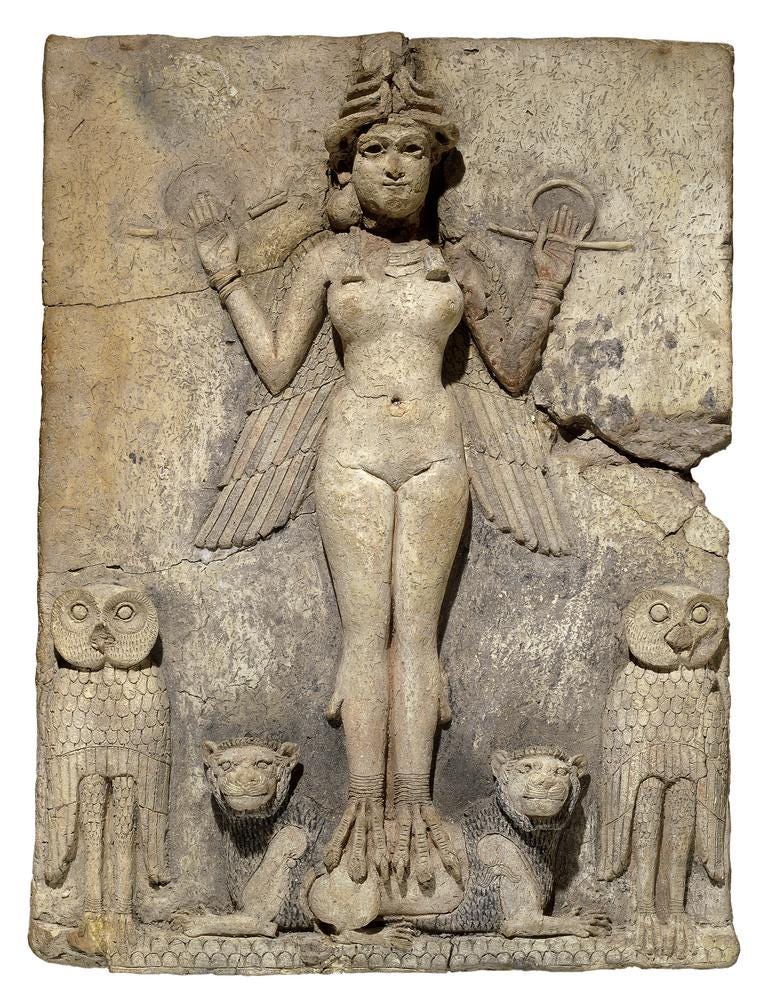
Queen of the Night relief. It is often discussed in relation to Mesopotamian goddess imagery and the underworld, though the exact identification remains debated. Credit: The British Museum.
The Sumerians and Akkadians imagined an underworld known by several names, including Kur, Irkalla, Arali, and Arallu. This was a world beneath the earth, a place of dust, darkness, silence, and stillness.
The Mesopotamian underworld was not mainly a moral court where good people were rewarded and bad people punished. It was the common destination of the dead. Kings, servants, warriors, mothers, children, and strangers all entered the same shadowed realm.
Texts such as the Descent of Inanna present the underworld as a place governed by strict rules. The dead are stripped of earthly power. Even a goddess must pass through gates and lose symbols of status before reaching the realm below.
This vision reflects a world in which death was understood as a reduction of life rather than a final moral sorting. The dead continued, but in a diminished form. Family offerings, libations, and ritual care mattered because the dead still depended on the living.
Here, hell had not yet become a place of eternal punishment. It was the dark architecture of mortality itself.
Egypt and the moral landscape of the afterlife
Ancient Egypt developed one of the most detailed afterlife systems of the ancient world.
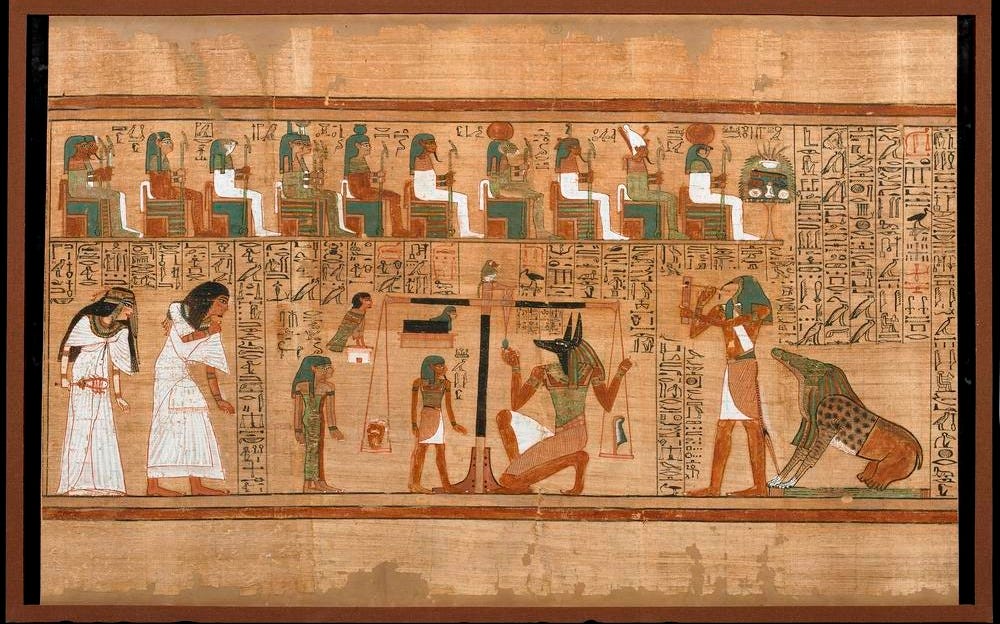
Book of the Dead, Papyrus of Ani, showing the weighing of the heart against the feather of Maat. Credit: The British Museum
Egyptian belief did not treat death as an end. It was a passage. The dead moved through the Duat, the dangerous otherworld, aided by spells, ritual knowledge, burial goods, divine protection, and proper preparation of the body.
The goal was the Field of Reeds, or Aaru: an idealized version of Egypt itself. It was imagined as a fertile landscape of water, crops, sunlight, and ordered agricultural abundance. For Egyptians, paradise was not an abstract cloud-world. It was Egypt perfected.
But access to this realm required judgment.
In the famous weighing of the heart, the heart of the deceased was placed on a scale against the feather of Maat, the principle of truth, justice, balance, and cosmic order. Anubis supervised the weighing, Thoth recorded the result, and Osiris presided over the judgment.
If the heart was balanced with Maat, the deceased could continue toward blessed existence. If the heart failed the judgment, it was devoured by Ammit, a fearsome being combining crocodile, lion, and hippopotamus features.
This was not exactly hell in the later sense. The punishment was more final: destruction, exclusion from eternal life, a second death.
Egypt therefore added a crucial idea to afterlife history: the dead could be judged morally. What a person did in life shaped what happened after death.
Greek paths: Hades, Elysium, and Tartarus
Greek afterlife traditions developed in several layers.
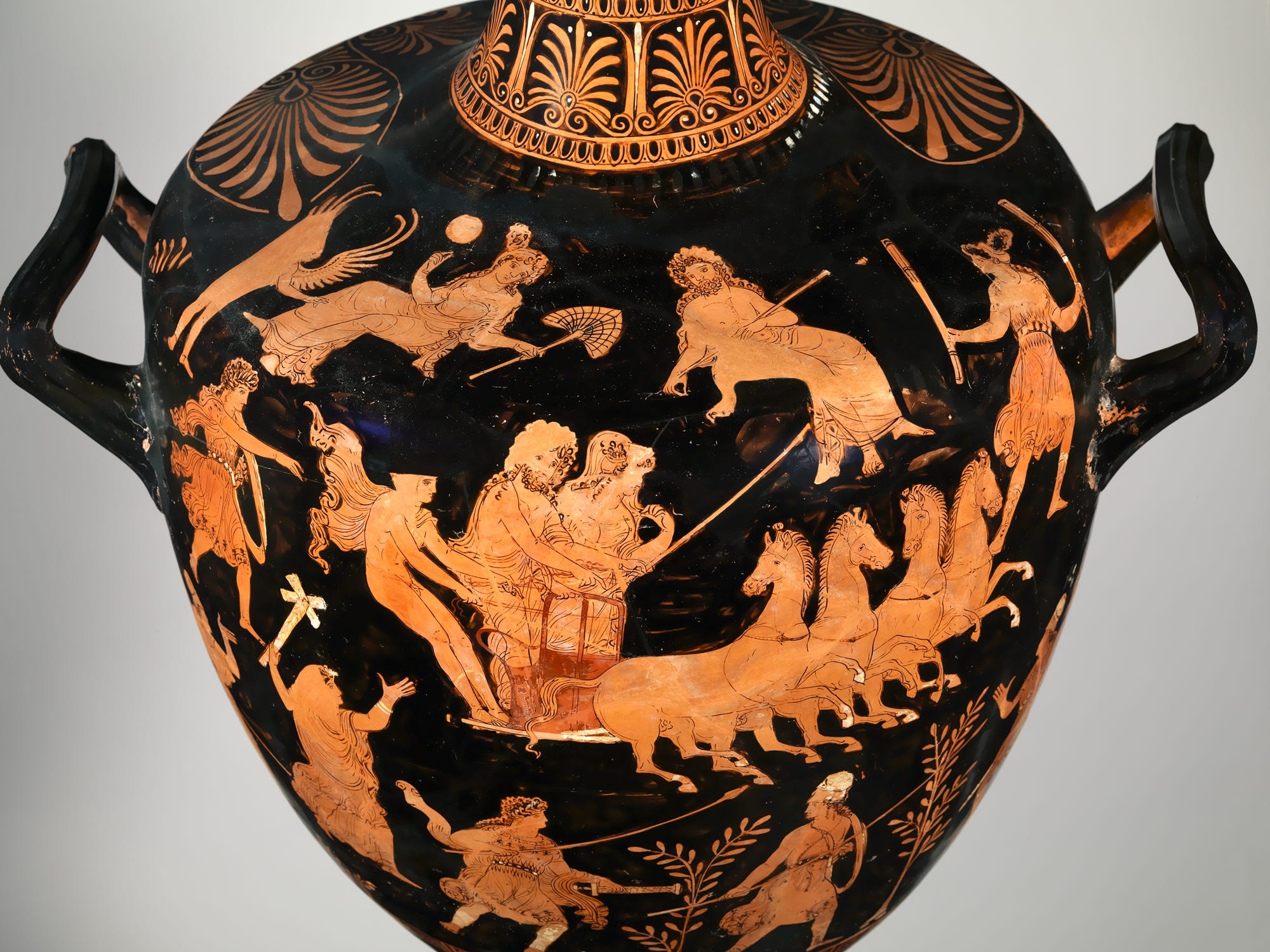
Greek vase scene connected with Hades, Persephone, and the underworld. A strong option is the Met’s terracotta hydria showing Hades’ chariot and the abduction of Persephone. Credit: The Metropolitan Museum of Art.
In early Greek imagination, most of the dead entered Hades, a shadowy realm beneath the earth. Like the Mesopotamian underworld, Hades was not simply a place of punishment. It was the general land of the dead.
But Greek tradition also developed more specialized destinations.
Elysium, or the Elysian Fields, was a blessed place reserved at first for heroes and those favored by the gods. In later traditions, access could expand to the righteous, the initiated, or those especially worthy of a better afterlife. It was imagined as a place of ease, beauty, and happiness at the edge of the world.
Tartarus, by contrast, became the deepest and most terrifying region of the underworld. It was a prison for divine rebels, monsters, and later for especially wicked souls. In myth, figures such as Tantalus, Sisyphus, and Ixion suffered punishments that mirrored their crimes.
This Greek development is significant because it gave the afterlife a stronger moral and narrative structure. Punishment could now be symbolic. The afterlife could become a place where actions were transformed into eternal consequences.
That idea would later become central to Christian visions of hell, especially through medieval literature.
Sacred mountains and cosmic centers
Many cultures placed divine worlds above the earth.
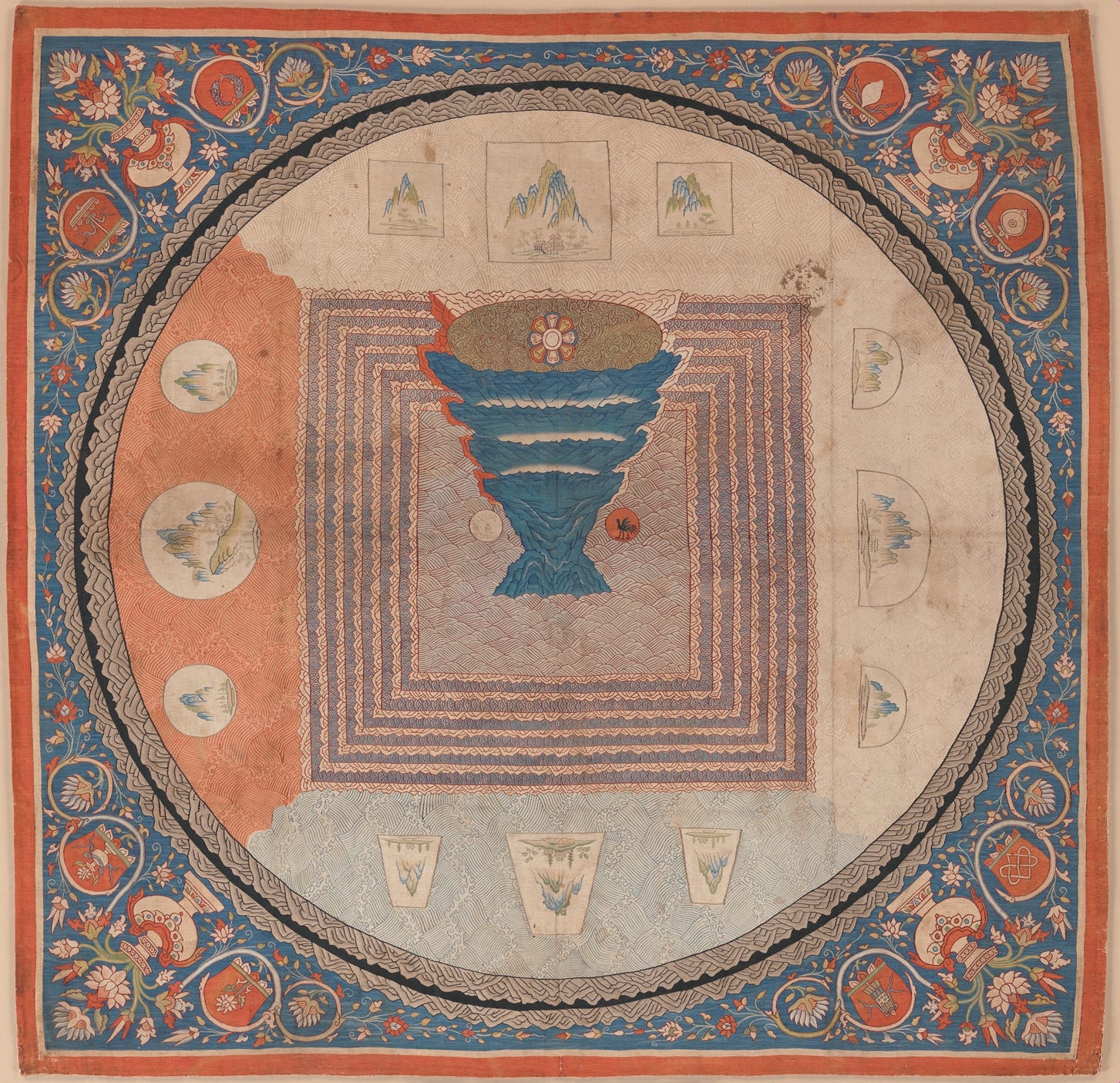
Cosmological Mandala with Mount Meru. This directly matches the Mount Meru section. Credit: The Metropolitan Museum of Art.
Mountains often became bridges between human life and the gods. Their height, remoteness, weather, and visibility made them natural symbols of the sacred.
In Hindu, Buddhist, and Jain cosmology, Mount Meru appears as a cosmic mountain, a central axis around which worlds are organized. It is not simply a mountain in the ordinary geographical sense. It is a model of the universe, a sacred center linking realms, gods, directions, and cosmic order.
In other traditions, divine gardens, celestial palaces, mountain paradises, and hidden lands carried similar meaning. They placed perfection somewhere beyond the ordinary human world, often above it, beyond it, or at its sacred center.
The vertical imagination is very old. Heaven is high because the sky is unreachable. The gods are above because storms, stars, sun, and moon appear above. Hell is below because graves, caves, darkness, and decay are below.
Human geography shaped sacred geography.
Mictlan and the difficult road of the dead
The Aztec world offers a different model.
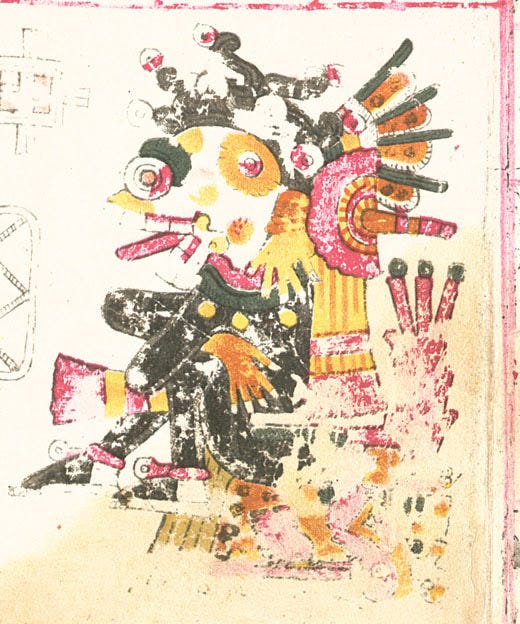
Mictlantecuhtli from the Codex Borgia. Credit: Codex Borgia / Wikimedia Commons
In Mexica belief, the destination of the dead depended strongly on the manner of death. Warriors, women who died in childbirth, those who drowned, and others could go to special afterlife realms. Many of the dead traveled to Mictlan, the underworld ruled by Mictlantecuhtli and Mictecacihuatl.
The journey to Mictlan was long and difficult. It involved trials, dangers, and passage through underworld regions. This was not the same as Christian hell. Mictlan was the final destination for many ordinary deaths, not only a place for moral punishment.
This distinction is important. Many world traditions organize the afterlife according to death type, ritual condition, social role, or cosmology rather than a simple moral division between good and evil.
Heaven and hell, as a strict binary, represent only one way of imagining the afterlife.
Sheol and the early Hebrew world
In early Hebrew tradition, the dead were often associated with Sheol.
Sheol was a shadowy realm of the dead, a place of silence and descent. It was not clearly divided into reward and punishment in the earliest biblical layers. The righteous and unrighteous could both be described as going down to Sheol.
This earlier view differs from later Jewish, Christian, and Islamic systems. It reflects a world where death was imagined less as a courtroom and more as a shared human destination.
Over time, Jewish thought became more diverse. During and after the Second Temple period, ideas of resurrection, judgment, paradise, and punishment became more developed. Persian and Hellenistic contexts likely played a role in shaping these later expectations.
Gan Eden came to represent a blessed garden-like afterlife in some Jewish traditions. Gehinnom, originally connected with the Valley of Hinnom near Jerusalem, developed into a place or process associated with judgment, punishment, or purification.
Jewish afterlife belief remained varied. Some traditions emphasize resurrection, others spiritual reward, others purification, and others the world to come. This diversity matters because later ideas of heaven and hell did not emerge fully formed. They developed through centuries of interpretation.
Christianity and the kingdom beyond death
Christianity inherited Jewish apocalyptic expectation and transformed it through the life, death, and resurrection of Jesus.
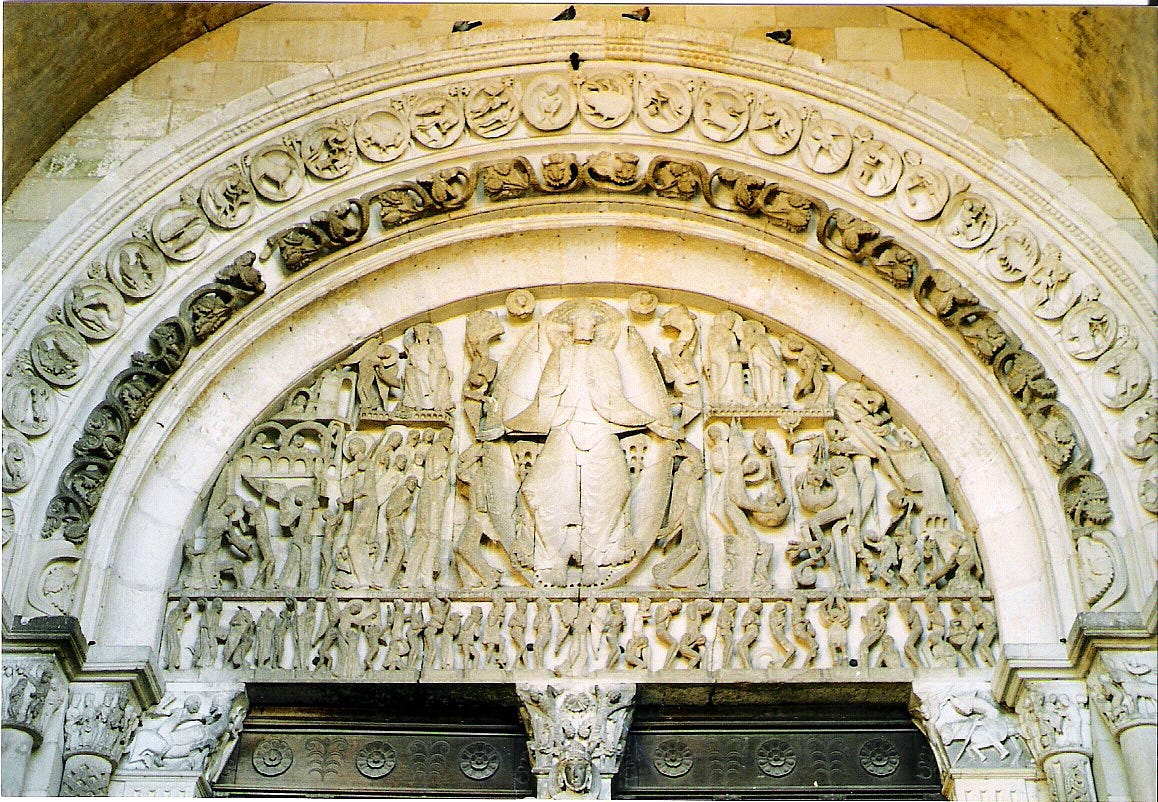
The Last Judgment tympanum at Autun Cathedral. It is a strong medieval visual for judgment, salvation, and damnation. Credit: Lamettrie / Wikimedia Commons.
In the New Testament, the Kingdom of God is central. It refers both to God’s reign and to a future fulfillment of divine justice. Heaven became associated with eternal life, communion with God, resurrection, and the final restoration of creation.
Christian heaven is not only a pleasant afterlife. It is the state of being fully with God.
Hell developed as the opposite condition: separation from God, judgment, exclusion, fire, darkness, and punishment. Different Christian traditions have interpreted hell in different ways. Some emphasize eternal conscious torment. Others emphasize annihilation, purification, or symbolic separation.
Medieval imagination gave these ideas extraordinary visual force.
Dante Alighieri’s Inferno, written in the early 14th century as the first part of the Divine Comedy, shaped Western images of hell more than almost any other literary work. Dante arranged hell into nine circles, with punishments matched to sins through poetic justice. His hell was architectural, moral, symbolic, and unforgettable.
Many modern images of hell owe as much to Dante as to scripture.
Islam and the garden and the fire
Islam presents a vivid and morally structured vision of the afterlife.
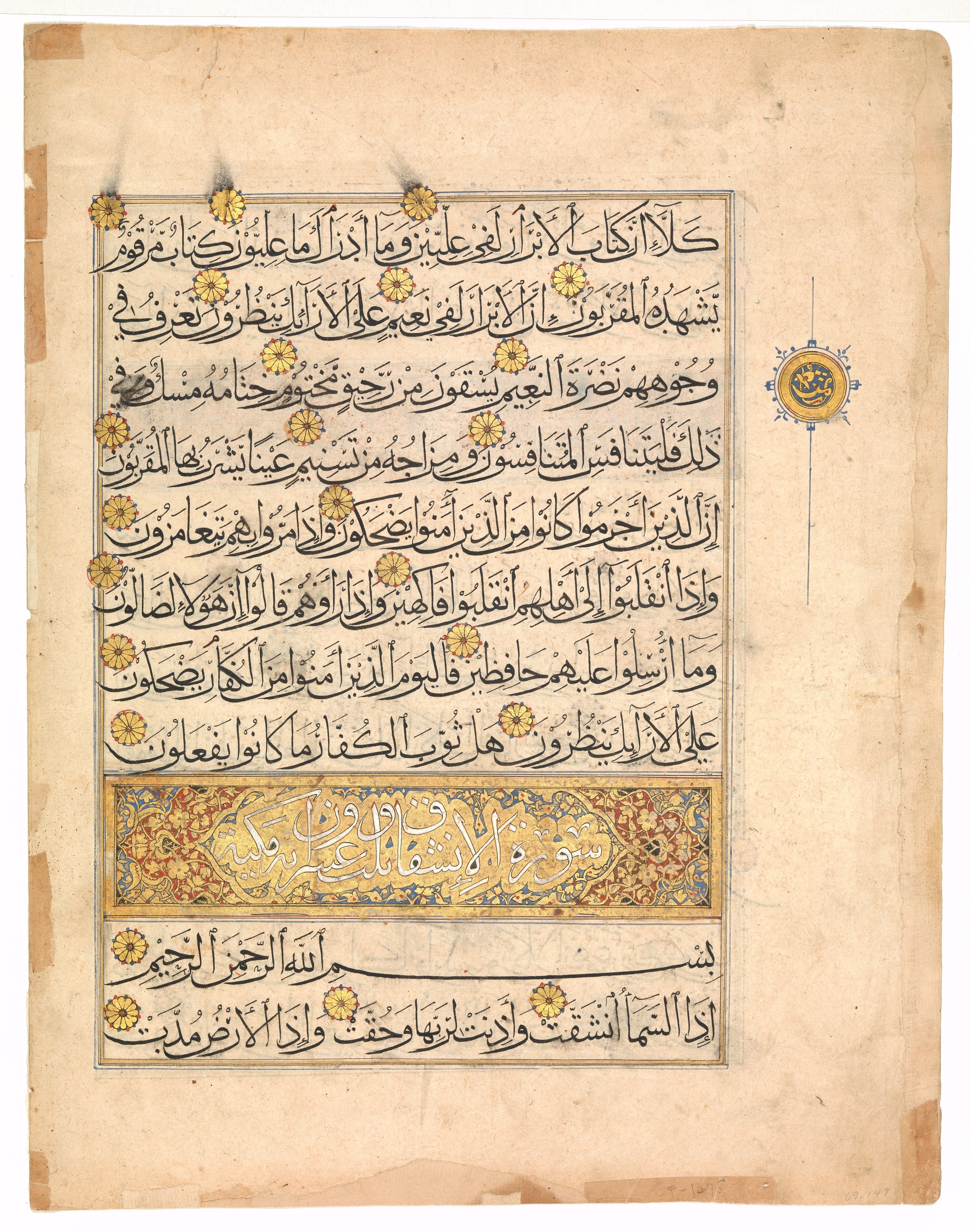
Illuminated folio from a Qur’an manuscript. It gives a respectful textual anchor for Qur’anic afterlife imagery without relying on figurative depictions. Credit: The Metropolitan Museum of Art.
The Qur’an repeatedly speaks of resurrection, judgment, accountability, paradise, and hell. Human life is a test, and each person is responsible before God. The final outcome is tied to faith, deeds, mercy, justice, and divine judgment.
Paradise, or Jannah, is often described as gardens beneath which rivers flow. It is a place of shade, peace, beauty, purity, nearness to God, and lasting reward. The garden imagery echoes the deep Near Eastern association between water, fertility, blessing, and divine favor.
Hell, or Jahannam, is described through fire, burning heat, confinement, regret, and severe punishment. These images are meant to carry moral seriousness. They also belong to a long tradition of eschatological warning in which the afterlife reveals the true weight of human actions.
Some scholars have compared aspects of Islamic, Christian, Jewish, and Zoroastrian afterlife imagery because these traditions developed across connected regions and often shared a language of judgment, fire, light, gardens, bridges, and final destiny.
Islamic descriptions, however, must also be understood within the Qur’an’s own theological framework: God is just, merciful, sovereign, and fully aware of human choices.
Zoroastrian judgment and the bridge
Zoroastrianism played a major role in the history of afterlife thought in western Asia.
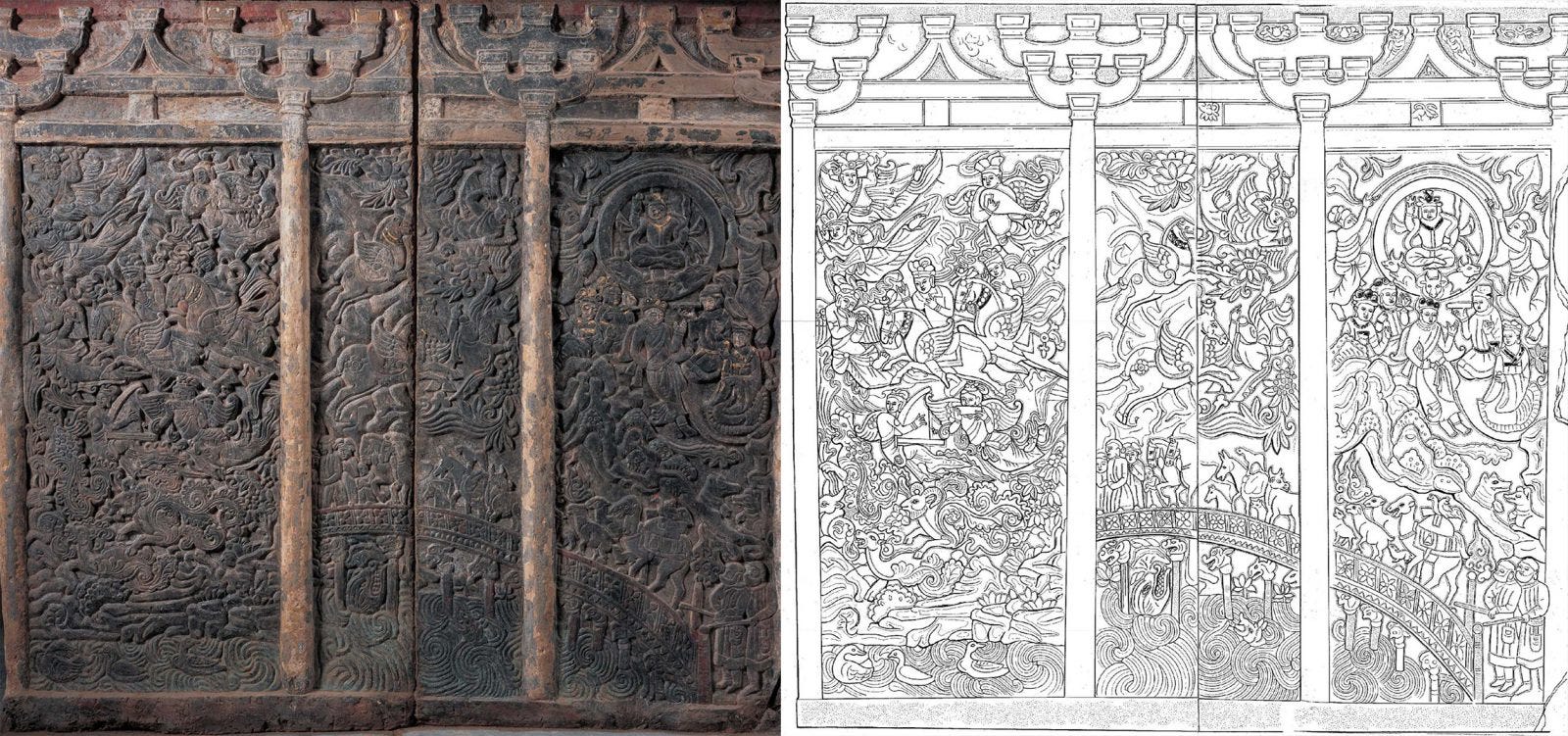
Reliefs from Shi Jun’s sarcophagus, which include scenes interpreted as the crossing of the Chinvat Bridge. Credit: Smithsonian / The Sogdians project.
Its worldview is strongly ethical and cosmic. Good and evil are not only human choices; they belong to a larger struggle between truth and falsehood, light and darkness, order and destructive forces.
After death, the soul passes through a period of waiting and then approaches the Chinvat Bridge, the bridge of judgment. The deeds of the person are weighed. For the righteous, the bridge widens and leads to a blessed realm. For the wicked, it narrows and leads downward.
Zoroastrianism also developed ideas of final renovation, cosmic judgment, and the eventual defeat of evil. These themes influenced or paralleled later developments in Jewish, Christian, and Islamic eschatology, though the exact pathways of influence remain debated.
The bridge is one of the most powerful afterlife symbols ever created. It turns moral life into a crossing. Death becomes a test of balance.
Buddhism and release from the cycle
Buddhism offers a very different framework.
In many Buddhist traditions, there are heavens and hells, but they are not eternal final destinations in the same way as some Abrahamic traditions present them. They are realms within samsara, the cycle of birth, death, and rebirth.
A being may be reborn in a heavenly realm through good karma, or in a hell realm through harmful karma. But even heavenly rebirth remains temporary. It does not solve the deeper problem of suffering and impermanence.
The highest goal is nirvana: liberation from craving, ignorance, suffering, and the cycle of rebirth.
This changes the meaning of “heaven.” A pleasant divine realm is still part of conditioned existence. True liberation lies beyond the cycle itself.
Buddhism therefore shifts the question. The aim is not only to reach a better place after death. It is to understand and end the causes of suffering.
The geography of paradise
Many paradises begin as landscapes people already know.
For Mesopotamians, paradise could be imagined through watered gardens and fertile lands. For Egyptians, the Field of Reeds resembled an ideal Egypt. For desert cultures, rivers and shade became powerful symbols of blessing. For mountain cultures, sacred peaks became cosmic centers.
This is not accidental. Humans build invisible worlds from visible ones.
The Garden of Eden, for example, is linked in Genesis with rivers, including the Tigris and Euphrates. Many later readers searched for Eden in Mesopotamia, Armenia, Arabia, Africa, India, or other distant regions. Medieval maps sometimes placed paradise at the edge of the known world.
Such searches were not purely spiritual. They were also geographical, imperial, and imaginative. The unknown world became a place where sacred history might still be hidden.
The search for paradise therefore belongs to exploration history as much as theology.
Fire, darkness, and the language of fear
Hell is often built from the most threatening human experiences.
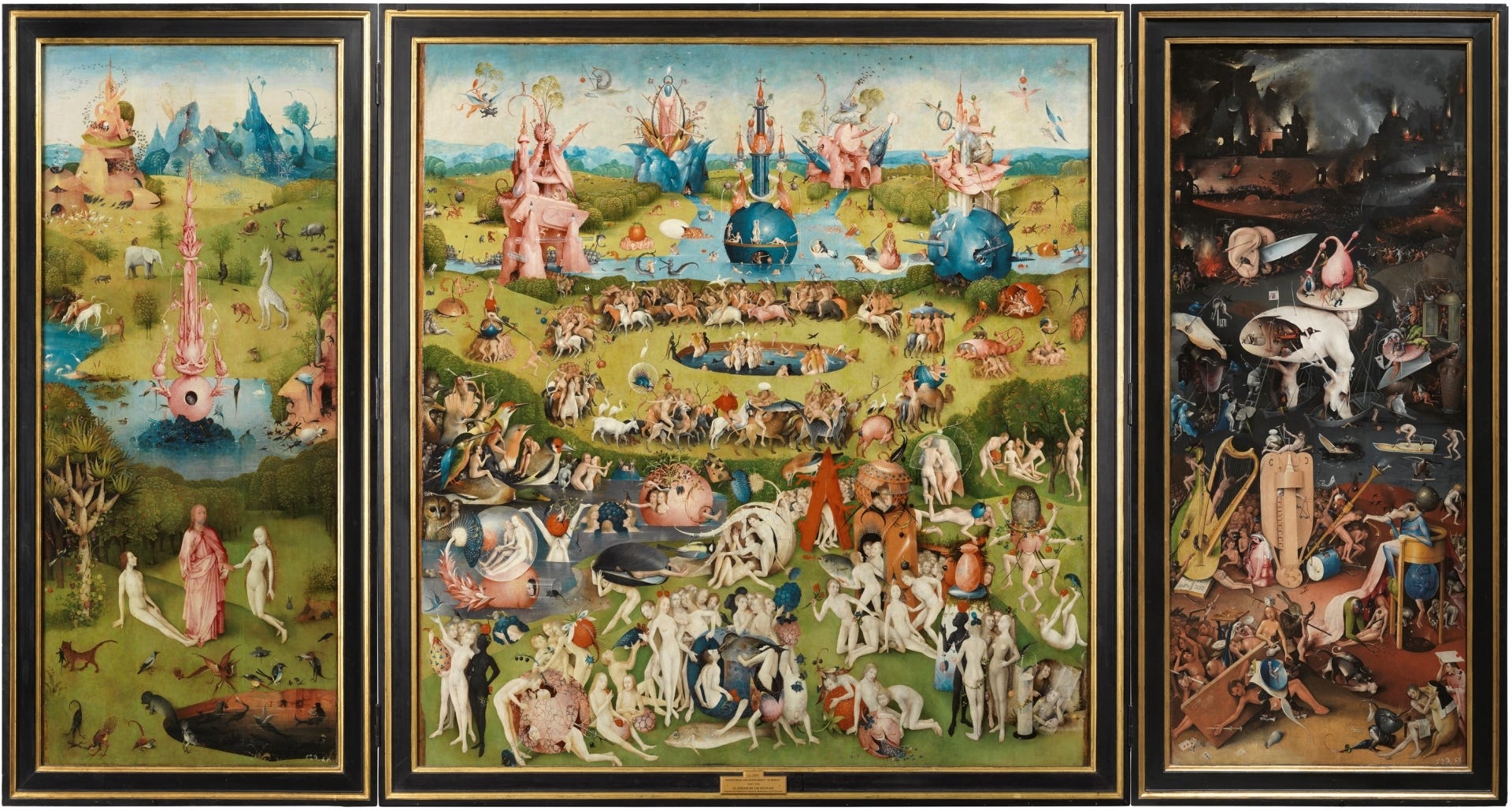
Bosch’s Hell panel from The Garden of Earthly Delights. Credit: Museo del Prado.
Fire destroys. Darkness disorients. Depth suggests burial. Confinement removes freedom. Thirst, heat, cold, hunger, and isolation are bodily forms of suffering. Many hells combine these experiences into moral landscapes.
The imagery is powerful because it is physical.
A person does not need theological training to fear burning, falling, suffocating, freezing, or being trapped. Hell speaks through the body before it becomes doctrine.
In many traditions, punishments are symbolic. The greedy suffer through hunger. The violent suffer violence. The deceitful are trapped by deception. The proud are brought low. This creates a moral logic in which actions return to the person who committed them.
Hell becomes a mirror of conduct.
Art and the architecture of the afterlife
Heaven and hell have shaped some of the greatest works of human art.
Egyptian tomb paintings show journeys through the afterlife. Greek vases depict underworld scenes. Buddhist temple art represents heavens and hells of rebirth. Medieval Christian churches filled walls with Last Judgment scenes. Islamic manuscripts and later popular traditions developed vivid imagery of paradise, the bridge, and punishment. Mesoamerican art gave death gods terrifying and sacred forms.
Art gave invisible worlds visual form.
This mattered because many people encountered doctrine through images. A painted hell could teach more forcefully than a sermon. A garden paradise could comfort the grieving. A judgment scene could remind viewers that ordinary life carried cosmic meaning.
The afterlife became architecture, color, gesture, and image.
Social order and moral imagination
Heaven and hell have served social functions.
They reward virtues that communities value: generosity, loyalty, courage, obedience, justice, purity, compassion, faith, wisdom, or self-control. They punish what communities fear: betrayal, violence, greed, impiety, cruelty, deception, or disorder.
This moral structure can encourage ethical behavior. It can also be used to control people through fear.
Religious authorities, rulers, poets, and artists have all used afterlife imagery to shape conduct. A society that believes every act will be judged can build strong systems of accountability. But the same belief can be turned into intimidation when punishment is emphasized without mercy.
The history of heaven and hell therefore includes both comfort and control.
They have consoled the suffering. They have warned the powerful. They have frightened children. They have inspired art. They have justified authority. They have given meaning to death.
Inner heavens and private hells
Modern psychology often reads heaven and hell as inner states.
A person can experience peace, forgiveness, love, clarity, and belonging as a kind of heaven. A person can experience guilt, trauma, despair, addiction, rage, or fear as a kind of hell.
This does not replace religious interpretations. It adds another layer.
Many spiritual traditions already contain this inner dimension. Mystics speak of union with the divine. Buddhist teachings describe liberation from craving and suffering. Christian writers describe the kingdom of God as both future and inwardly present. Islamic spirituality speaks of nearness to God and purification of the heart.
The afterlife may be beyond death, but its images also describe life now.
This is one reason heaven and hell remain powerful even in secular cultures. People still use the words to describe emotional reality: a heavenly place, a hellish experience, inner peace, inner torment.
The old maps still work because they describe human consciousness.
Science, archaeology, and the limits of evidence
Archaeology can study beliefs about heaven and hell, but it cannot prove or disprove the afterlife itself.
It can excavate tombs, temples, inscriptions, offering pits, funerary texts, cave art, ritual objects, burial positions, cremation remains, grave goods, and sacred landscapes. It can show how people prepared for death and what they believed might follow.
It can also connect some myths to real environments. Fertile river valleys, volcanic landscapes, caves, deserts, mountains, and seasonal cycles all shaped religious imagination.
But archaeology reaches a boundary. It can show what humans believed, built, painted, buried, and feared. It cannot step beyond death and verify metaphysical reality.
This boundary is important. The study of heaven and hell belongs partly to history, partly to religion, partly to philosophy, and partly to personal belief.
Technology and modern speculation
In the modern world, heaven and hell have entered science fiction and speculative thought.
Some writers imagine paradise as a simulated world, a digital afterlife, an uploaded consciousness, or a virtual realm created by future technology. Others imagine hell as psychological imprisonment, artificial punishment, or a controlled environment built by advanced intelligence.
Simulation theory, artificial intelligence, space colonization, and virtual reality have all created new ways to imagine old afterlife themes.
These ideas are speculative. They are not evidence for ancient heaven or hell. But they show that the basic structure remains alive. Humans still imagine worlds beyond ordinary life. They still ask whether consciousness can continue, whether justice can be final, and whether suffering can be escaped.
Technology has changed the setting. The question is ancient.
The earthly search for paradise
People have never stopped looking for paradise on Earth.
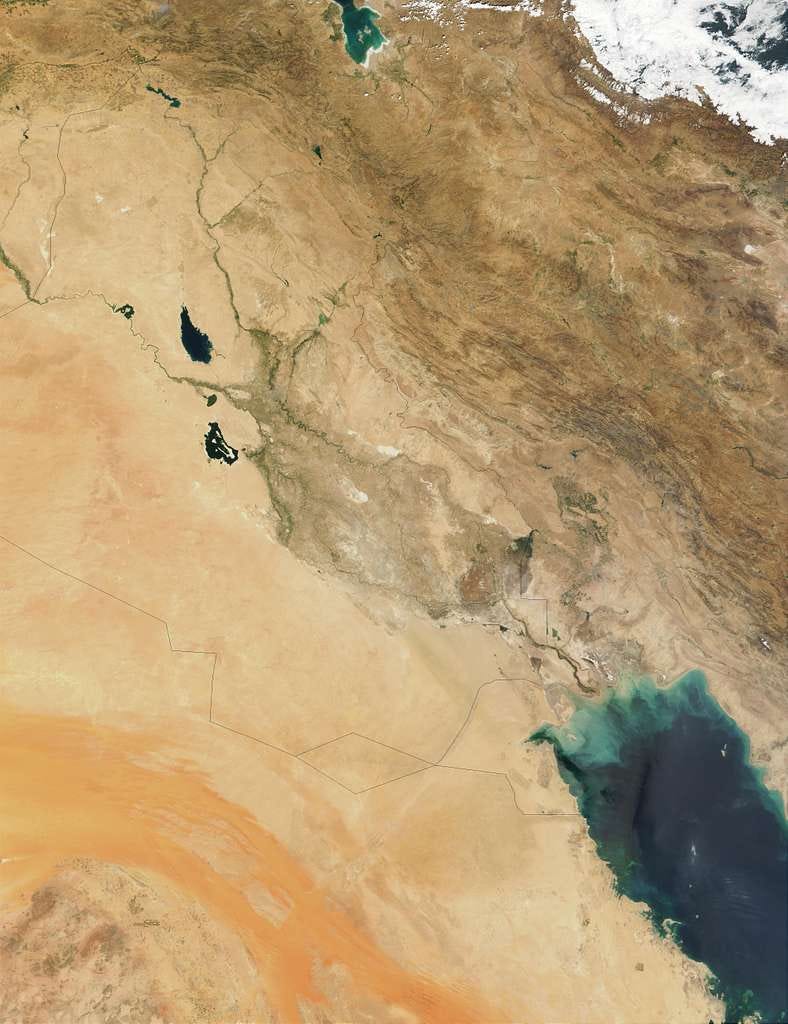
NASA image of Mesopotamia showing the Tigris and Euphrates region, or a Fertile Crescent map. This fits the Eden/geography discussion. Credit: NASA Earth Observatory / MODIS, or Wikimedia Commons for the Fertile Crescent map
Some searched for Eden in Mesopotamia. Others imagined lost islands, hidden valleys, sacred mountains, underground worlds, or cities beneath the sea. Explorers, theologians, mystics, geographers, and storytellers all tried to place paradise somewhere on the map.
The search reveals something important. Humans often want heaven to be real in a physical way. A garden we can find. A mountain we can climb. A cave we can enter. A river we can follow.
This desire continues today in tourism, archaeology, wellness culture, spiritual retreats, and environmental longing. Paradise is often imagined as a place untouched by violence, pollution, stress, or decay.
In that sense, the dream of paradise has become ecological as well as religious. A lost garden now also means a lost balance with nature.
The Oldest Question
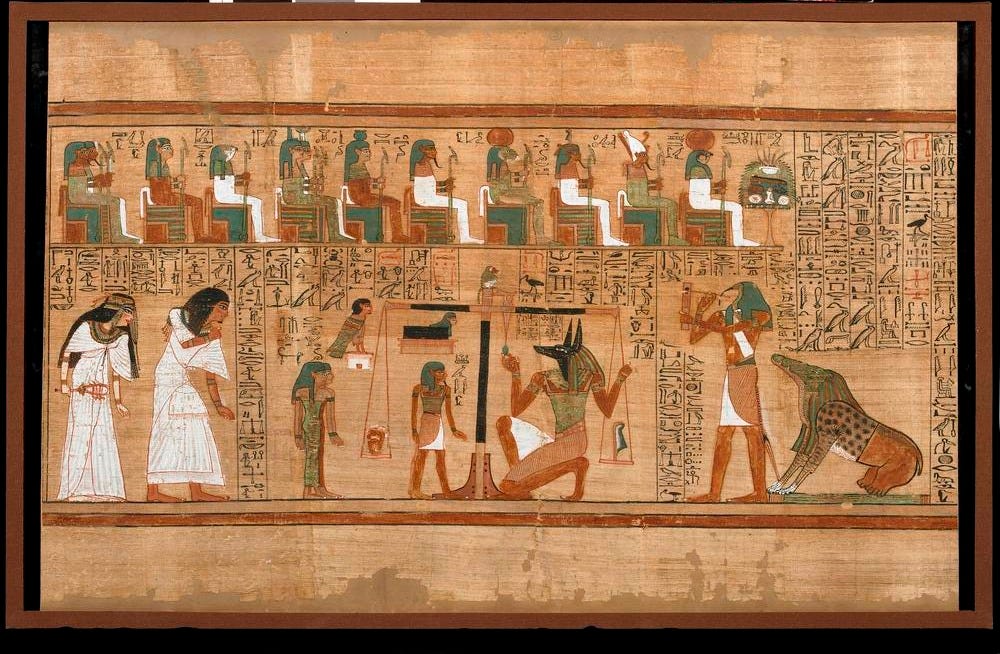
The Egyptian weighing of the heart scene from the Papyrus of Ani. It visually represents one of humanity’s oldest questions: what happens after death and how are we judged? Credit: The British Museum.
Heaven and hell endure because they hold the oldest human questions together.
What is justice?
What happens to the dead?
Can suffering be redeemed?
Do our actions matter beyond this life?
Is the universe moral?
Can peace exist without loss?
Can evil be answered?
Is paradise somewhere outside us, or something we must cultivate within?
Different cultures have answered these questions in different ways.
Mesopotamia imagined shadowed underworlds and pure divine lands. Egypt built a moral afterlife around judgment and the Field of Reeds. Greece shaped Elysium and Tartarus. Judaism moved from Sheol toward richer ideas of resurrection, paradise, and purification. Christianity developed heaven, hell, resurrection, and judgment through the image of God’s kingdom. Islam gave powerful form to the garden and the fire. Zoroastrianism placed the soul on a bridge of moral reckoning. Buddhism looked beyond heavenly pleasure toward liberation from suffering itself.
These traditions do not give one identical answer. They form a long human conversation.
Heaven, hell, and the human mirror
Heaven and hell are more than destinations.
They are mirrors.
Heaven reflects what humans long for: peace, reunion, beauty, justice, love, abundance, meaning, and closeness to the sacred. Hell reflects what humans fear: pain, guilt, isolation, punishment, chaos, regret, and separation from everything good.
Their forms have changed across history, but their emotional power remains.
They may be understood as real realms, sacred symbols, moral teachings, psychological states, poetic landscapes, or mysteries beyond human knowledge. The answer depends on tradition, belief, philosophy, and personal experience.
What is certain is that heaven and hell reveal how deeply humans care about justice and meaning. We want the good to endure. We want evil to be answered. We want death to open into something understandable.
That is why these ideas have survived from ancient gardens and underworlds to modern literature, film, theology, psychology, and speculation.
The search continues because the question continues.
Where is heaven?
Where is hell?
Perhaps every culture has been answering in its own language: in the sky, beneath the earth, beyond death, inside the heart, and inside the stories we tell to make sense of being human.
Support Independent Ancient Content. Your support helps me create more archaeology posts, articles, and mini history videos:
Sources
Electronic Text Corpus of Sumerian Literature. Enki and Ninhursag. University of Oxford.
Encyclopaedia Britannica. (2026). Dilmun. Encyclopaedia Britannica.
Encyclopaedia Britannica. (2026). Garden of Eden. Encyclopaedia Britannica.
Encyclopaedia Britannica. (2026). Heaven. Encyclopaedia Britannica.
Encyclopaedia Britannica. (2026). Paradise. Encyclopaedia Britannica.
Encyclopaedia Britannica. (2026). Elysium. Encyclopaedia Britannica.
Encyclopaedia Britannica. (2026). Inferno. Encyclopaedia Britannica.
Encyclopaedia Britannica. (2026). Christianity: Concepts of life after death. Encyclopaedia Britannica.
Encyclopaedia Britannica. (2026). Kingdom of God. Encyclopaedia Britannica.
Encyclopaedia Britannica. (2026). Qur’an. Encyclopaedia Britannica.
Encyclopaedia Britannica. (2026). Jahannam. Encyclopaedia Britannica.
Encyclopaedia Britannica. Eschatology in religions of the West. Encyclopaedia Britannica.
Encyclopaedia Britannica. (2026). Last Judgment. Encyclopaedia Britannica.
Encyclopaedia Britannica. (2026). Nirvana. Encyclopaedia Britannica.
Encyclopaedia Britannica. Mictlantecuhtli. Encyclopaedia Britannica.
British Museum. Journey to the afterlife. British Museum.
Egyptian Museum. Anubis. Rosicrucian Egyptian Museum.
Jewish Virtual Library. Afterlife. Jewish Virtual Library.
My Jewish Learning. Heaven and Hell in Jewish Tradition. My Jewish Learning.
Columbia University, Asia for Educators. The Ten Magistrates of the Underworld Realm. Columbia University.
Excellent piece. The point about paradise always starting as a known landscape (the Field of Reeds as 'Egypt perfected,' Eden as the watered garden) is the throughline that ties it all together, and you let it surface naturally instead of hammering it. The Zoroastrian bridge section is the standout for me. I'd happily read a full piece just on the Chinvat-to-Christian-eschatology question.