


Türkiye's Ministry of Culture and Tourism has announced that the 2026 season at Göbekli Tepe has moved into ground that has never been dug before. Until now, excavation has concentrated on the southern and western parts of the mound, where the trenches sit under protective roofs. This year, for the first time, work has begun in the northern section, in an area of roughly 80 by 70 meters.
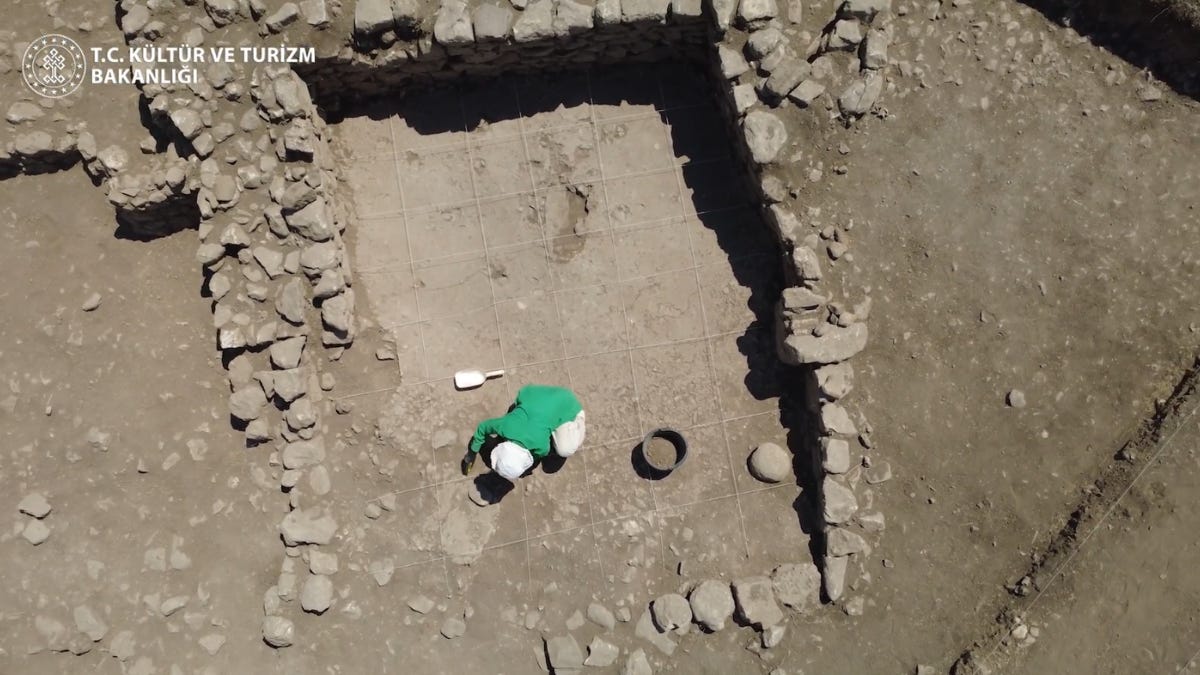
The decision was not a guess. Surface scans and geomagnetic measurements indicate that this part of the mound also holds large public buildings, rectangular-plan structures and huts. That builds on the geophysical campaign run under the Heritage for the Future and Taş Tepeler project, in which teams from Istanbul University, the German Archaeological Institute and Freie Universität Berlin combined geomagnetic mapping, ground-penetrating radar and lidar to detect not only the familiar circular enclosures but rectangular traces that may be early dwellings.
That distinction matters. Göbekli Tepe is famous for its circular enclosures of T-shaped pillars, but the picture emerging now is of a site with houses as well as monuments. Excavations under the project have already exposed rectangular-plan buildings belonging to Göbekli Tepe's second phase, dated to the 8th millennium BC.
Work is running on several fronts at once. Excavation continues in the GT1 and GT2 areas under their two protective roofs, while conservation and consolidation are underway in Structures A, C and D. The final surface fragments of the pillars in Structure C have been returned to place, the walls of Structure D have been reinforced along with the ground fixings of its two central pillars, and steel cabling is being added to protect the pillars against seismic movement. Renewed visitor paths, laid out around the new excavation zones, will open shortly.
Source: T.C. Kültür ve Turizm Bakanlığı (Republic of Türkiye, Ministry of Culture and Tourism)
More like this please. Excellent news.