


A first-of-its-kind protein study of teeth from South Africa’s Rising Star cave found no male markers in at least 20 individuals, raising the possibility of the oldest sex-specific burial site known to science.
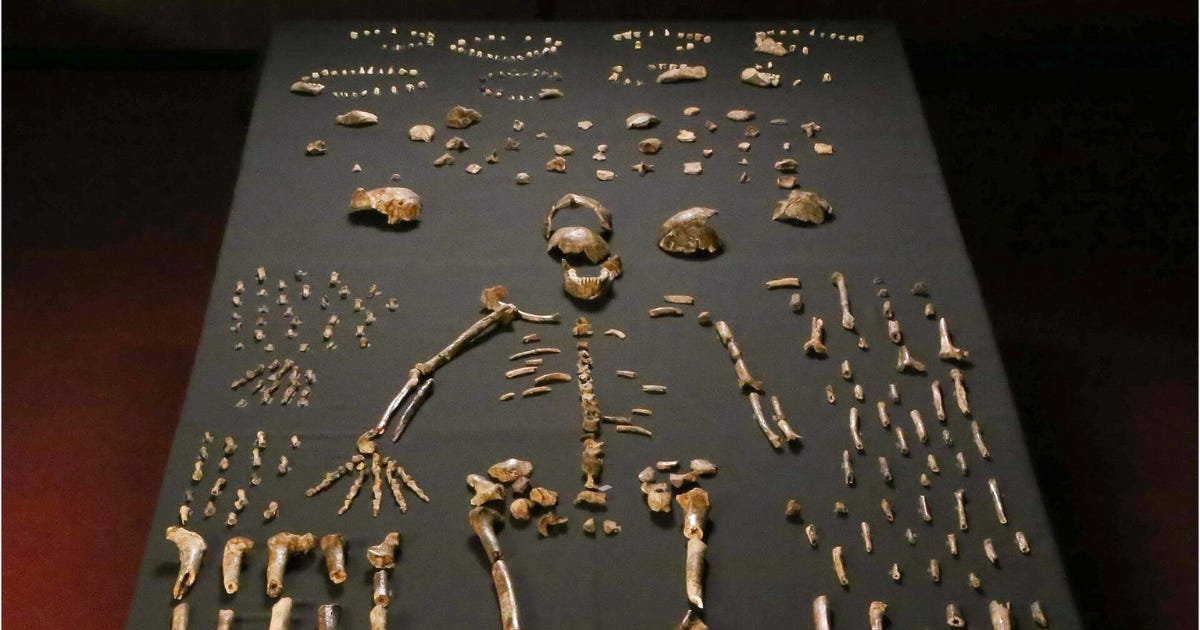
The 737 known elements of H. naledi . Credit: Lee Roger Berger research team .
For more than a decade, the fossils of Homo naledi have posed a quiet puzzle. The adults pulled from the depths of the Rising Star cave system, in South Africa’s Cradle of Humankind, looked strikingly alike. They varied little in size or shape, far less than scientists expect from a population that mixes males and females. Now a new molecular study offers an answer that few researchers saw coming: every individual the team could test was biologically female.
The finding comes from the first successful extraction of ancient proteins from the teeth of this extinct human relative, published on 24 June 2026 in the journal Cell. An international team analyzed enamel from 23 teeth representing at least 20 individuals and found a complete absence of the protein marker that identifies biological males. As the largest extinct hominin sample ever examined with ancient protein analysis, the result reshapes long-held assumptions about Homo naledi and hints at a cultural practice older than any comparable evidence from our own species or the Neanderthals.
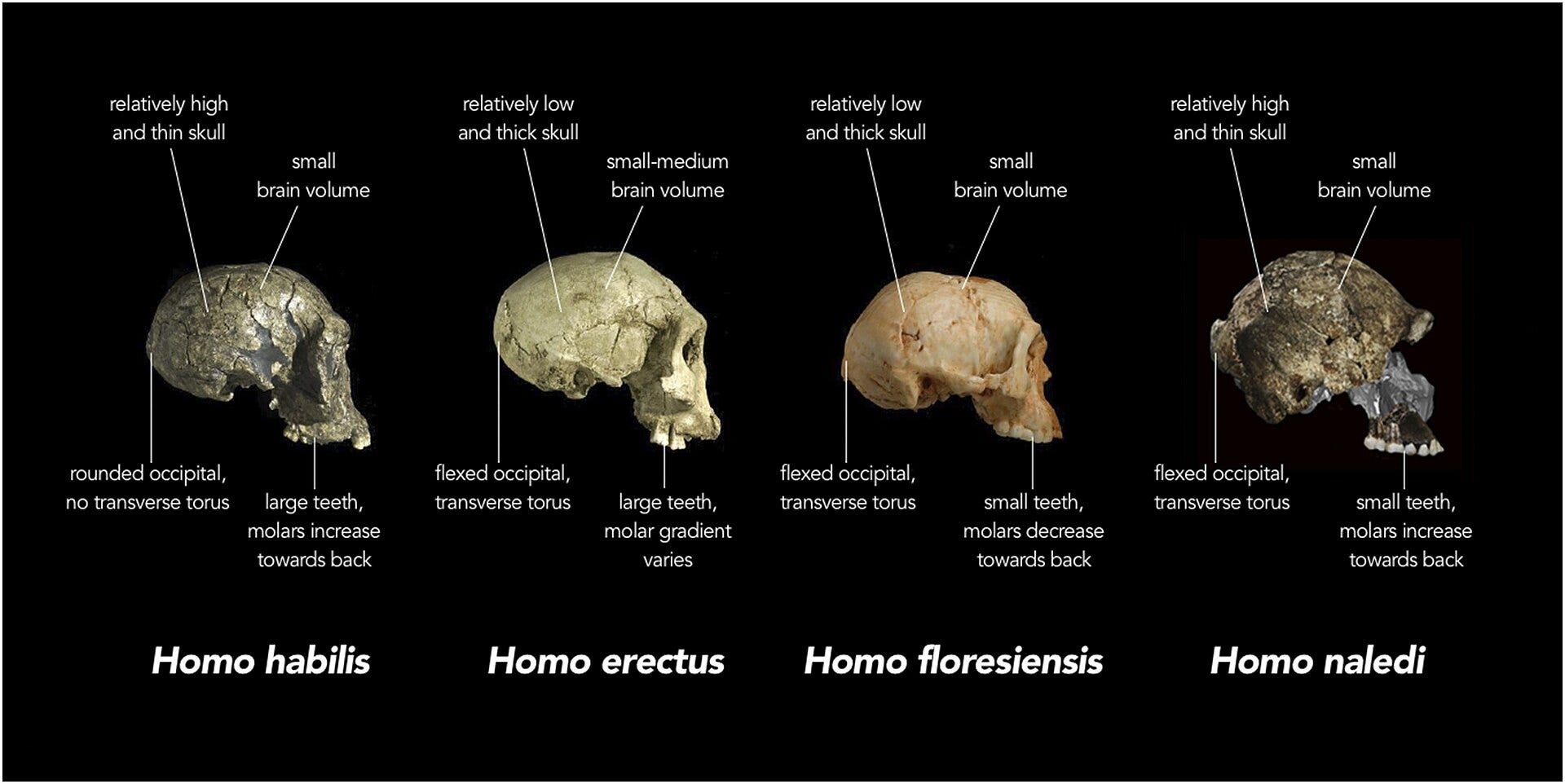
A comparison of skull features of H. naledi with other small-brained Homo: H. habilis, H. erectus georgicus, and H. floresiensis
A marker hidden in enamel
To read the biological sex of fossils hundreds of thousands of years old, the researchers turned to a protein called amelogenin. The protein comes in two slightly different versions produced by two genes: AMELX, carried on the X chromosome, and AMELY, carried on the Y. Because only males carry a Y chromosome, the presence of AMELY peptides is a near-certain signature of a male individual. Find it, and the tooth belonged to a male. Fail to find it across a well-preserved sample, and the most straightforward reading is that no males are present.
The team searched for AMELY in tooth after tooth and never found it. Adults, adolescents, children, and even a two-year-old infant all carried protein markers consistent with female sex.
Tooth enamel is uniquely suited to this kind of deep-time detective work. As the hardest tissue in the human body, it shields its proteins from environmental contamination for hundreds of thousands and even millions of years, long after DNA has degraded beyond recovery.
“Unlike those found in other remains like bone fragments, proteins in tooth enamel are preserved because dental enamel, the hardest tissue in the human body, shields proteins from environmental contamination even for millions of years. This makes them ideal carriers of genetic information from deep time,” said lead author Palesa Madupe, a South African-born molecular scientist who conducted the work as a postdoctoral researcher at the University of Copenhagen and is now at the Max Planck Institute for Evolutionary Anthropology in Leipzig, Germany. “Our study helps resolve the long-standing mystery of why Homo naledi lacked significant variation; it’s probably because they could have all belonged to one sex.”
To recover the proteins, the researchers applied a minimally destructive acid etching technique, lightly treating a small area of enamel to release fragments called peptides. The peptides were then read by a mass spectrometer to identify the proteins present, a method known as paleoproteomic analysis. A practical breakthrough of the work was showing that this gentle approach can yield as much protein data as far more invasive sampling, an advance that matters for fragile fossils elsewhere in the world.
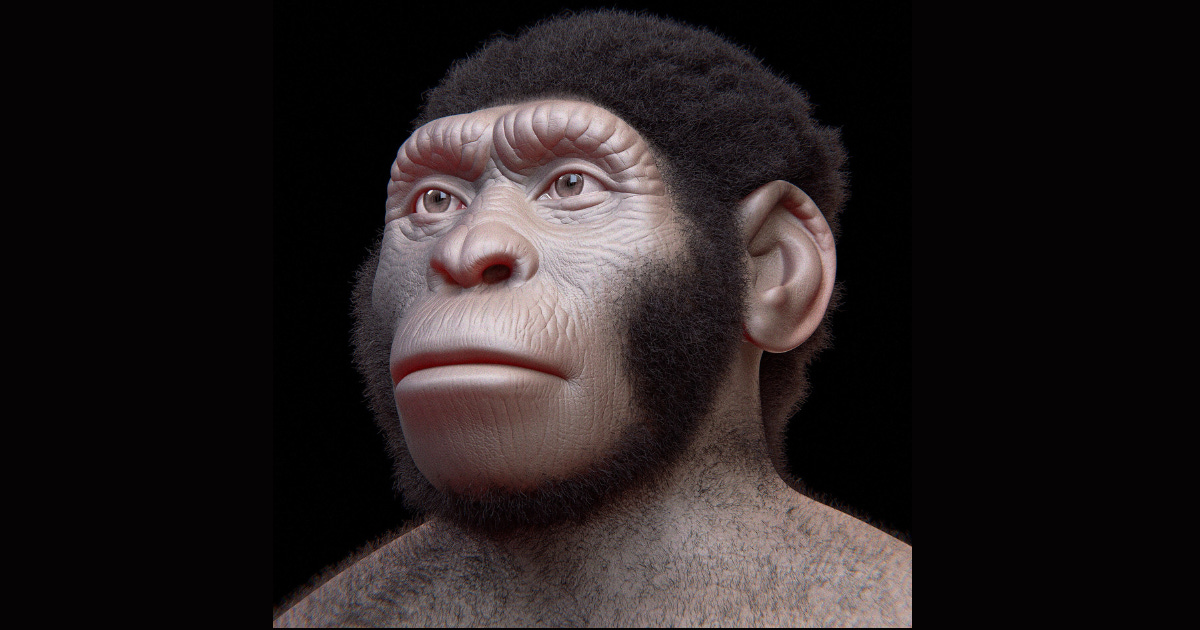
A facial reconstruction of Homo naledi. Credit: By Cicero Moraes (Arc-Team)
One in a million
The teeth in the study came from across the entire cave system, including the Dinaledi and Lesedi Chambers, the Hill Antechamber, and the locality where the skull and teeth of a Homo naledi child were found. Around half of the individuals were children. Among the adults was the well-known “Neo” skeleton from the Lesedi Chamber, one of the largest individuals in the entire collection and long assumed by some to be male. The proteins say otherwise. Neo was female.
For Lee Berger, the National Geographic Explorer in Residence who first described the species and serves as a corresponding author on the study, the odds make the case hard to dismiss. “It appears that the most likely explanation for the observed absence of an Amelogenin-Y marker in these individuals is that we are seeing a sex-bias in mortuary practice, a practice until now only observed in contemporary human cultures,” Berger said. “The chance of having sampled twenty individuals and they are all from one sex, is quite literally one in a million.”
The result lands as the latest chapter in a story that has repeatedly challenged ideas about what early human relatives were capable of. Homo naledi lived between roughly 335,000 and 241,000 years ago and carried a brain only slightly larger than a chimpanzee’s, yet the Rising Star team has reported evidence of fire use, engraved symbols, and deliberate burial. If the all-female pattern reflects how these individuals came to rest deep underground, it would point to the oldest sex-specific mortuary practice yet documented.
“There are many past human societies with sex-specific burial practices, but we’ve found very little hard evidence of this from the earliest burial sites of modern humans or Neanderthals,” said co-author John Hawks of the University of Wisconsin-Madison, a member of the Rising Star team. “These remains of Homo naledi are older than any known Neanderthal or modern human burial site, and it’s remarkable to see that they may all be female.”
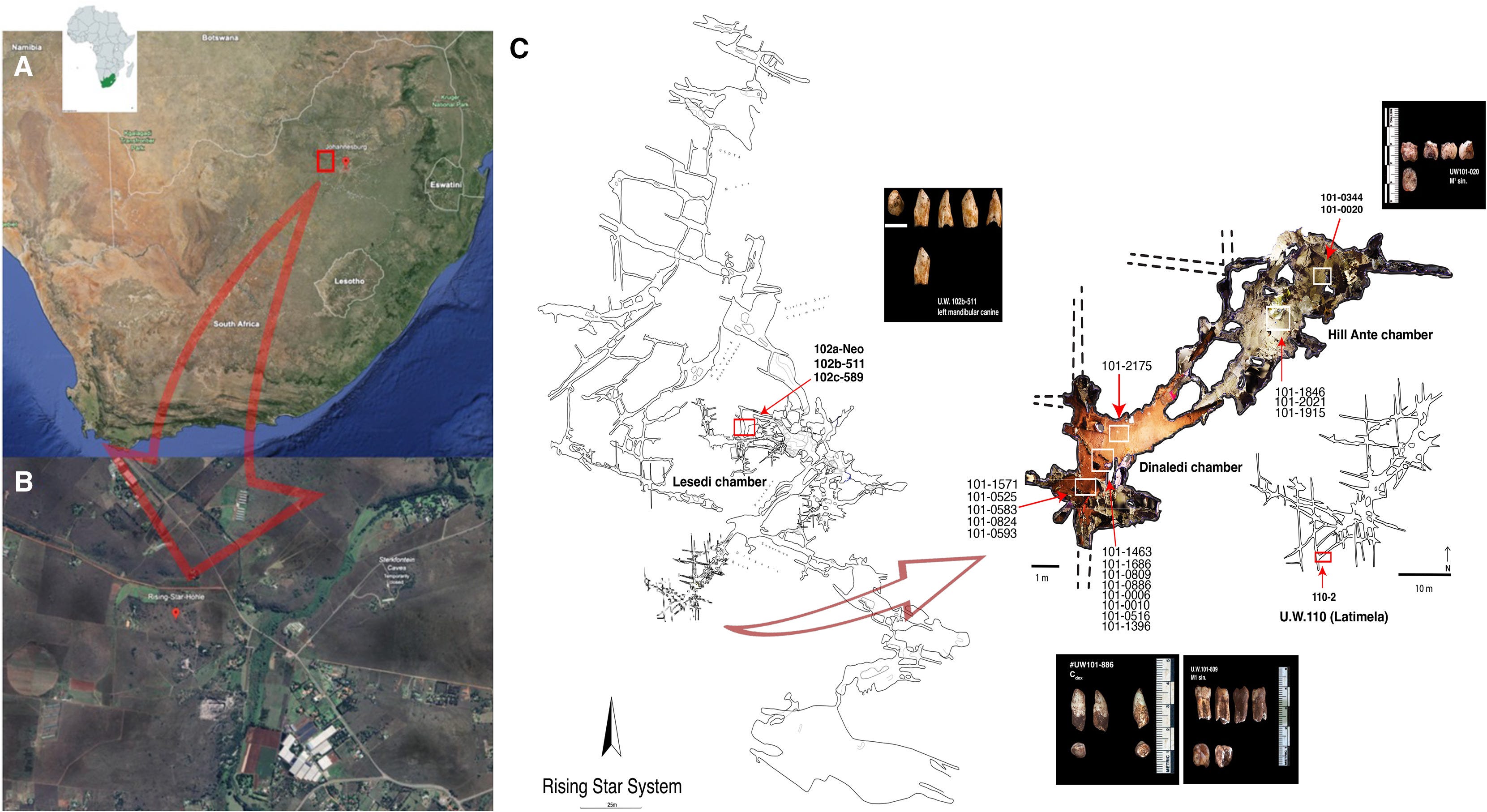
Location and layout of the Rising Star cave system. Credit: P. Madupe, Alberto J. Taurozzi
The case for caution
The team is careful not to overstate certainty. Of the 22 individuals examined, the protein evidence is decisive for 20; for two others, lower peptide recovery makes the reading less firm. Several analytical approaches from multiple labs converged on the same conclusion, that the absence of AMELY cannot be explained away by poor preservation. If those 20 individuals had been male, the male marker should have appeared.
There is also a genetic alternative the authors raise honestly. The AMELY gene can be deleted or inactivated in a male without otherwise altering his biology, a phenomenon already documented in living men and even in the DNA of a Neanderthal male. Could every male in this population have happened to lose it?
“While the deletion of the entire AMELY gene has already been observed in extant male humans and even in the DNA of a Neanderthal male, it’s very unlikely that this would be the case among even half of the 20 individuals we studied or for an entire population,” said senior author Enrico Cappellini, professor of paleoproteomics at the Globe Institute, University of Copenhagen, where the analytical work was carried out. “Either scenario, namely the absence of H. naledi males in the Rising Star cave system or a systematic deletion of their AMELY gene, is fascinating and would have deep implications for a better understanding of the biology and evolution of this species.”
Rethinking old assumptions
The molecular result did not arrive out of nowhere. The skeletal sample has long shown unusually low variation, and a 2024 analysis of the Dinaledi teeth led by Lucas Delezene suggested the collection looked more like a single sex than a random mix of both. The proteins now confirm that intuition with hard data.
The implications run deeper than a single cave. Researchers have often assumed that fossil assemblages represent a random cross-section of a population, and that the most complete skeletons are likely male. Homo naledi upends both. It also means that for years, scientists may have been describing “average” body size, brain size, and tooth size for a species using a sample drawn from only half of it.
The discovery was unveiled the same week the National Geographic Society opened its new Museum of Exploration in Washington, D.C., where Berger’s work and the Rising Star program feature prominently. For the researchers, the lesson reaches beyond Homo naledi itself. The most surprising findings, they suggest, often reveal less about the distant past than about the assumptions we carry into it.
Source: La Brujula Verde, “Discovery reveals that all Homo naledi fossils found in the Cradle of Humankind belong exclusively to female individuals,” 26 June 2026. Based on Palesa P. Madupe, Alberto J. Taurozzi, et al., “Proteomic analysis of dental enamel from 20 Homo naledi individuals shows no male markers,” Cell (2026), https://doi.org/10.1016/j.cell.2026.05.044.