


Between about 14,700 and 11,700 years ago the world changed faster than at any time since. Ice sheets collapsed, seas rose by more than a hundred metres across the whole deglaciation, and coastlines where people had lived for thousands of years went under.

It is tempting to look for that upheaval in the oldest writing we have. Sumerian king lists, Egyptian temple texts, Plato, Tamil epics and Norse myth all speak of floods, lost lands and a world that ended once before. Some of those threads lead back toward the Ice Age. Others turn out to be far younger than they look, and a few were invented in the nineteenth century.
The Sumerian King List counts its early kings in units of 3,600
The best copy is the Weld-Blundell Prism in the Ashmolean Museum, a clay prism about twenty centimetres tall inscribed on four sides around 1800 BC. Herbert Weld Blundell bought it on the antiquities market in 1922, and it is said to come from Larsa.
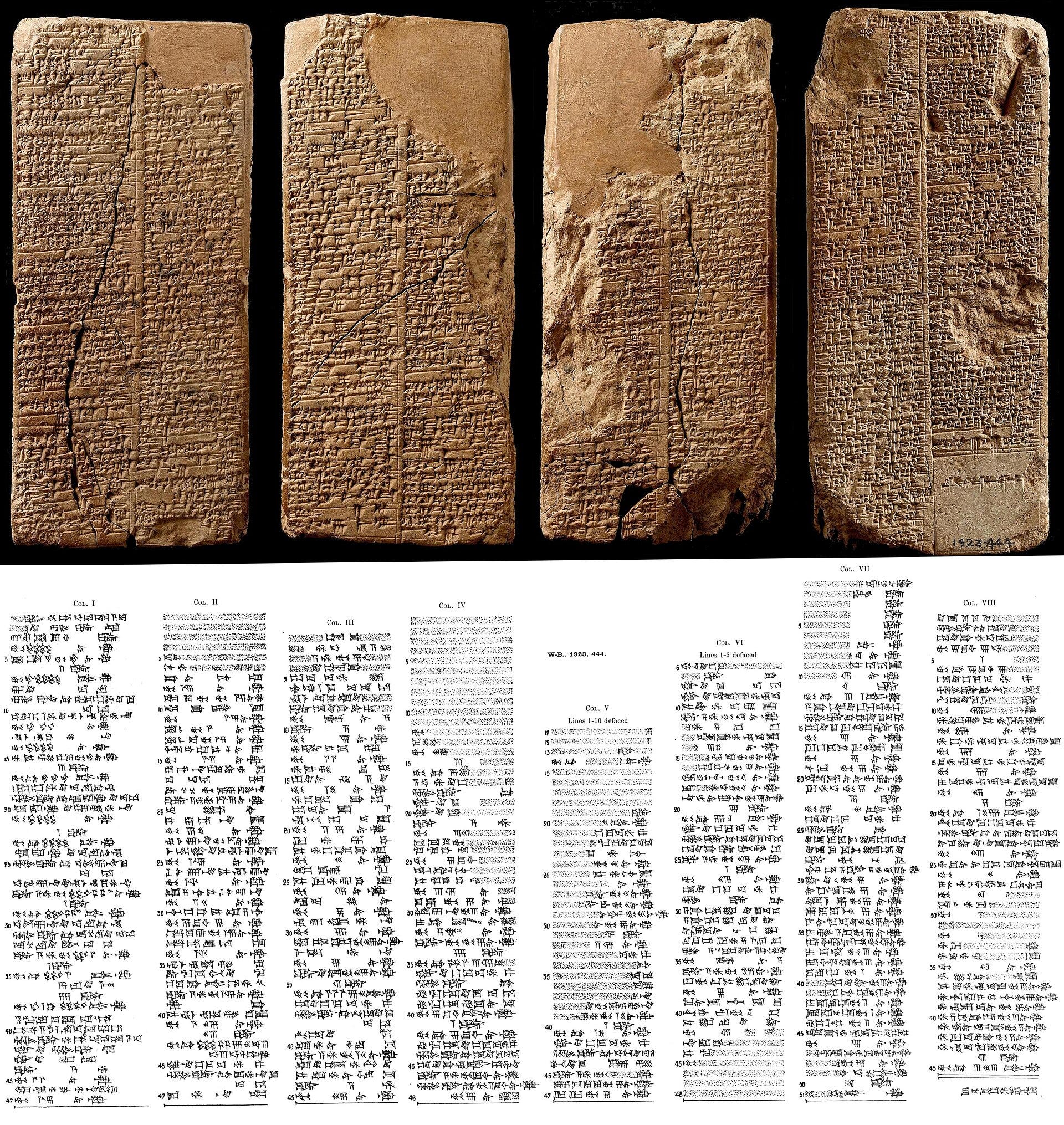
It opens with kingship descending from heaven to Eridu and lists eight kings in five cities before the flood. Alulim reigns 28,800 years, Alalngar 36,000, En-men-lu-ana 43,200, down to Ubara-Tutu at 18,600. Then comes a single line saying the flood swept over, and kingship descends again, this time at Kish.
The numbers repay attention. 28,800 is eight units of 3,600, the sar, the great round number of Sumerian base-sixty arithmetic. 36,000 is ten sars and 43,200 is twelve. These are schematic counts, the way a scribe expresses immense age, and after the flood the reigns shorten step by step through Etana at 1,500 years into ordinary human spans.
The Babylonian priest Berossus, writing in Greek around 280 BC, gives ten kings before the flood and a total of 432,000 years, which is 120 sars. Genesis also has ten generations from Adam to Noah, with Adam at 930 years and Methuselah at 969. The parallel is real and much studied, and what it shows is a shared Mesopotamian literary pattern, a vast age before the flood and a shortening after it.
Egypt’s king lists begin with gods, and the totals are calendrical
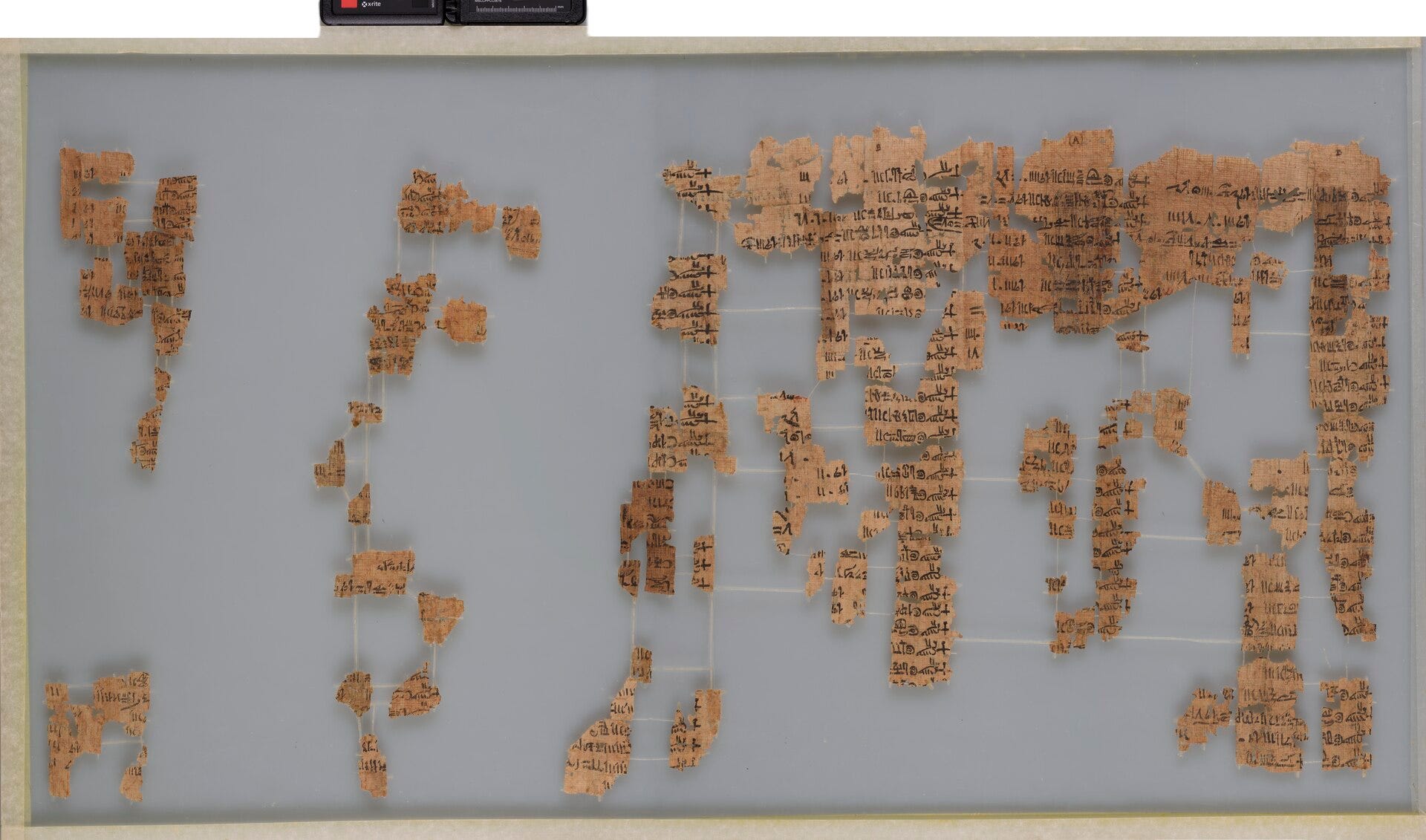
The Turin King List, a papyrus from the reign of Ramesses II now in the Museo Egizio, is the one Egyptian list that runs back past Menes. It broke badly when it was shipped to Italy in the early nineteenth century and has been reassembled since. Its opening lists gods, then spirits and the Followers of Horus, then human kings.
A later tradition attributed to Manetho, the Egyptian priest who wrote in Greek in the third century BC, gives a grand total of 36,525 years. That is 25 times 1,461, the length of the Sothic cycle over which the Egyptian civil calendar drifted back into line with Sirius. Like the Sumerian sars, it is a number built from astronomy.
The Edfu Building Texts describe an island of the egg, a serpent enemy, and divine builders called the Shebtiw who carried the art of temple building to Egypt. They are genuine and remarkable. They are also carved on a temple built between 237 and 57 BC, and the Egyptologist Eve Reymond published them in 1969 as a Ptolemaic theology of how temples came to be. They preserve older ideas at more than nine thousand years’ distance from the end of the Ice Age.
The sea did rise, and some people remember it
This is the strongest part of the case, and it deserves more attention than it gets.
