


An international team led by French archaeologist François Desset has decoded Linear Elamite, one of the last undeciphered writing systems of the ancient Near East, after more than a decade of research on inscriptions from ancient Iran.
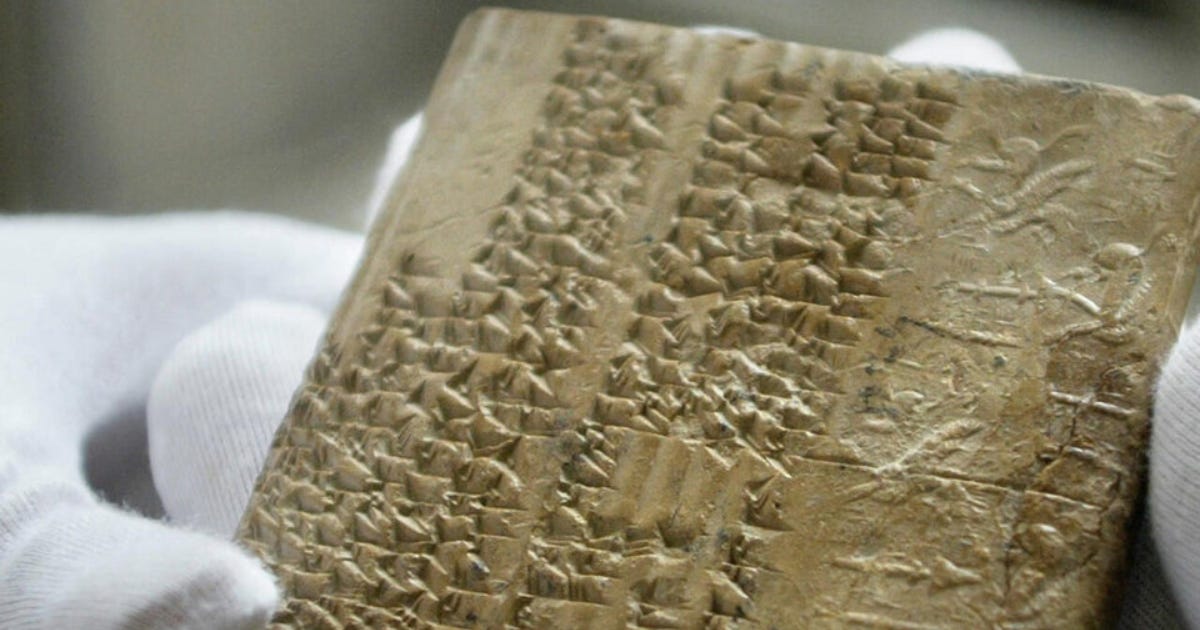
Archaeologists decipher 4,000-year-old Linear Elamite script from ancient Iran
Desset, an archaeologist specializing in Iran from the Neolithic through the Bronze Age, worked alongside colleagues Kambiz Tabibzadeh, Matthieu Kervran, Gian Pietro Basello, and Gianni Marchesi. Their proposed decipherment, first announced in 2020 and detailed in a peer-reviewed study published in 2022, has drawn wide attention for cracking a script that had resisted scholars for over a century.
The breakthrough drew on a set of previously inaccessible inscriptions on silver beakers held mainly in the Mahboubian Collection in London. The vessels are thought to originate from the Kam-Firuz area near the ancient city of Anshan in southwestern Iran. The additional texts gave researchers enough material to identify recurring royal names, which served as the key to unlocking the script’s phonetic values.
Linear Elamite consists of geometric signs and was used during the Bronze Age, roughly between 2300 and 1900 BC, by the Elamite civilization that flourished in what is now southwestern Iran. Desset and his colleagues have argued it may be the oldest known purely phonetic writing system, a claim that remains debated among specialists, with some scholars maintaining the script is partly logographic.
The script was first uncovered in the early 1900s during French excavations at the ancient city of Susa, but it remained unreadable for more than a hundred years because so few inscriptions survived. Earlier scholars such as Ferdinand Bork, Carl Frank, Walther Hinz, and Piero Meriggi identified the values of a handful of signs but could not complete a decipherment, largely because the available corpus was too small.
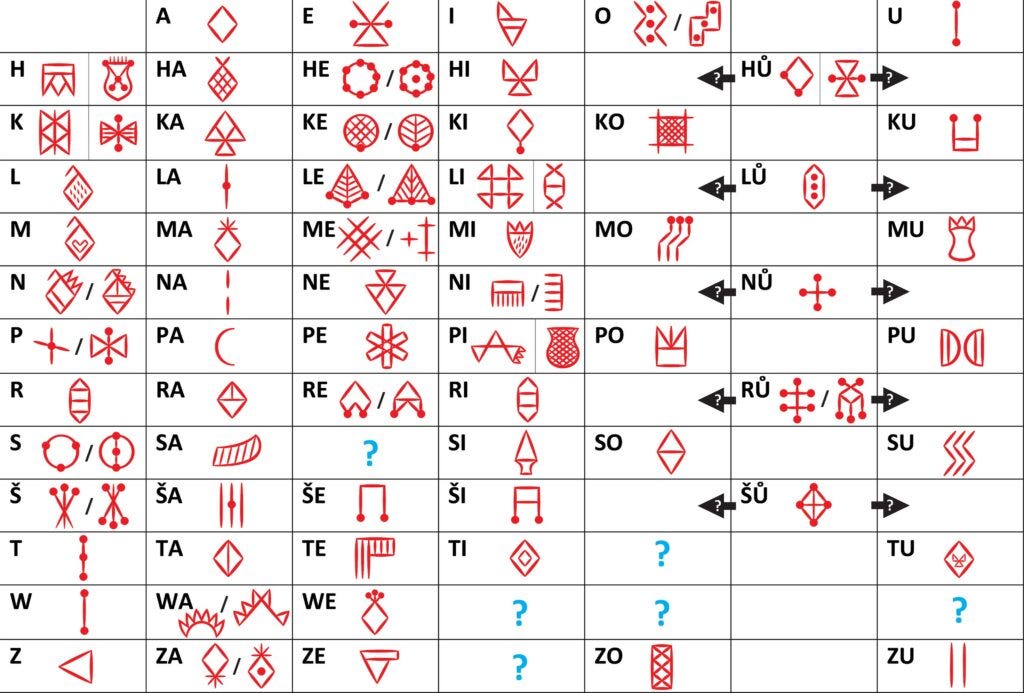
Regularised Linear Elamite characters as interpreted by Desset et al. in 2022. Credit: François Desset
Desset has said his engagement with the script deepened after 2006, when he took part in excavations in southern Iran. The turning point came when he identified a repeated sequence of symbols matching the ending of the name of the Elamite ruler Shilhaha, who reigned around 1950 BC. Recognizing that pattern allowed the team to assign sound values to several signs and gradually read the rest.
The achievement has invited comparison with Jean-François Champollion, who deciphered Egyptian hieroglyphs in the early nineteenth century by recognizing royal names such as Ptolemy and Cleopatra. Desset has described Shilhaha as playing the role in his own work that those names played for Champollion.
Following the breakthrough, researchers have been able to read dozens of Linear Elamite inscriptions, from a known corpus of only around 40 to 50 texts. Desset has said he next intends to turn to the even older and largely undeciphered Proto-Elamite script, one of the earliest writing systems in the world, of which more than 1,600 inscriptions survive.
The Elamite civilization emerged during the early urbanization of the ancient Near East in the fourth millennium BC. Centered first at Anshan and later at Susa, Elam covered much of present-day Khuzestan and Ilam provinces in Iran and extended into parts of southern Iraq. Its language is considered unrelated to any known language family and remained in official use during the Achaemenid Persian Empire.
Desset has expressed hope that the work will support the preservation of Iran’s cultural heritage and contribute positively to Iranian culture and identity.
Archeology is having a moment. Amazing discovery
Appreciate how persistent research led to this major discovery! Glad access was granted: "The breakthrough drew on a set of previously inaccessible inscriptions on silver beakers held mainly in the Mahboubian Collection in London." Hoping for even more progress on solving this ancient puzzle.