


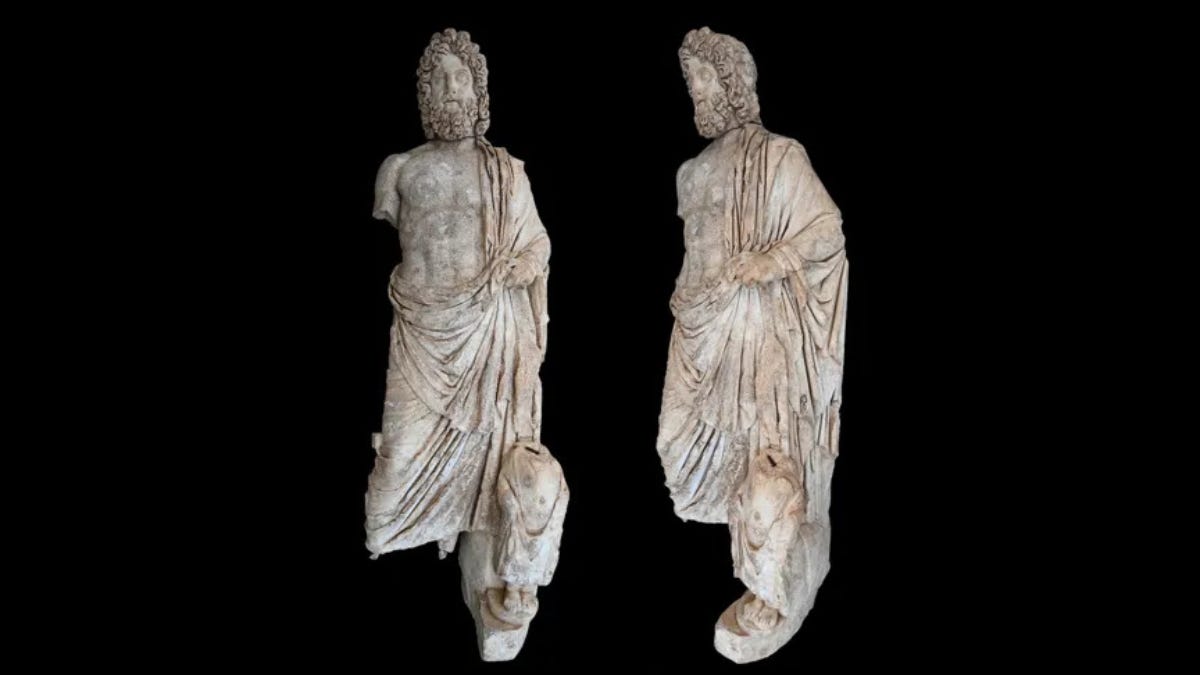
Excavations in Turkey's Aspendos, located in the province of Antalya, have yielded an incredible 2.20-meter-tall marble group statue. Revealed on August 6, 2026, by Turkey's Minister of Culture and Tourism, Mehmet Nuri Ersoy, the statue depicts the ancient Greek god of healing, Asclepius, with the child god Telesphoros at his feet. This remarkable find is believed to date to the last quarter of the 2nd century AD and is part of a larger Heritage for the Future project run by the ministry.
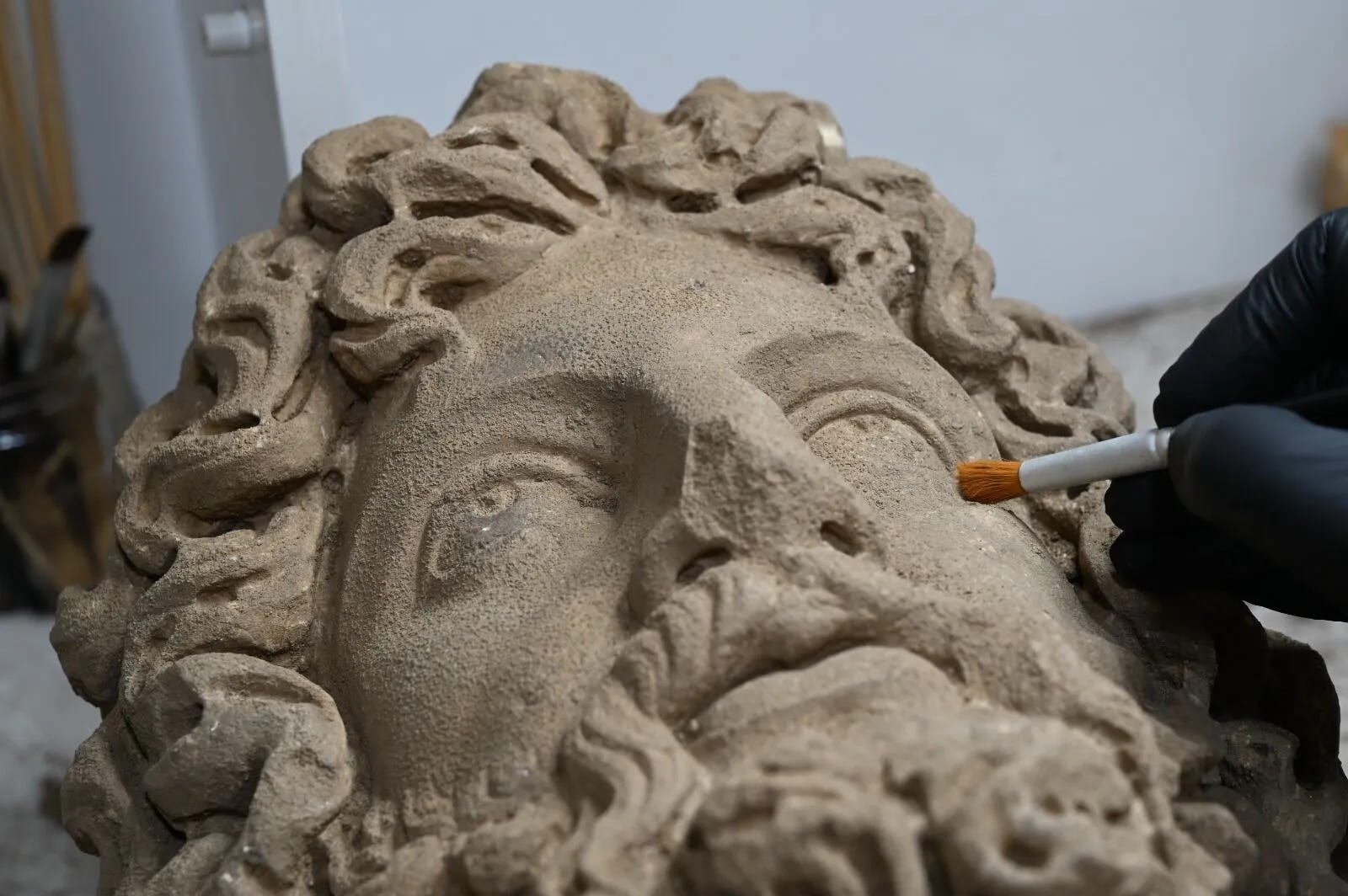
The location of the discovery
The group has been unearthed from a collapse on the north wing of the Monumental Gate, on the west façade of the East Square on Theatre Street, which itself forms part of the public/ceremonial sector of the Roman city of Aspendos thus, indicating it was publicly exposed.
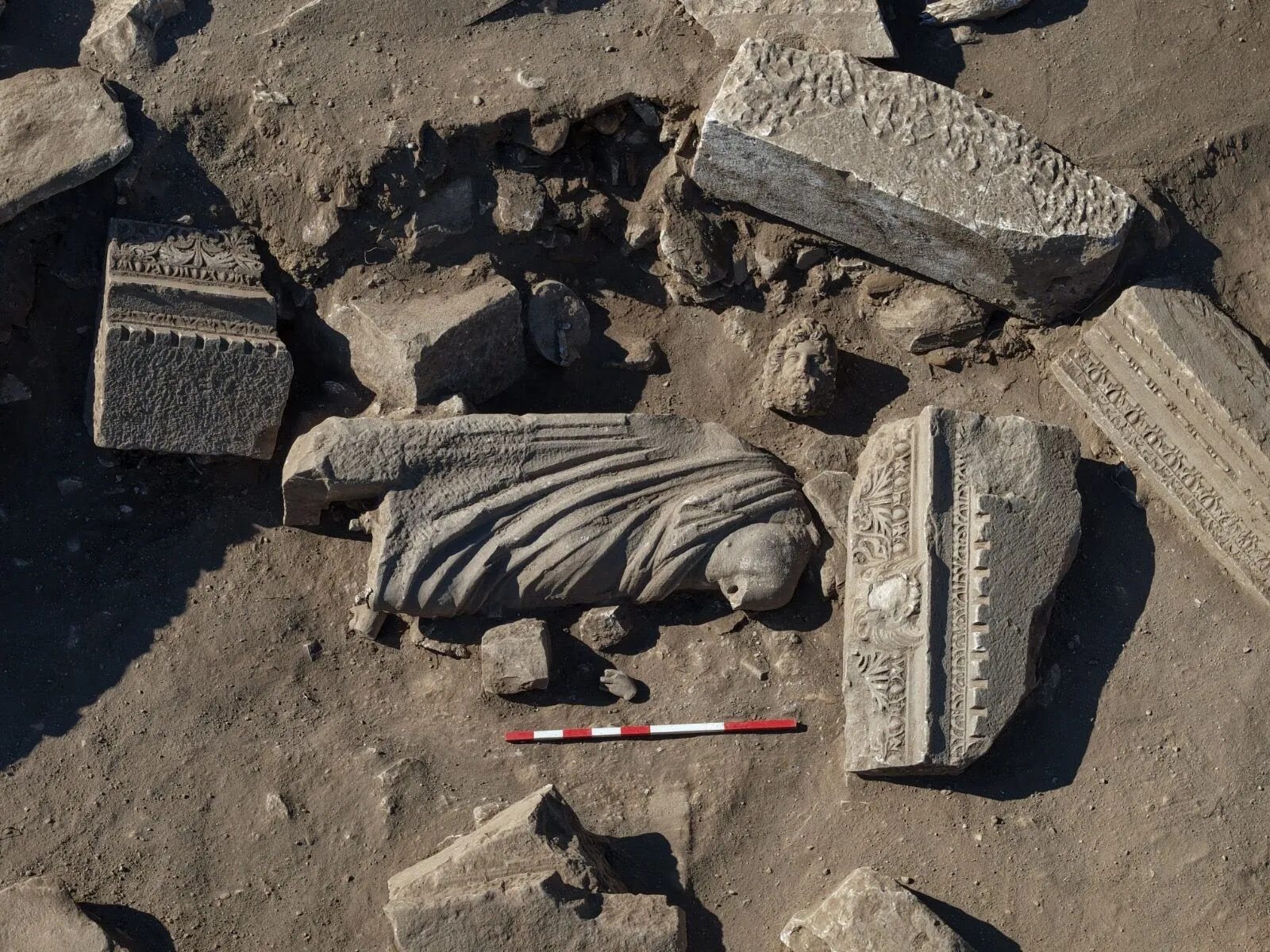
The figures
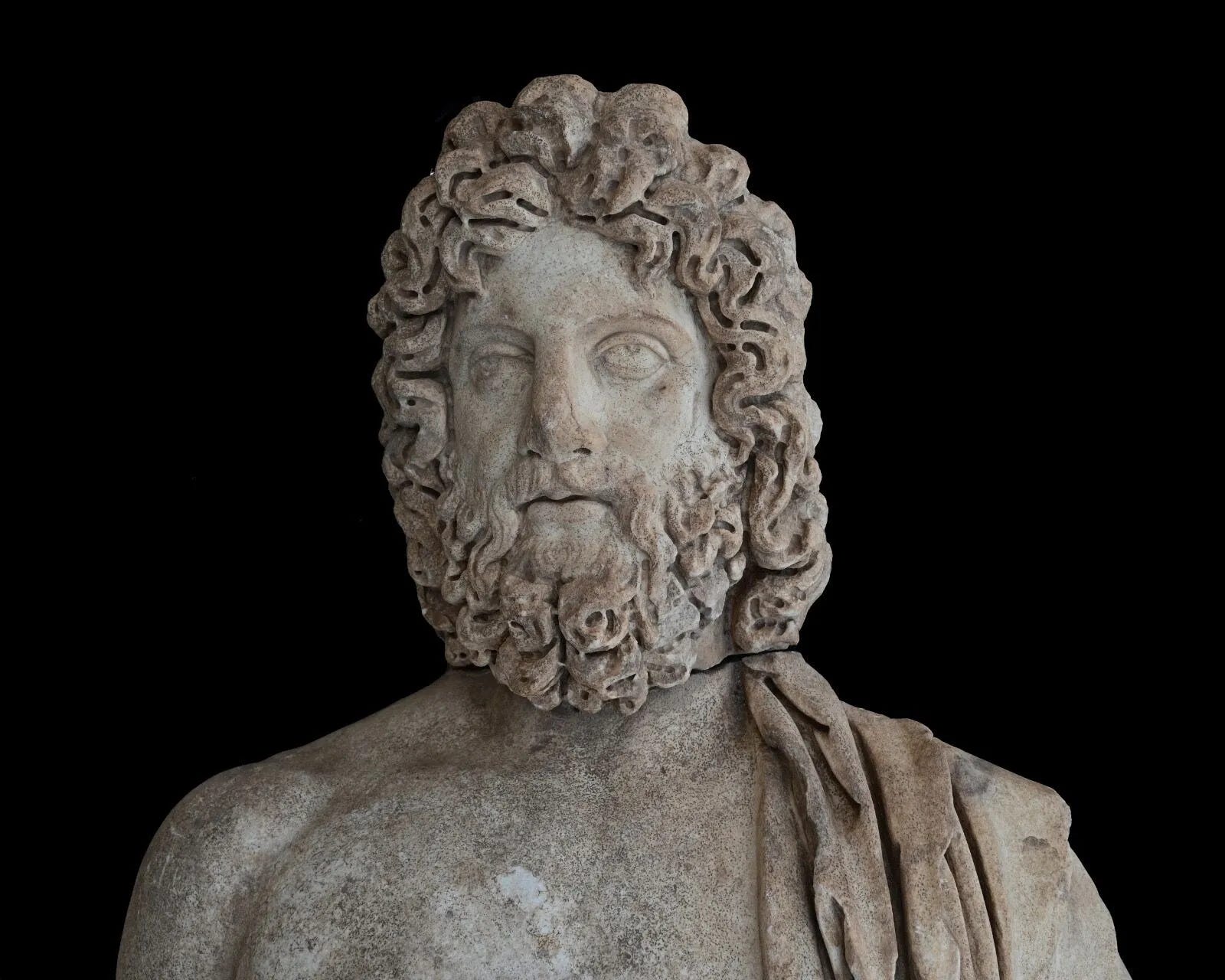
Asclepius is portrayed standing with a frontal orientation. He is a mature, bearded man with a mane of thick, long hair. He stands with his weight shifted to his left leg, his right leg slightly bent and extended forward and to the side. Much of his upper body is bare, with a himation draped over his left shoulder and then gathered around his waist and legs in heavy folds.
Telesphoros
His name means ‘bringer of completion’ and his specialism was convalescence, the recovery phase from a crisis. Asclepius is the healer; Telesphoros is the convalescent. Arguments suggest that he was Celtic god brought into Anatolia in the third century BC and incorporated into the Asclepius cult perhaps at Pergamon, where he even had a dedicated temple, the Telesphorion, within the Asclepius precinct, and was known by other names such as Euamerion at Titane and Acesis at Epidaurus.
Telesphoros is usually represented in a wide cape reaching to his feet known as a cucullus and has been connected with the Genius Cucullatus recorded in two epigraphical examples from Noricum.
His worship gained momentum in the second century AD under Hadrian and has been distributed mainly along the river Danube and in Anatolia, and he was identified in an Athenian inscription of the same century as a child of Asclepius.
Sources: Anadolu Agency, 6 August 2026, reporting the announcement of Minister of Culture and Tourism Mehmet Nuri Ersoy and the statement of the General Directorate of Cultural Heritage and Museums. Background on Telesphoros from Pausanias, Description of Greece 2.11, and from Wroth, "Telesphoros," Journal of Hellenic Studies 3 (1882).
We should find a way to excite young people around the world about wonderful antiquities such as this. Thank you for this brilliant article.
Another font of knowledge in beautiful Anatolia!