


Egypt’s Supreme Council of Antiquities has exposed a complete residential district inside the fortress at Tell el-Abqain, in Beheira governorate in the northwestern Delta, along with the burial of a young horse.
The fort belongs to the chain of garrisons Ramesses II maintained along the western frontier, watching for Libyan raids and later for the Sea Peoples. Earlier seasons at the site produced a ceremonial cow burial and a bronze sword carrying the pharaoh’s cartouche. This is the first campaign to uncover the living quarters street by street.
The settlement was planned
Hisham el-Leithy, secretary general of the Council, describes a large mudbrick complex with a main street about four meters wide running east to west, crossed by a second street that leads to the fort’s limestone southern gate.
The team reads that grid as deliberate planning rather than a settlement that accumulated around a garrison. Rooms within the complex held grain silos and cylindrical ceramic ovens. Mohamed Abdel-Badei, head of the antiquities sector, says some rooms north of the main street served as wheat stores, and large jars recovered from them still contained charred grain.
Nearby stand three stone wells inscribed with the titles of Ramesses II, found in previous seasons.
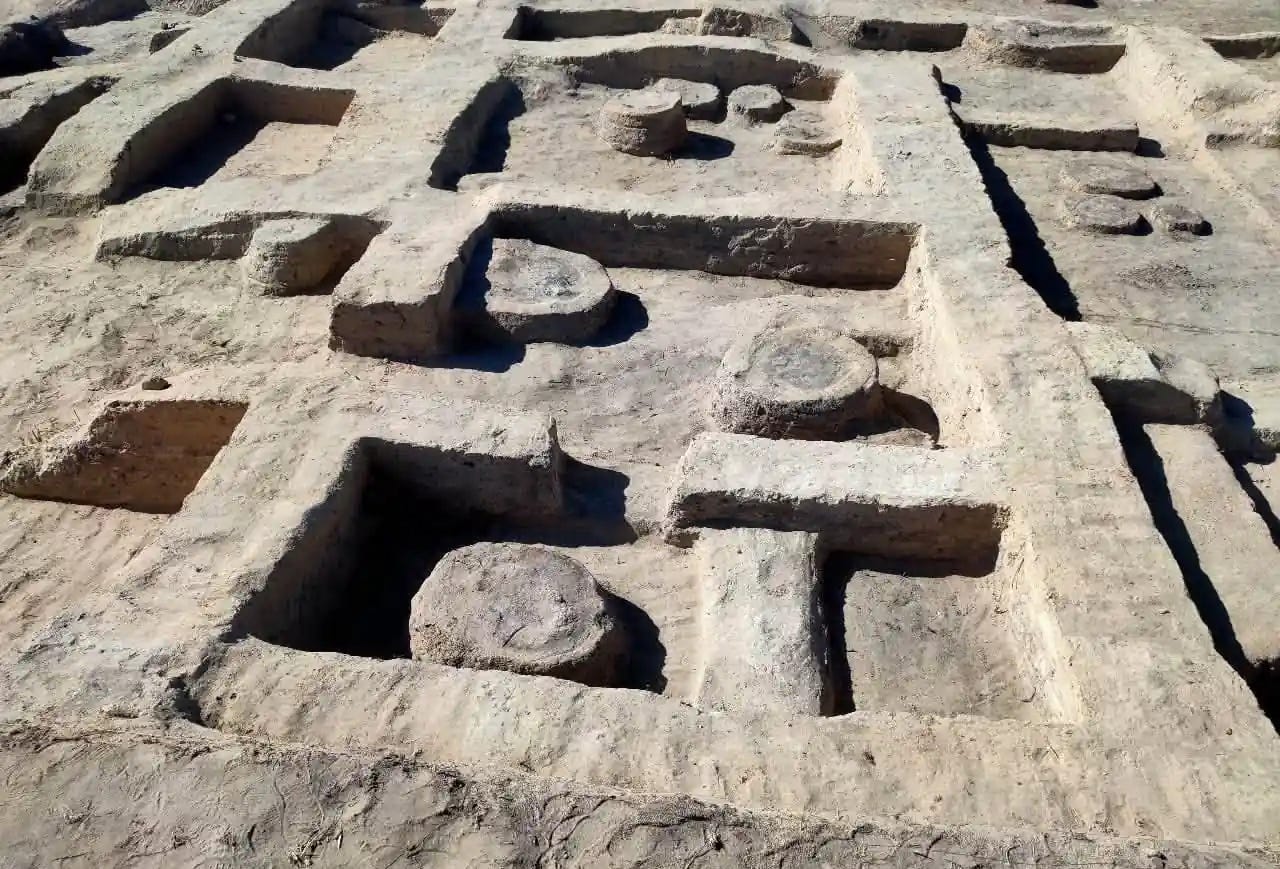
View of the archaeological excavations. Image credit: Ministry of Tourism and Antiquities
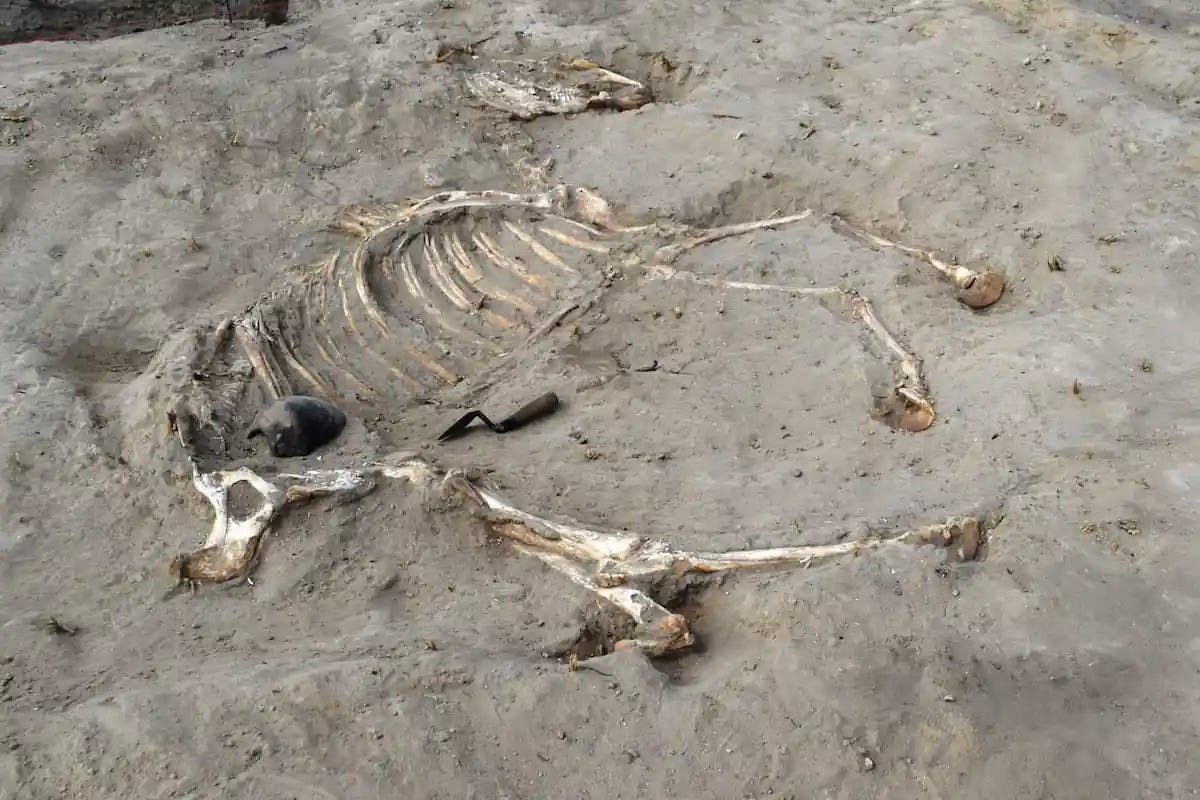
The horse was buried with care
The animal is a young male, and preliminary study suggests a medium-sized, fast breed of the kind used for military training or for drawing chariots.
What marks it as an honorary burial rather than a disposal is the intact posture, the position of the head and the evident attention paid to the arrangement. A few metres away the team recovered cylindrical pieces of alabaster and limestone, probably decorative fittings from a chariot harness.
Two stelae and a Libyan captive
Khaled Abdel-Ghani Farhat, director of Beheira antiquities and supervisor of the dig, reports a limestone stela fragment carrying a hieratic inscription naming Merneptah, son and successor of Ramesses II, who reigned from 1213 to 1203 BC. The text compares his strength to Set and invokes Ptah. Farhat describes it as without precedent in the region.
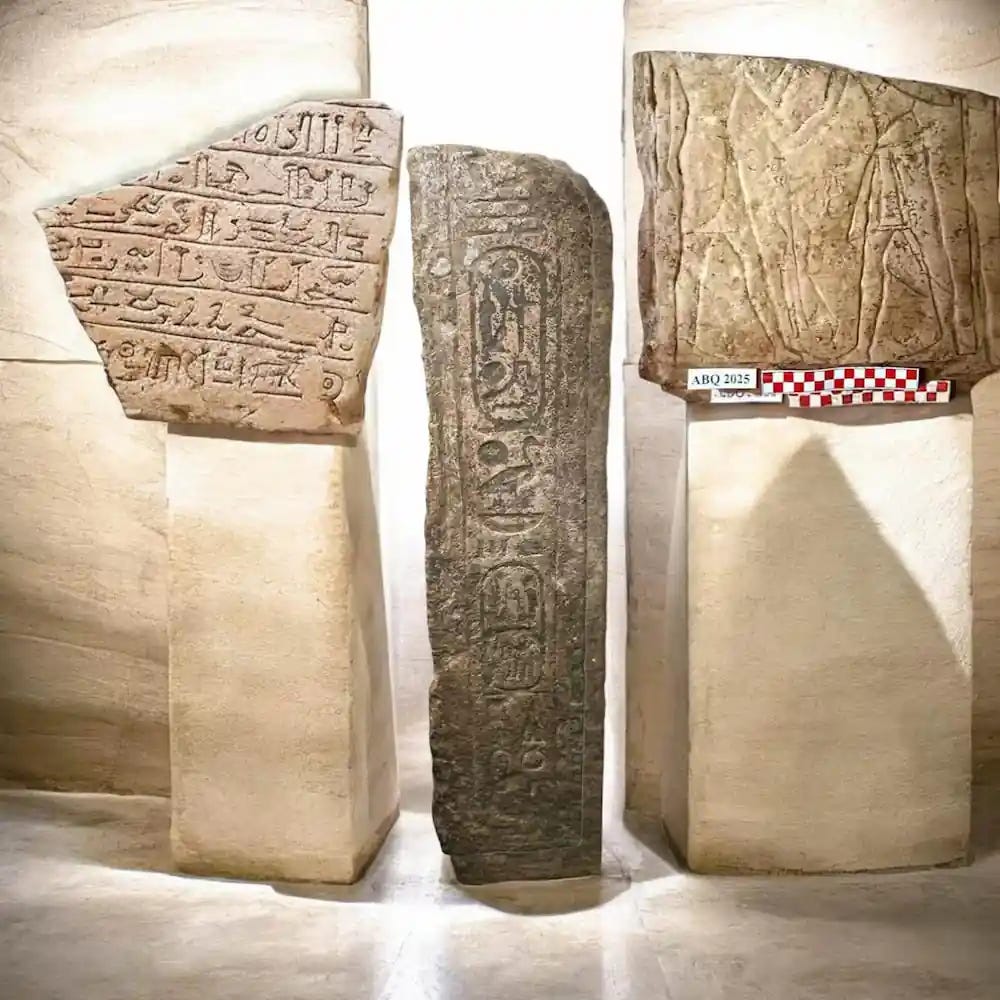
A second limestone stela, in hieroglyphs, carries the birth name, coronation name and Horus name of Ramesses II. A third fragment shows a bound prisoner identified as a Meshwesh Libyan.
That detail carries an irony the garrison could not have seen coming. Less than three centuries after Ramesses II died, a Meshwesh chief named Sheshonq I took the Egyptian throne and founded the Twenty-second Dynasty.
What the soldiers kept
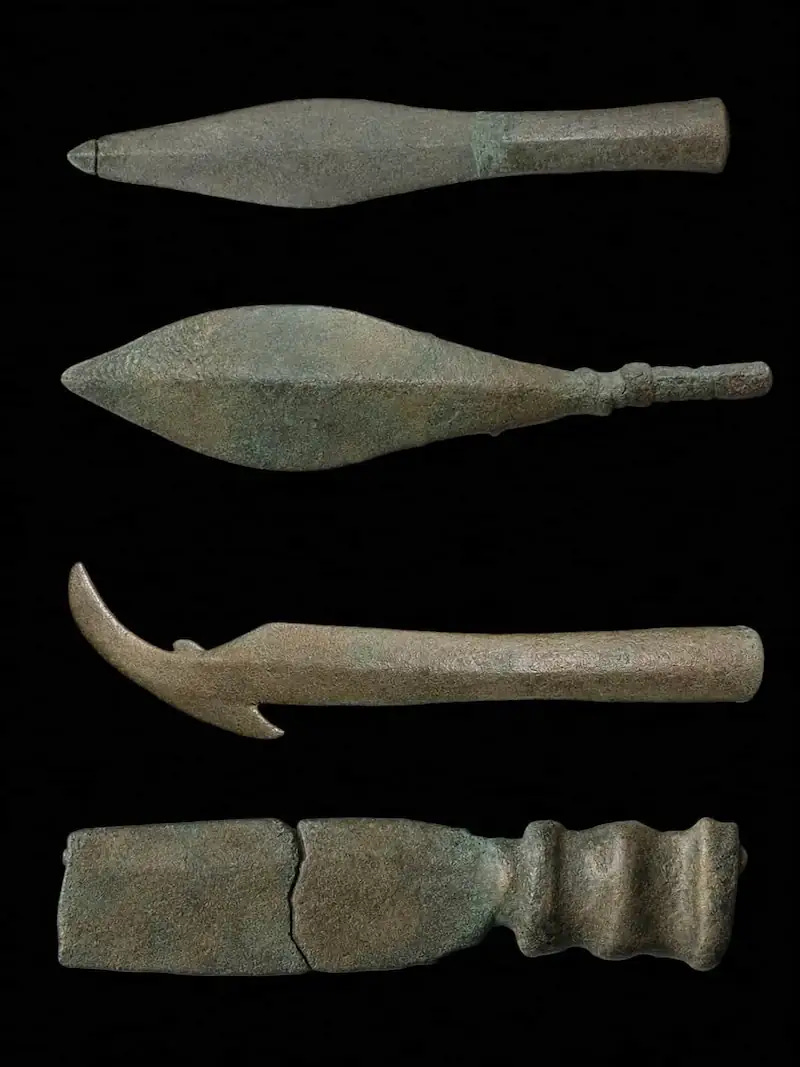
Scarabs from the site name Ramesses II and Seti I, along with Amun, Sekhmet, Ptah and Set. Amulets take the form of a fish, a lotus, a cobra, a baboon and the nefer sign.
The rest is domestic. Storage and cooking pottery, vessels for perfume and oil, loom weights, fragments of mills and mortars, balance weights and personal ornaments. Among them is a pilgrim’s flask associated with the cult of Abydos, the Osiris sanctuary far to the south, carried by somebody stationed at the other end of the country.
What has not been established
Neither the ministry nor the team has said which phase of the fort’s occupation the residential district and the horse burial belong to, or whether they connect to the cow burial and the sword from earlier seasons. Work on the fortress plan and its place in the New Kingdom’s western defensive network continues.
Source. Egyptian Ministry of Tourism and Antiquities, September 2026.