


Two finds have come out of the seabed around Elba during monitoring work by the Soprintendenza for Pisa and Livorno. One is a dolium of Roman date, a large terracotta storage vessel. The other is a wooden hull about five metres long, so thoroughly covered in marine mucilage that very little of it can be seen.
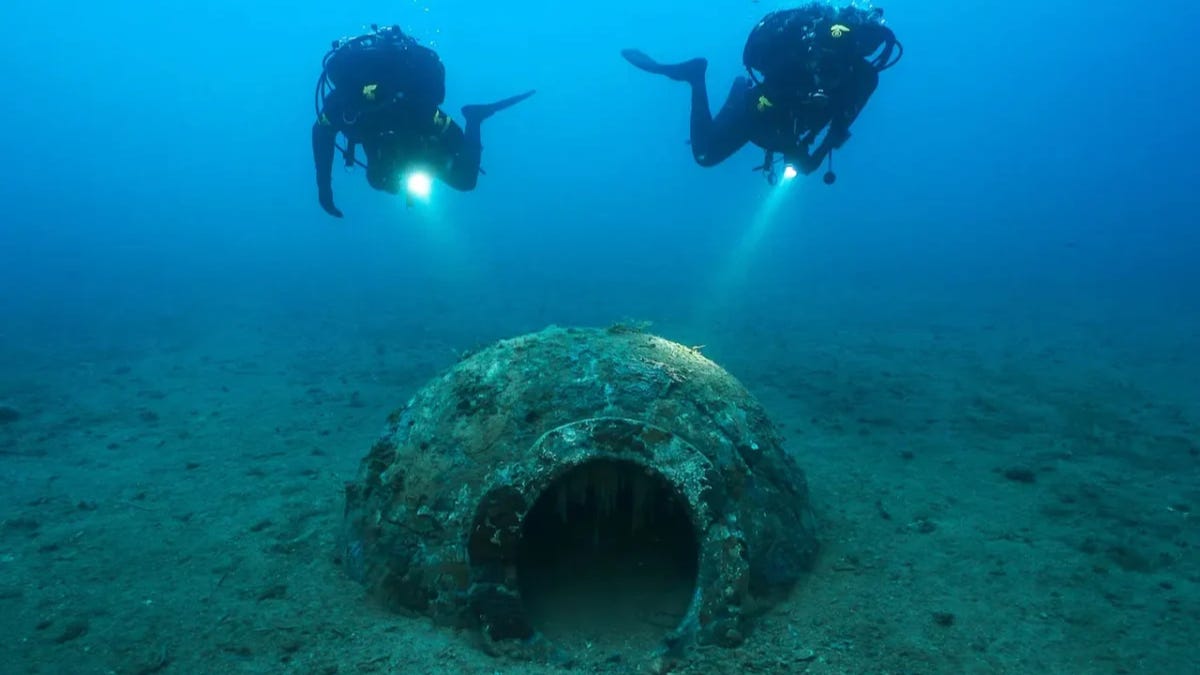
The work began in May 2026 and covers the waters between Piombino and the islands of the Tuscan Archipelago, carried out with the Carabinieri cultural heritage protection unit in Florence and the Carabinieri diving unit in Genoa. It is a survey programme rather than an excavation, intended to check the condition of known submerged sites, confirm the positions of objects already catalogued, update the mapping and follow up new reports from the public.
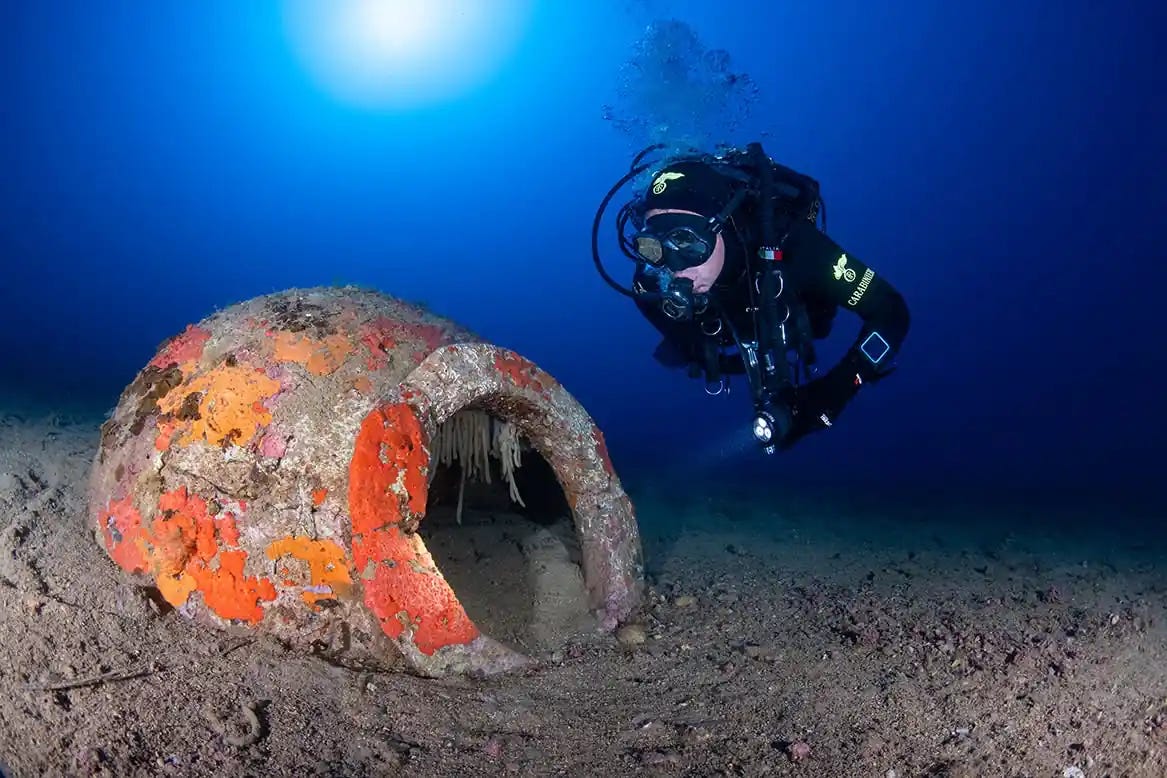
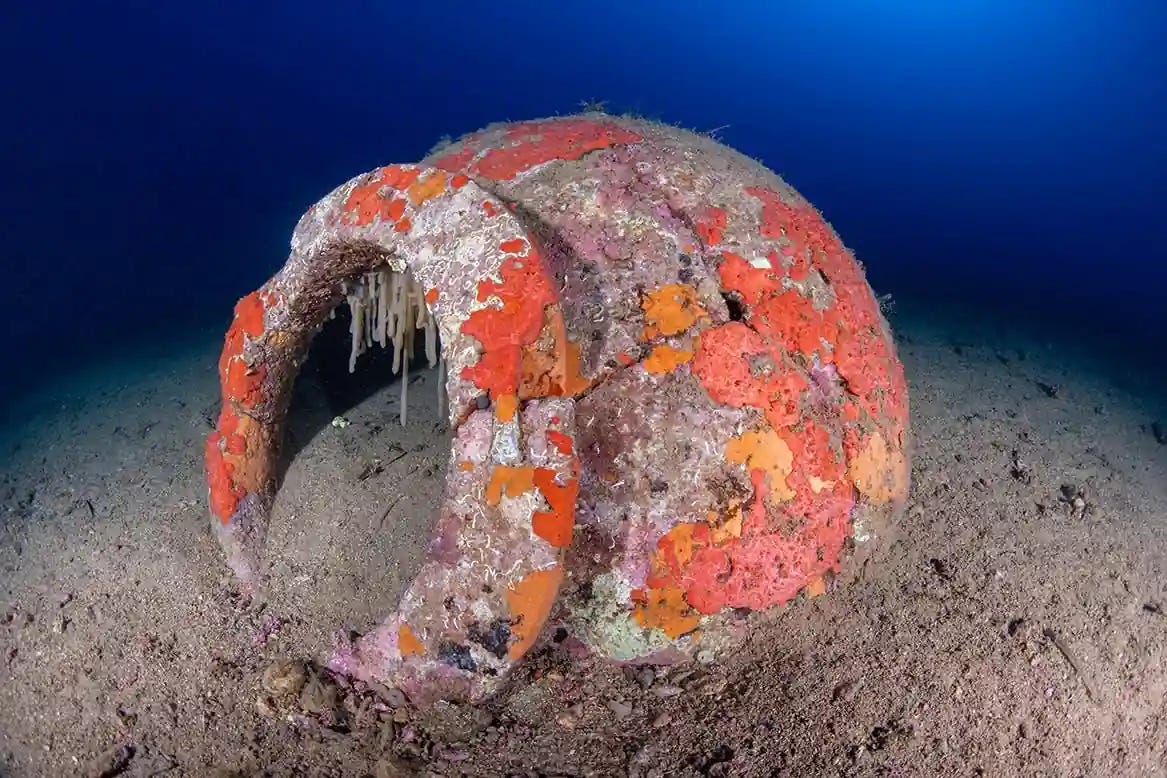
The dolium probably came off a wine ship
Dolia were used in antiquity for storing and moving foodstuffs, above all wine, oil and grain. What makes this one interesting is the type of vessel it is likely to have come from.
Between roughly the first century BC and the first century AD, a particular kind of merchant ship worked the main Tyrrhenian routes carrying wine in bulk. Rather than loading amphorae, these ships had enormous dolia fixed into the hold, effectively tanks, which allowed far greater volumes to be shipped at once. They are known in Italian scholarship as navi a dolia. The characteristics of this vessel and the context it was found in point that way, according to the Soprintendenza.
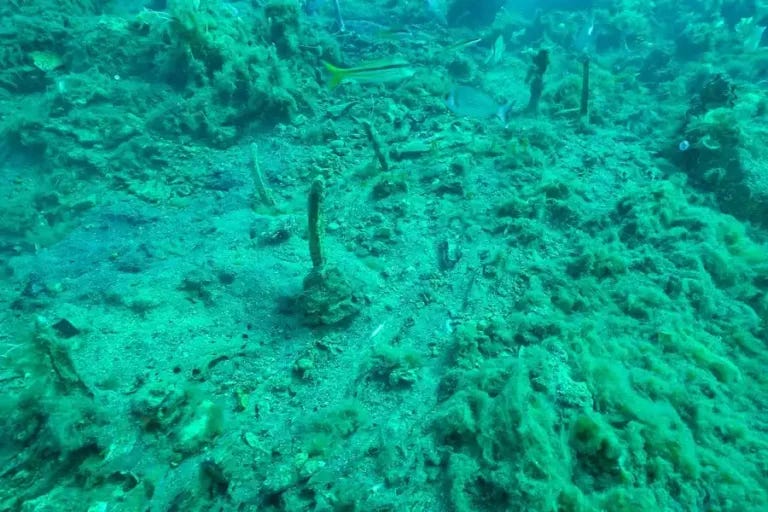
The hull cannot be dated yet
The second find is about five metres by two. Divers have identified planking, wooden structural elements and a large number of bronze nails, which is enough to establish that it is a boat and not much more than that.
The mucilage covering it, a gelatinous organic film that forms in the water column and settles on the seabed, is the main obstacle. The Soprintendenza is explicit that the state of preservation does not currently permit a firm date, and gives a range from late antiquity through to the medieval period. Other reporting places the chronological bracket wider still, from the Roman era to the Middle Ages.
Whether the two belong together is an open question
They were found in the same area, and it would be convenient if the dolium had come from this hull. There is no evidence for that yet. The dolium points to the Roman period, the hull sits somewhere in a range of a thousand years or more, and nobody has established a relationship between them.
A second campaign is planned for autumn 2026 to cut exploratory trenches, which should narrow the date of the wreck and clarify whether the finds are connected.
Elba sits on a route that has been used for millennia
The island lies just over ten kilometres off the Tuscan coast at the nearest point, with Corsica close by to the west, which places it on maritime routes running between the Italian peninsula and the western Mediterranean. Ships called there, loaded and unloaded, or passed on toward the mainland ports.
The seabed reflects that. The best known wreck is the one found at Procchio in 1967, a Roman merchantman that went down off the northern coast, and material has been recorded at Sant’Andrea, Chiessi, Capo Enfola and around Portoferraio. Deeper water between Elba and Pianosa has produced Roman cargoes at over six hundred metres, investigated by Ca’ Foscari University with remotely operated vehicles.
Navigation here had a specific hazard. The mountain gave shelter to ships close inshore, and that shelter disappeared the moment they left the island anchorages for the channel toward the mainland or turned back into open water.
Valerio Tesi, the superintendent, described the sea of the Tuscan Archipelago as an exceptional deposit of archaeological material, and credited the results to the working relationship between his office and the Carabinieri units involved.
Sources: Soprintendenza Archeologia, Belle Arti e Paesaggio per le province di Pisa e Livorno, reported in Toscana Media News, Livorno Today and Stile Arte, August 2026. Background on deep-water wrecks between Elba and Pianosa from Ca' Foscari University of Venice, 2024 campaign.
The remaining coloration on the dollia is amazing! I’m curious what process would have been used.
That possible shipwreck looks so mysterious!