


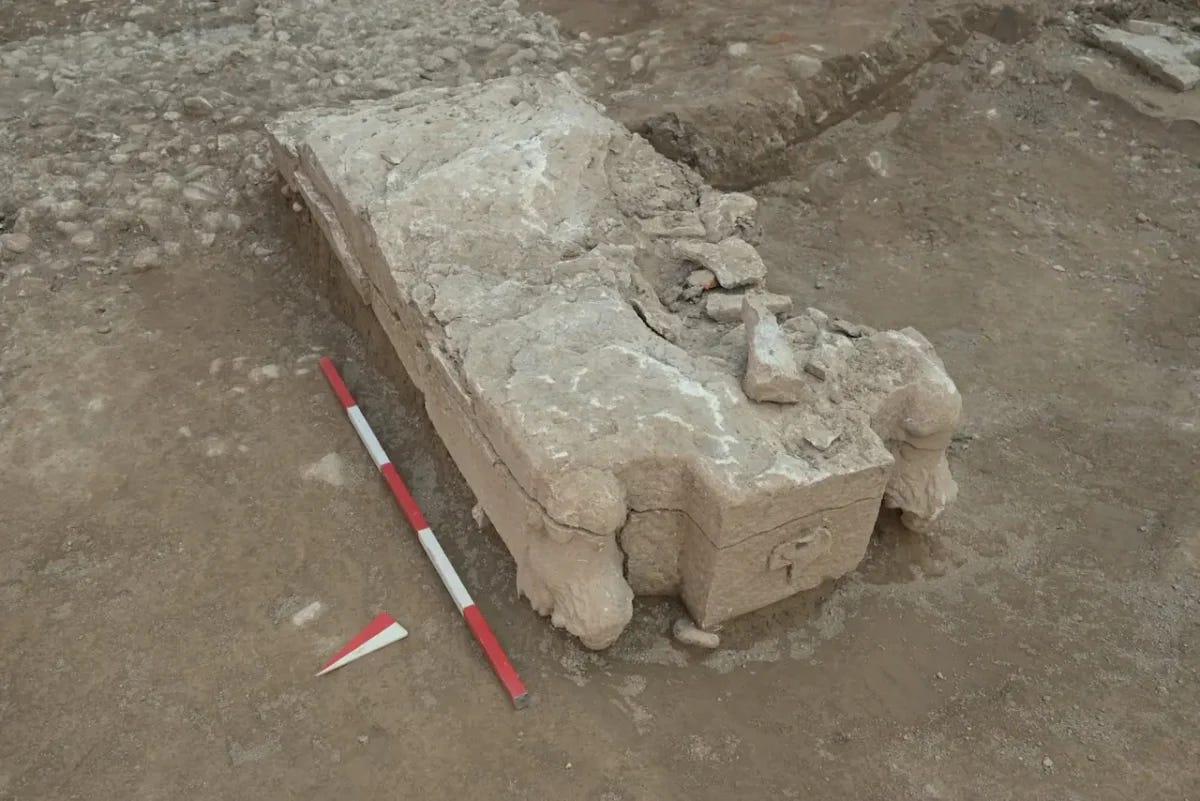
A stone funerary monument has been recovered from Emona’s northern cemetery during preventive excavation at the Potniški Center intersection in central Ljubljana. Slovenian specialists in Roman epigraphy and funerary sculpture have examined the visible fragments and say there is nothing comparable known from anywhere in the country. They describe it as unprecedented in the Balkan Peninsula.
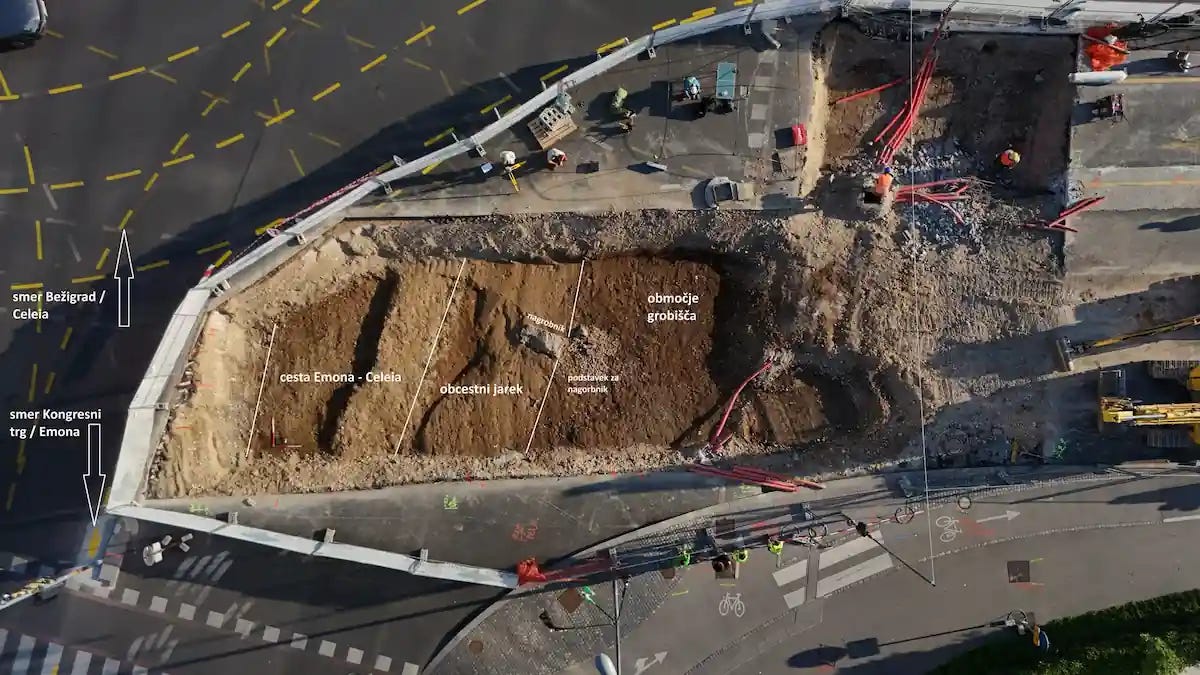
Emona was founded as a Roman colony in the first century AD and lies beneath the centre of the modern Slovenian capital. The northern cemetery extended out along the road to Celeia, present-day Celje. Slovenian heritage law required excavation ahead of the infrastructure works now planned for the intersection, and the cemetery’s presence there was already known, though not how well this particular stretch of it had survived.
Preserved by falling
The monument was found in the ditch beside the Celeia road. It had toppled from its original position at some point in antiquity, possibly through an earthquake or ground instability, and sediment covered it soon after. Being buried is what saved it, from weathering and from anyone who might have taken the stone for reuse.
It has broken into numerous fragments, but the surfaces are in good condition. Conservators are stabilizing it in place before it can be lifted, and have designed an extraction system meant to keep the pieces intact during transport. The lift is expected within days.
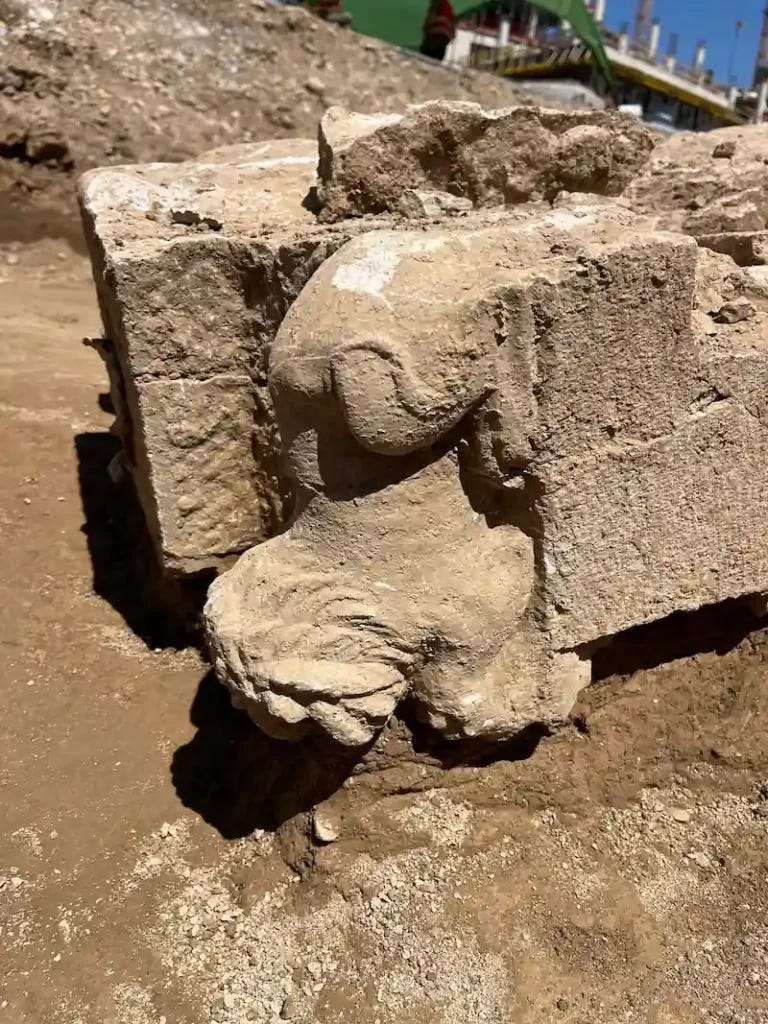
The two things that make it unusual are its form and the iconography carved on it. Neither can be assessed properly while the monument is still in the ground and in pieces. That work waits for the laboratory.
Roman burial along the roadside
Roman cemeteries ran along the roads out of a city rather than sitting in a single enclosed plot, so tombs and commemorative monuments lined the approaches. A monument in the ditch beside the Celeia road is consistent with that arrangement and adds a fixed point to what archaeologists know about how the ground north of Emona was laid out.
The rest of the excavation
Development has destroyed a great deal of Roman Ljubljana over the centuries, which makes a well-preserved stretch of cemetery unusual in itself. This one has produced a substantial quantity of material relating to burial practice and to daily life in the colony, which sat at the northeastern edge of Roman Italy near the Pannonian frontier.
The deadline
The section is due to be handed to the construction crews at the end of next week. That has forced the team to decide what to pursue and what to leave, and summer heat is not helping the pace of open-air work. The excavation is on schedule, and the directors say they are satisfied with the results so far, with several working days still to run.
Sources: (Ne)odkrita arheologija Ljubljane, August 2026. Excavation by the Ljubljana City Museum and the Archaeological Research Consortium for Ljubljana. Slovenian media reported on 27 July 2026 that 125 graves had been documented at the site in the preceding month.