


Egypt's Supreme Council of Antiquities has uncovered a complete bathing complex of the Ptolemaic and Roman periods at Tell Nasser, in the eastern Nile Delta. The find comes from the first excavation campaign ever mounted at the site, which sits about 40 kilometres south of Port Said, 35 kilometres north of Al-Qantara West, and a kilometre and a half north of the Al-Salam Canal.
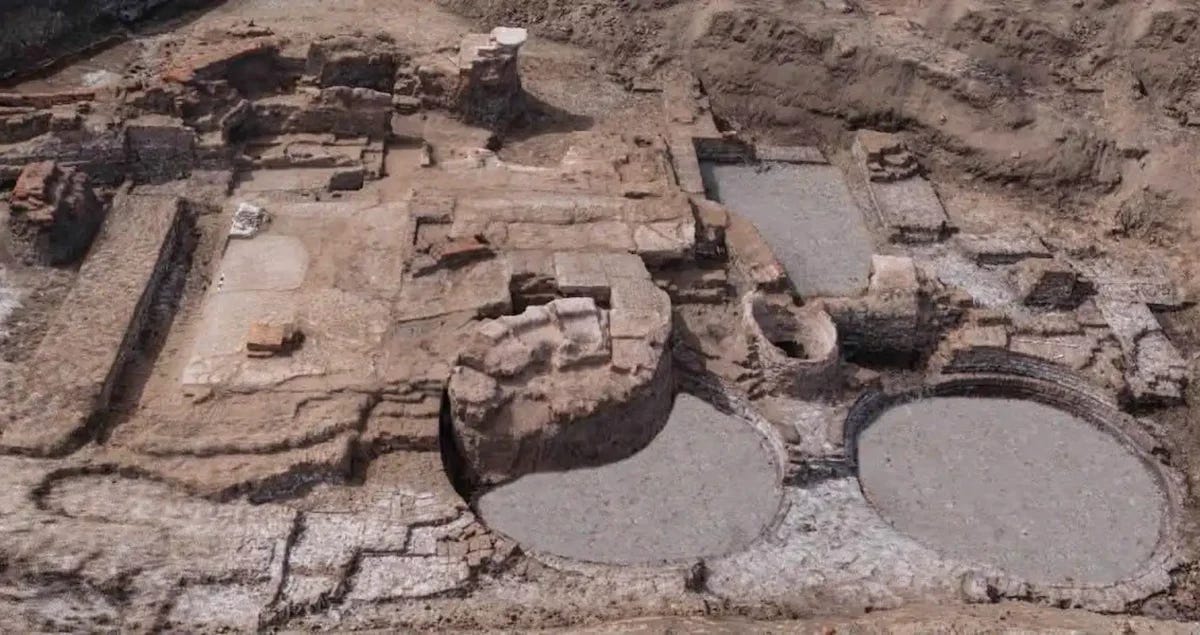
The complex includes circular pools, and it remained in use across the transition from Ptolemaic to Roman rule.
Three results from a first season
Hisham El-Leithy, secretary general of the Supreme Council of Antiquities, identified three findings of particular significance.
The first is documentary. This is the first systematic recording of a complete thermal complex at Tell Nasser, a site that had not previously been investigated in any organised way.
The second concerns the site’s chronology. The excavation confirmed occupation predating the Ptolemaic period, which places the baths within an existing settlement rather than on newly founded ground.
The third concerns duration. The complex continued in use into the Roman period, with architectural modifications made during that time, evidence that its function and its usefulness both persisted through a change of rulers.
Sherif Fathy, Minister of Tourism and Antiquities, described the results as a substantial contribution to understanding settlement patterns, architectural development, and public service infrastructure in the eastern delta during the Ptolemaic and Roman periods.
The round plan and what it signifies
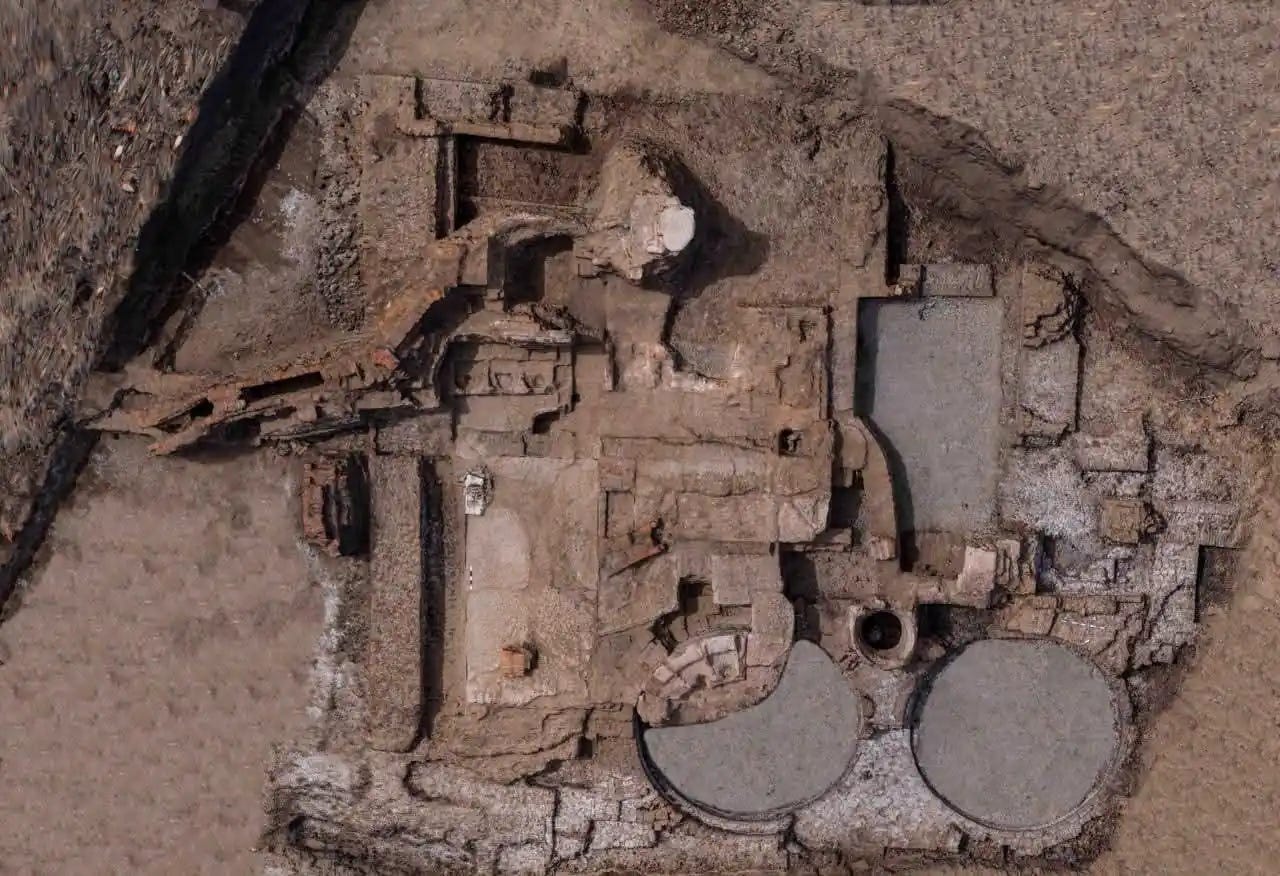
The circular pools identify the building type. Baths of this form, known as tholos baths after their round plan, entered Egypt under the Ptolemies and became one of the most visible Greek contributions to Egyptian civic architecture. Bathers used individual hip baths arranged around the interior wall of a domed rotunda, an arrangement documented at Greek sites across the Mediterranean and adopted widely in Egypt from the fourth century BC onward.
Examples continue to surface. A late Ptolemaic tholos bath was found in Alexandria’s Moharam Bek district in May 2026, alongside a Roman villa with mosaic floors.
The Council describes the Tell Nasser complex as a complete model of hydraulic engineering for the eastern delta, and notes parallels with other Hellenistic baths documented in Egypt, among them one recently excavated at Tell al-Hir in northern Sinai.
A private unit among the public rooms
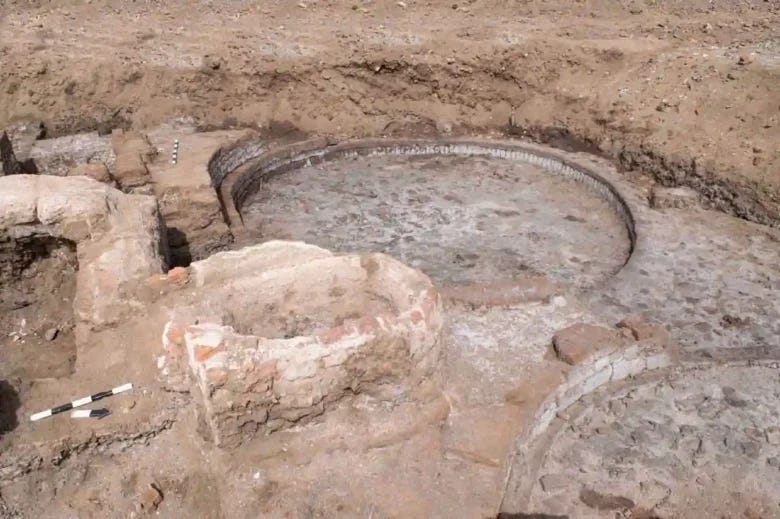
One feature distinguishes Tell Nasser from those comparisons. Alongside the public bathing facilities, the complex contains a private bathing unit.
That combination indicates the building served more than one category of user, which is a detail worth watching as excavation continues, since it bears on who had access to the facility and on what terms.
Sources: Egyptian Ministry of Tourism and Antiquities and Supreme Council of Antiquities, July 2026. Comparative material on tholos baths from reported excavations at Moharam Bek, Alexandria, May 2026, and Tell al-Hir, northern Sinai.