


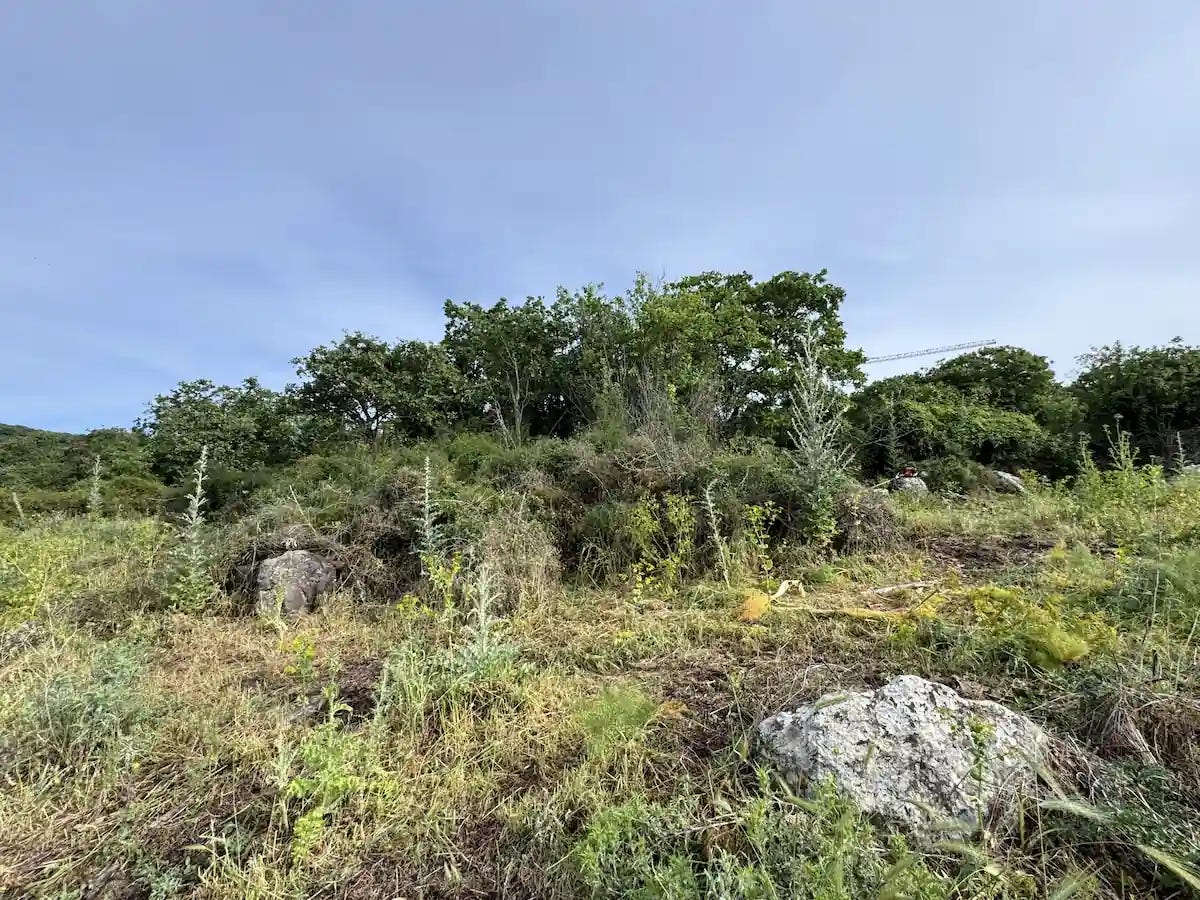
A monumental Bronze Age tomb has come to light at Carrarzu Iddia, in the territory of Bortigali in central Sardinia, on the southern slope of Crastu Littu at an altitude of around 740 meters. It had been standing there all along, hidden under dense vegetation.
The position is commanding. From the ridge the view runs across the plain of Macomer, over the plateaus of Abbasanta and Paulilatino, out to the highlands of the Nuorese and as far as the Gulf of Oristano.
The find was announced on July 30, 2026, and presented at the town library by mayor Patrizia Luciana Tomassetti alongside Elena Anna Boldetti and Monica Stocchino, the superintendents for Cagliari and for Sassari and Nuoro, with archaeologists Luca Doro and Gianluigi Marras.
Cleared rather than excavated
The tomb was not dug out of the ground. The two Sardinian Soprintendenze were already working at the site on the excavation and restoration of its nuraghe when survey work identified the structure, and clearing operations were agreed with the landowners. Removing the vegetation and accumulated material brought the monument back into view.
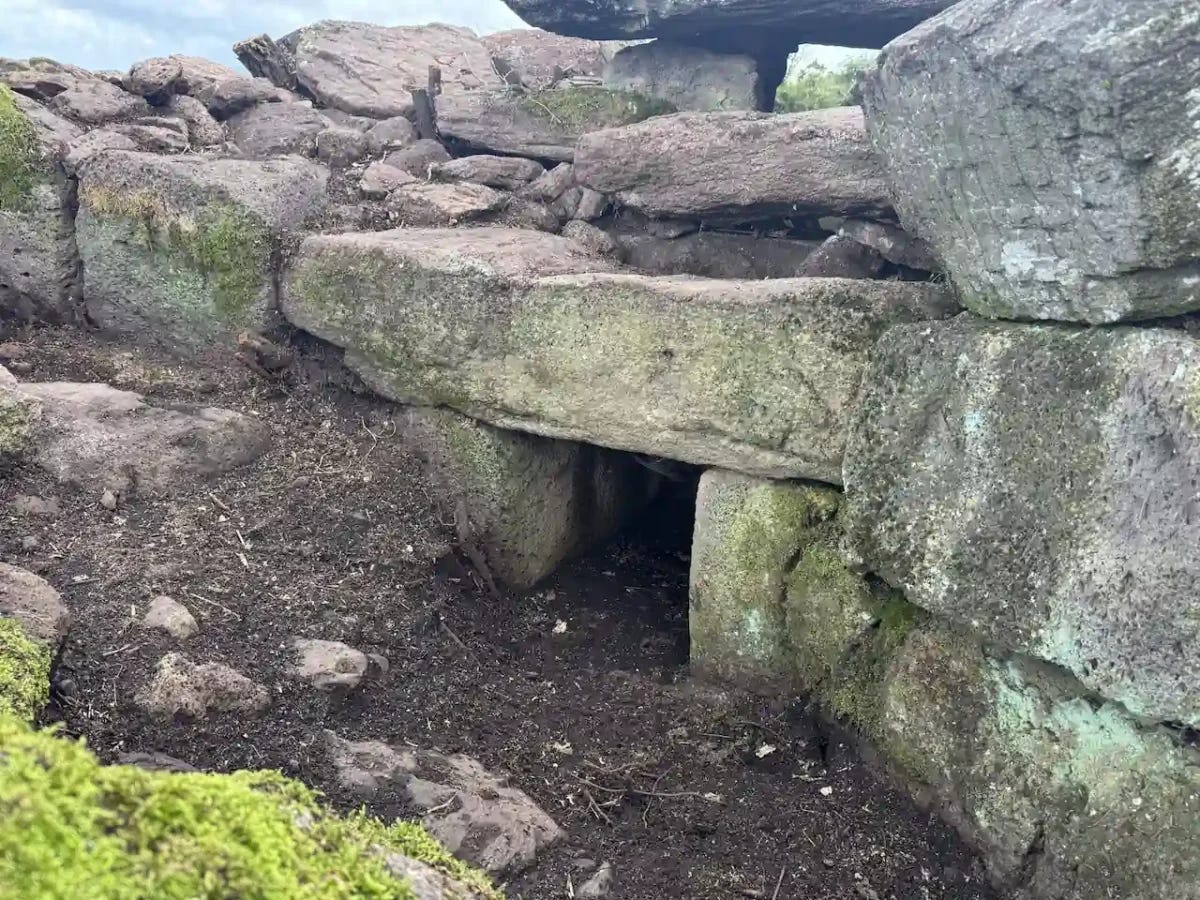
What emerged is in exceptional condition. Built in blocks of trachyte, the tomb preserves its burial chamber and the monumental exedra, the curved forecourt set before the entrance where the community would have gathered.
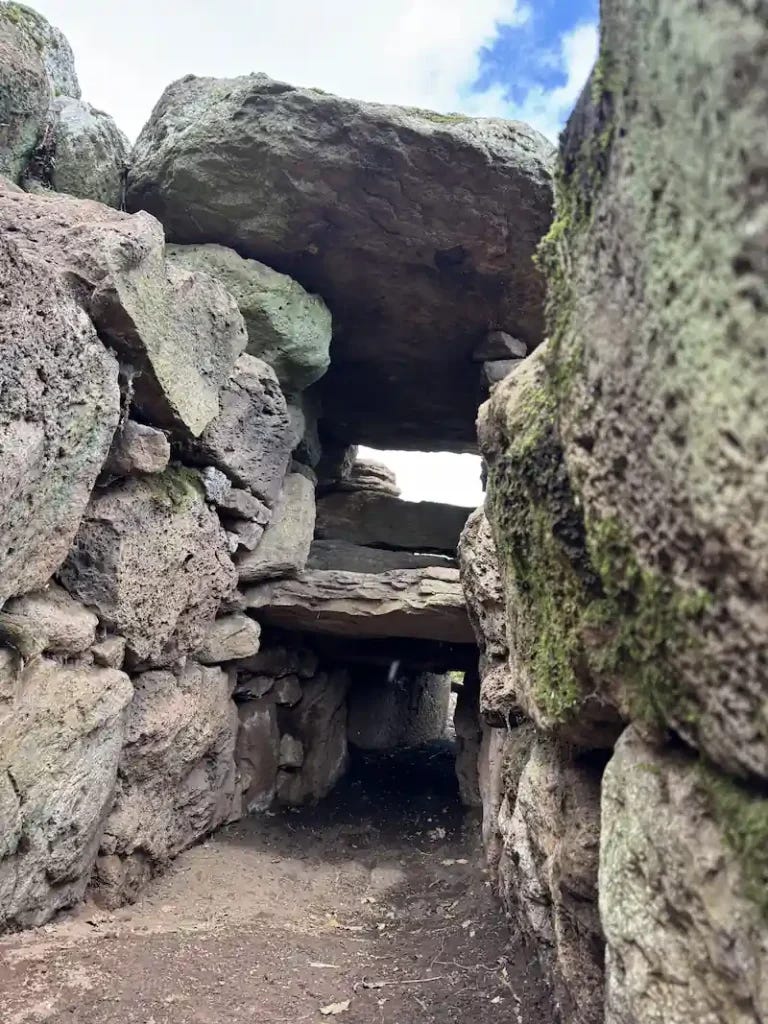
One feature has drawn particular attention. Inside the chamber, near the entrances, the space is divided across two levels. This is rarely documented in tombs of this type and will be the subject of further study.
A form that appears around 1800 BC
Giants’ tombs are among the most distinctive expressions of Nuragic funerary architecture, and they are found throughout Sardinia, where roughly seven hundred have been recorded. They emerged around 1800 BC and were used for collective burial.
Their function extended beyond the practical. These monuments carried symbolic and identitary weight, expressing the relationship between a community, its ancestors, and its control of the surrounding territory. The forecourt in front of the entrance is the architectural signature of that role, a space designed for ceremony rather than interment.
Two giants’ tombs were already known in the municipality of Bortigali, at Tiriani-Perda ‘e S’Altare and at Sereddis. Carrarzu Iddia makes a third.
The rest of the site
The tomb belongs to a larger complex that the current campaign has been steadily uncovering. Work at Carrarzu Iddia has also brought to light two protonuraghi, an earlier form of the Nuragic tower, along with a village and a well cistern of probable sacred function.
Fieldwork began in May as part of a four million euro project covering several municipalities of the Marghine region, aimed at making one of the area’s most significant Nuragic sites accessible again. The excavation has concentrated on the Middle Bronze Age, roughly 1800 to 1400 BC. Alongside the architecture, the team has recovered bronze bracelets and fragments of ceramic vessels, with material still coming out of the ground during the days before the announcement.
Boldetti described the site as a fortunate one, begun with more routine interventions in mind and turned into an extraordinary discovery. Stocchino called the Marghine a region that continues to produce surprises, and this find a genuine revelation.
Sources: Soprintendenza Archeologia, Belle Arti e Paesaggio per la Città Metropolitana di Cagliari e le Province di Oristano e Sud Sardegna, and Soprintendenza ABAP per le Province di Sassari e Nuoro, announcement of July 30, 2026, as reported by ANSA, L’Unione Sarda, La Nuova Sardegna, and Casteddu Online.
The Nuragic culture is heavily underestimated, maybe due to lack of their own writing form, but at that time it was outstanding in the Mediterranean sea. The Shardana, the elite warriors of Ramses II, are believed to come from Sardinia. Hope this and other findings will help understanding them better.
Most interesting. Sardinia had to have quite the little civilization and surplus labor to build such things, which meant they also could build ships. It is likely these people were the ancestors of some of the Sea Peoples who crashed into the eastern Mediterranean during the Bronze Age Collapse.