In a limestone cave in southeastern Australia, people have been carrying armfuls of grass inside, spreading it in thin layers, and setting it alight for the past 25,000 years.
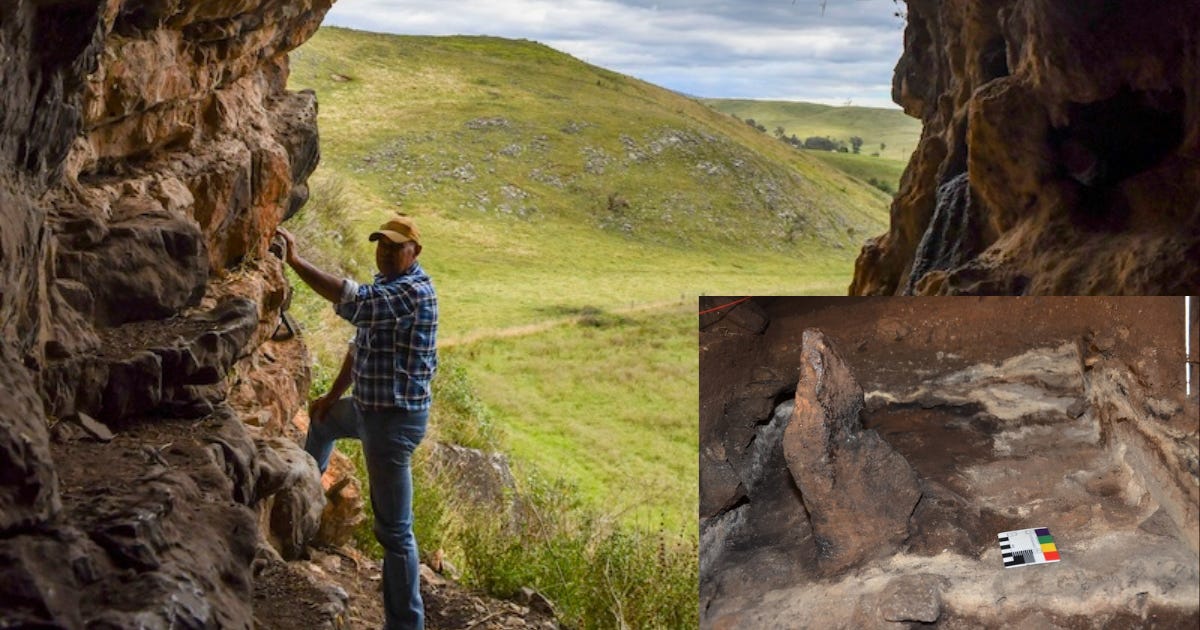
A new study of microscopic plant remains from Cloggs Cave, on GunaiKurnai Country in Victoria, has traced that practice continuously across the entire span of the cave’s human use, offering rare physical confirmation of ritual traditions long recorded in GunaiKurnai oral history and nineteenth-century ethnography.
The research was published in Frontiers in Environmental Archaeology on July 22, 2026, led by Dr. Elle Grono, a postdoctoral researcher at the Australian National University, with colleagues from Australia, France, and New Zealand.
Research done with, not on, a community
The excavations behind the study, carried out in 2019 and 2020, were requested by the GunaiKurnai Land and Waters Corporation itself, and representatives of the GunaiKurnai community took part in the study’s design, the fieldwork, the interpretation of results, and the publication of findings. Professor Bruno David of Monash University co-led the excavations jointly with the corporation. That arrangement matters to how the findings should be read, since the archaeological evidence here is presented alongside GunaiKurnai knowledge rather than in place of it.
The GunaiKurnai are the acknowledged traditional custodians of Gippsland and the southern Victorian Alps in southeastern Australia. Caves within their Country are known, from oral traditions and from nineteenth-century ethnographic records, as places where mulla-mullung, powerful and learned men and women, together with other spiritual practitioners, performed rituals of magic, healing, and cursing. Cloggs Cave, set on a bluff not far from the town of Buchan, is one of them.
Crystals that record where a plant died
The evidence comes from phytoliths, microscopic bodies of silica that form within plant tissues and survive long after the plant itself has decayed. Their value here lies in a specific property Grono explained plainly. Unlike pollen, which wind and insects scatter across the landscape, phytoliths mostly accumulate at the precise spot where a plant breaks down. Because no plants grow inside the cave, where there is no light, any phytolith found in its sediments must have been carried in, either by people or by animals such as possums, on their fur or in their scats.
The team sharpened that distinction further by analyzing the phytolith contents of individual, well-preserved buried possum scats, allowing them to separate animal-borne material from human activity. Their key indicator turned out to be burning. As Grono put it, the team focused on the half-burnt phytoliths in the ashy layers, since only humans could have brought those in, whereas unburnt material could have arrived by either route.

Seventy-three layers and a standing stone
Working with two excavation pits reaching depths of 1.5 and 2.3 meters, the researchers separated thousands of phytoliths into taxonomic groups under the microscope. The upper portions of those pits held 73 thin ashy layers, dated by optically stimulated luminescence and accelerator mass spectrometry radiocarbon dating to between roughly 4,400 and 1,600 years ago, each one laid down by people.
Within those layers the excavation turned up something unexpected, a standing stone 28 centimeters tall, which subsequent analysis showed had been placed upright in the cave by the Old Ancestors for ritual purposes around 2,000 years ago. The burnt phytoliths at the heart of the study came from the ash layers surrounding it.
Grasses chosen deliberately, and brought whole
Across the deposits, the team identified 29 distinct phytolith types spanning grasses, herbs, and woody plants, most of them exceptionally well preserved, with even the most delicate silica structures, such as hair cells, remaining intact.
Grasses overwhelmingly dominated, accounting for up to 97 percent of the material. These came from the Pooideae subfamily, which favors temperate and cool climates, and from Panicoideae, which grows mostly in warm and humid conditions. Phytoliths from Chloridoideae, drought-tolerant grasses suited to hot, dry environments, were less common, and those from woody plants and herbs were rare.
That pattern points to deliberate selection rather than convenience. The Old Ancestors avoided the many species available in the coastal forest and open woodland surrounding Cloggs Cave, targeting instead grasses that could be found a short distance from the cave mouth. The phytoliths themselves came from stems, leaves, flowers, and roots alike, which as Grono noted indicates the grasses were brought in whole, inedible parts included, rather than gathered for food.
Overall, nearly a fifth of the phytoliths, up to 18 percent, were burnt or melted. Their presence throughout the dated deposits, from top to bottom, implies people were carrying plants into the cave and burning them there across the entire 25,000-year span.

Ash, spirits, and greased sticks
David placed the burning within GunaiKurnai practice directly. The burning is consistent, he said, with traditional GunaiKurnai practices of using ash to perform magic and ritual, and also to track the footsteps of anyone entering the cave, including spirit-Beings.
The grasses were not the only plants involved. Deeper and older deposits at the site have yielded other macrobotanical evidence, including trimmed wooden sticks made from Casuarina trees and smeared with grease, indicating that rituals employing woody plants were performed there as well, alongside the burning of grass.
Taken together, the phytoliths, the ash layers, the standing stone, and the greased sticks converge on a single picture, one that GunaiKurnai tradition had already described. Cloggs Cave was a special and secluded place, used across hundreds of generations for practices that the archaeological record can now measure but that the community’s own knowledge has carried forward all along.
Sources: Frontiers (July 22, 2026). Grono, E., David, B., Mullett, R., Stevenson, J., Petchey, F., Delannoy, J.J., et al. (2026). "Phytoliths From Cloggs Cave, GunaiKurnai Country (Southeastern Australia) Reveal the Gathering of Whole Grasses for Burning Practices Inside the Cave." Frontiers in Environmental Archaeology, 5, 1871928. doi.org/10.3389/fearc.2026.1871928


