


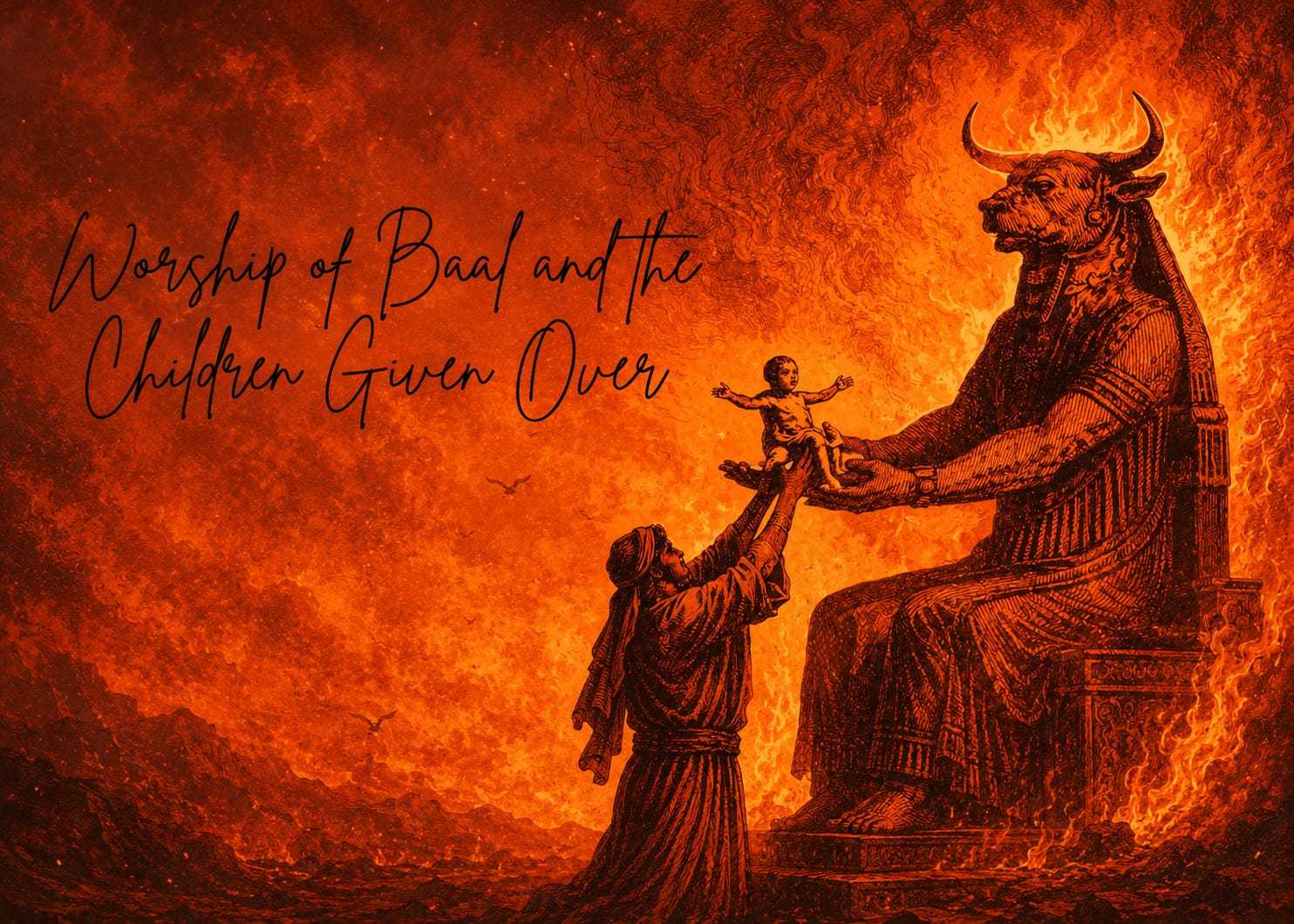
The phrase giving over the children to Baal is meant to horrify. In the biblical imagination it marks the point where devotion curdles into atrocity, where a community crosses a moral boundary so stark that later writers use it as shorthand for total religious collapse. But once you step outside the polemic and into primary texts, inscriptions, and excavated remains, the subject gets more precise and more complicated.
Two things are true at the same time:
In the Hebrew Bible, child offering is repeatedly linked with Baal-language (and with the infamous Tophet) as a practice condemned as an abomination.
In the wider Northwest Semitic world, Baal is not a single god with a single cult. It is a title (lord) applied to multiple local deities and divine aspects. The evidence for child sacrifice varies sharply by place and period, and the best-known archaeological case is not Bronze Age Ugarit but Phoenician-Punic contexts, especially Carthage.
So when modern readers compress everything into one sentence (Baal worship equals sacrificing children), they flatten a messy historical record into a slogan.
Who is Baal, exactly?
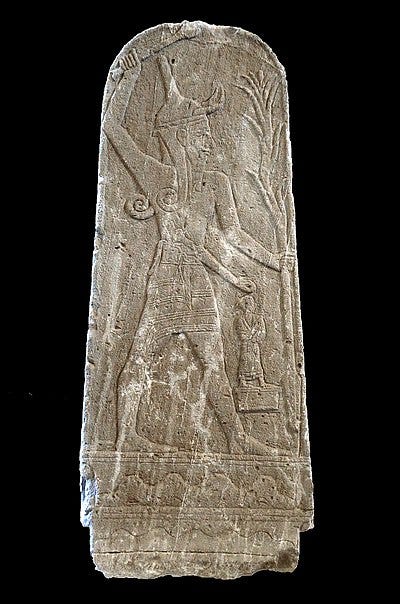
Baal (Northwest Semitic baʿl, lord) functions both as a divine name and a title. In Late Bronze Age Ugarit (Ras Shamra in modern Syria), Baal is the storm god often identified with Hadad, celebrated in the Baal Cycle as the power who brings rain, fertility, and kingship. The cult world reflected in Ugaritic ritual texts includes offerings and sacrifice, but there is no clear reference to child sacrifice at Ugarit in the currently known evidence.
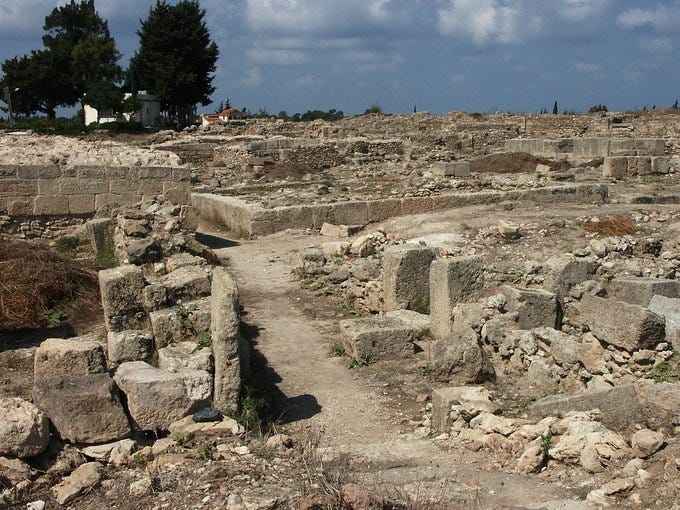
Later, in Phoenician-Punic religion, you meet Baal Hammon, the major god of Carthage (often paired with Tanit). The Carthage Tophet is explicitly associated with these deities in inscriptions and later reporting, which is why the Baal-and-children theme tends to orbit Carthage more than anywhere else.
Bottom line: Baal is not one uniform cult across time. The question is always which Baal, where, and when.
The biblical charge: Tophet, fire, and giving offspring
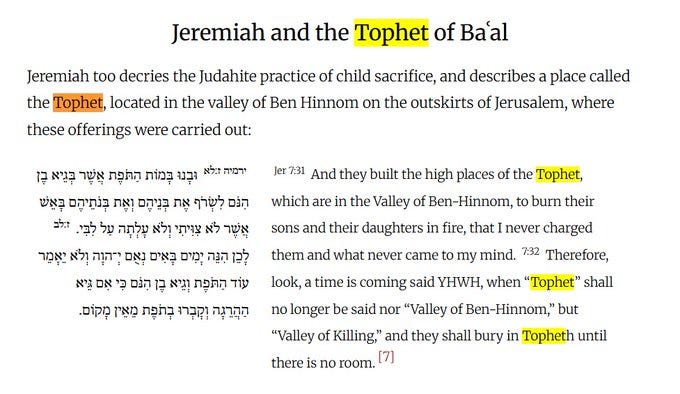
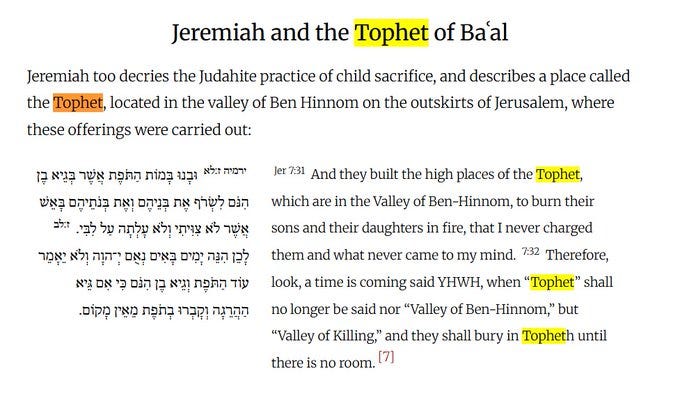
The Hebrew Bible contains multiple condemnations of a rite described as making sons and daughters pass through fire, and it situates this practice in and around the Valley of Hinnom (later associated with Gehenna imagery). A key reform text says Josiah defiled the Tophet so no one could make a son or daughter pass through fire as a molekh offering.
Jeremiah intensifies the accusation by tying child burning specifically to Baal language (not just to the ambiguous term molekh), portraying the act as a betrayal of YHWH and as moral pollution of the land.
A major scholarly hinge: is Molech a god, or a type of offering?
Modern scholarship is divided on whether molekh/Moloch in some biblical passages names a deity or labels a sacrificial category (connected to Punic mlk/molk terminology). This debate matters because it changes how we read “to/for Molech”: as devotion to a specific figure, or as participation in a particular ritual logic.
Even among scholars who accept that the biblical texts refer to real child sacrifice, there is still argument over scope (rare crisis-ritual vs broader practice), targets (foreign god vs a syncretized rite), and what parts of the descriptions are theological rhetoric rather than forensic reporting.
The archaeological battleground: the Tophet of Carthage
If you want the strongest material record behind the children-given-over idea, you end up in Phoenician-Punic archaeology.
What a tophet is (in the archaeological sense)
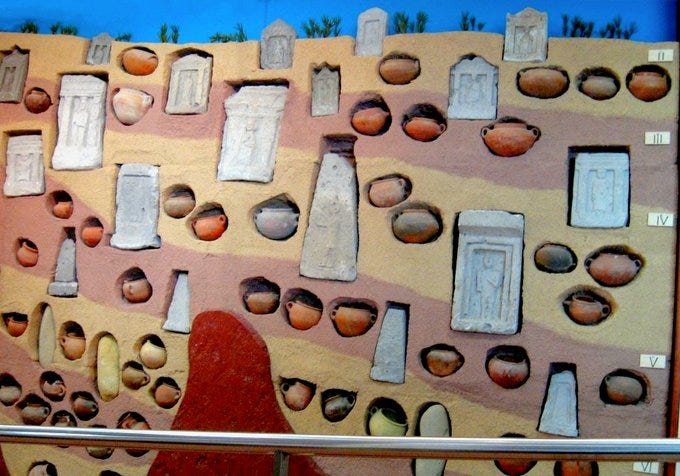
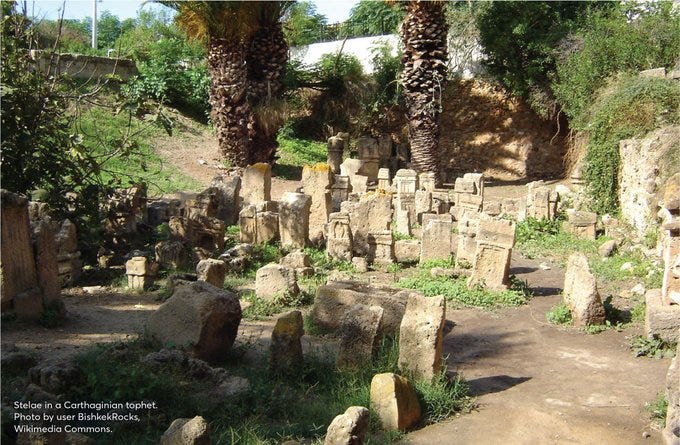
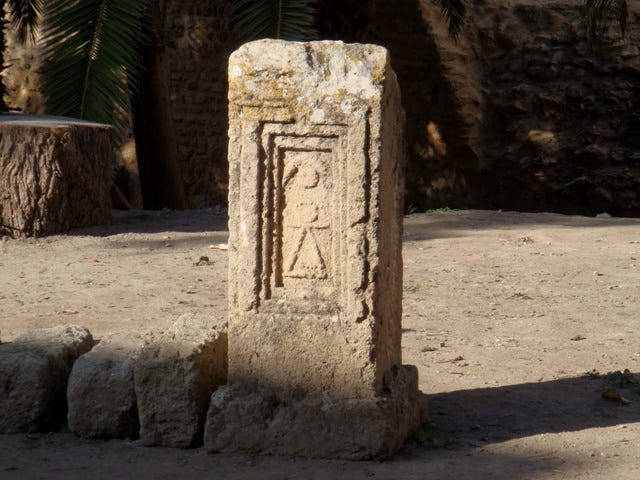
In Carthage, the tophet is a precinct containing large numbers of urn burials with cremated remains of very young children (and often animals), along with stelae and dedicatory inscriptions connected to Tanit and Baal Hammon. UNESCO’s description of Carthage explicitly notes the tophet as a sacred place dedicated to Baal with numerous stelae.
Inscriptions and museum scholarship discuss mlk/molk offerings and even categories like molk ʾadam (offering of a human) alongside substitution language (a lamb in place of something else), suggesting a ritual system structured around vowed gifts and fulfillment.
The live controversy: sacrifice or cemetery?
There are two major interpretive camps, and both publish in serious venues.
Position A: the remains reflect real child sacrifice (at least in many cases).
A widely cited multi-author study and related reporting argued that the combined evidence (inscriptions, animal remains, age profiles, and context) is best explained by ritual killing rather than only burial of natural infant deaths.
Position B: the tophet is primarily a cemetery for infants who died naturally, with ritualization after death.
A prominent PLOS ONE study concluded the age distribution could fit perinatal mortality patterns and argued the remains do not support systematic infant sacrifice.
Where the field actually is: still arguing, but with better tools.
Later peer-reviewed exchanges emphasize that aging cremated infant remains is technically difficult, and small methodological differences can flip conclusions. Antiquity has hosted back-and-forth on what the data can bear.
The most responsible synthesis today sounds like this: Carthage provides strong evidence for a specialized infant-and-votive precinct tied to Baal Hammon and Tanit, and a credible case exists for sacrificial killing in at least some instances, but the scale and regularity remain contested and cannot be reduced to a single sentence.
What giving over the children may have meant in practice
When ancient sources say parents gave their children, the possibilities include several grimly different mechanisms:
Direct sacrifice: the child is killed as the offering.
Vowed offering with substitution logic: the vow structure is fixed, but substitution (for example, a lamb) is sometimes possible, reflected in the way mlk/molk is discussed in relation to animal substitutes.
Ritualization of death: the child died (from disease, prematurity, or crisis), and the parents performed a costly rite framing that death as an offering in a sanctuary space.
All three models show up in modern scholarship because the archaeological signatures can overlap: cremation, urn burial, animal remains, and votive stelae do not automatically tell you cause of death.
Why the Baal-and-children motif survived so powerfully
The Bible’s anti-child-offering rhetoric is not only about another god. It is about identity formation. To say they give their children to Baal is to draw a boundary line: this is what we are not, this is what we reject, this is why reform must be absolute.
That rhetorical afterlife continues. In modern literature and commentary, Moloch (often blended in popular imagination with Baal imagery) becomes a symbol for systems that devour what is most precious, especially children, whether the topic is war, economic exploitation, or technological arms races.
This matters because the same symbolic power can be weaponized: accusations of child sacrifice have historically fueled moral panics and dehumanizing propaganda. A careful historical approach does not erase the ancient evidence, but it resists turning that evidence into a timeless accusation template.
Historical background (compressed timeline)
Late Bronze Age (c. 1400–1200 BCE): Ugarit and Baal-Hadad. Baal appears as storm-kingship deity in Ugaritic myth and ritual evidence, with no clear attestation of child sacrifice in the known corpus.
Iron Age (first millennium BCE): Israel and Judah in prophetic critique. Biblical writers condemn rites of passing children through fire and link them with Tophet and with Baal language in Jeremiah, framing the practice as an extreme breach.
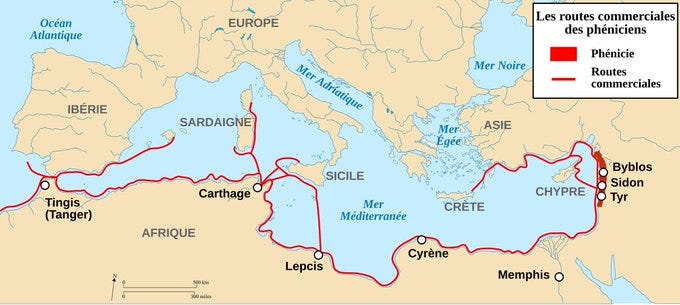
Phoenician-Punic world (first millennium BCE into early centuries CE): Carthage and tophets. The most archaeologically dense context for the debate is Carthage’s tophet precinct associated with Tanit and Baal Hammon and the mlk/molk offering terminology.
Greco-Roman reception: Classical authors report Carthaginian child sacrifice, often in hostile ethnographic tones, feeding a long tradition where the charge becomes part of how enemies narrate each other.
Today’s events: what is happening now and why it matters
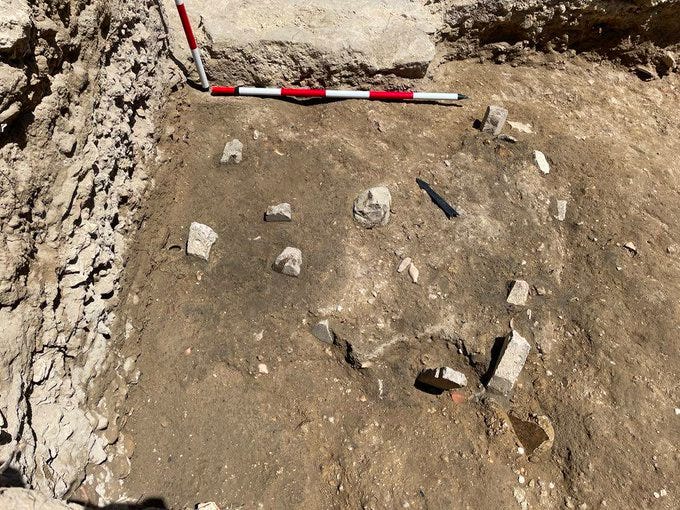
New fieldwork and heritage work at Carthage’s sacred precincts. Tunisia’s heritage authorities have publicized ongoing scientific fieldwork connected to the temple area associated with Tanit and Baal Hammon as part of broader development and study of the tophet zone.
New peer-reviewed approaches to tophet remains outside Carthage. A 2024 Antiquity article on the Neo-Punic tophet at Zita (Tunisia) shows how researchers are re-examining cremated infant and child remains with life-course and contextual methods, expanding the dataset beyond the Carthage spotlight.
Renewed excavation around Ugarit (Baal’s best-known mythic home). Archaeologists have returned to work near the Late Bronze Age city of Ugarit after long interruption, which is relevant because Ugarit remains central for reconstructing Baal’s profile in Canaanite religion and separating what the texts actually attest from later polemics.
In other words: the Baal-and-children topic is not only an old scandal. It is a living research problem, shaped by new excavations, improved bioarcheological methods, and public heritage decisions about how to present painful material responsibly.