


Imagine a scholar turning up solid evidence of a missing monarch tucked somewhere into the official line of British kings, a second, short-lived Elizabeth, or a Charles who reigned before the current one, quietly erased from the record. That is roughly the scale of disruption a new study is causing among specialists in ancient Assyria.
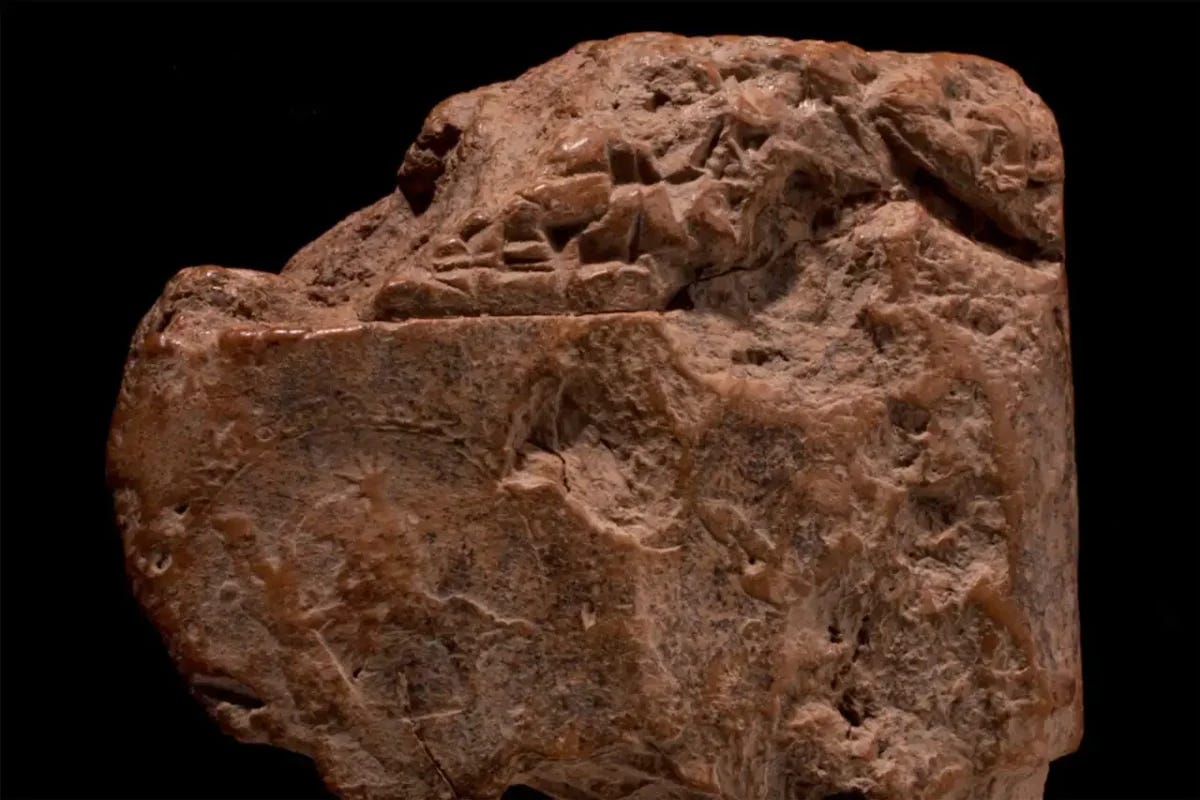
Fragment of a cuneiform tablet bearing a royal grant dated to 762 B.C.E., issued in the name of a newly identified Assyrian king, Tiglath-pileser. Shown is the obverse of tablet Rm 75. Credit: Trustees of the British Museum / Cuneiform Digital Library Initiative.
Researchers have found evidence for three previously unknown Assyrian kings, each ruling briefly during the tenth and eighth centuries BC, monarchs whose names appear to have been deliberately scrubbed from history by the very successors who replaced them.
The study, titled “Three New Kings of Assyria,” was written by Eckart Frahm, the John M. Musser Professor of Near Eastern Languages and Civilizations at Yale, together with Alexander Johannes Edmonds of the University of Münster in Germany. It appears in the Journal of Cuneiform Studies. Yale announced the findings on July 9, 2026.
A surprise no one expected
Assyria’s known history stretches from around 2025 BC to 609 BC, beginning as the small city-state of Ashur, in what is now Iraq, before growing into a vast empire that came to dominate much of western Asia. For its final centuries, the so-called Neo-Assyrian period, Assyriologists believed they already had a fairly complete picture of who had ruled, drawn largely from the Assyrian King List, a document preserved on three well-preserved cuneiform tablets that appeared to show power passing smoothly, almost always from father to son, without serious incident.
Frahm called the discovery of room for three entirely new rulers within that supposedly settled period a genuine surprise, since no one expected there would be space left for unknown kings in this particular stretch of Assyrian history. The new study builds on his own earlier research, which had already flagged evidence for one of the three. As Frahm put it, he and Edmonds have now shown that three such rulers had been hiding in the shadows all along, buried inside poorly preserved cuneiform documents that had been published long ago but never properly understood.
A land grant that didn’t add up
The clearest case concerns a cuneiform royal grant, a record of an Assyrian king awarding land to an individual, held at the British Museum and dated by its eponym year to 762 BC. Earlier scholarly translations had assumed the grant was issued by Adad-nerari III, who reigned from 810 until his death in 783 BC. A second royal name also appears on the tablet, that of a king called Tiglath-pileser, previously identified as Tiglath-pileser III, who ruled from 745 to 727 BC.
The trouble is that neither king actually held the throne in 762 BC, a contradiction scholars had never managed to resolve. Frahm’s solution came from a fresh reading of the tablet’s opening line. The grant’s name for the first king, he argues, is written differently there than Adad-nerari III’s name appears elsewhere, suggesting it was not him at all. The grant, in his reading, was far more likely issued under a king also named Tiglath-pileser, but not the one recorded on the official King List, an entirely separate Assyrian prince who had simply taken the same royal name for himself.
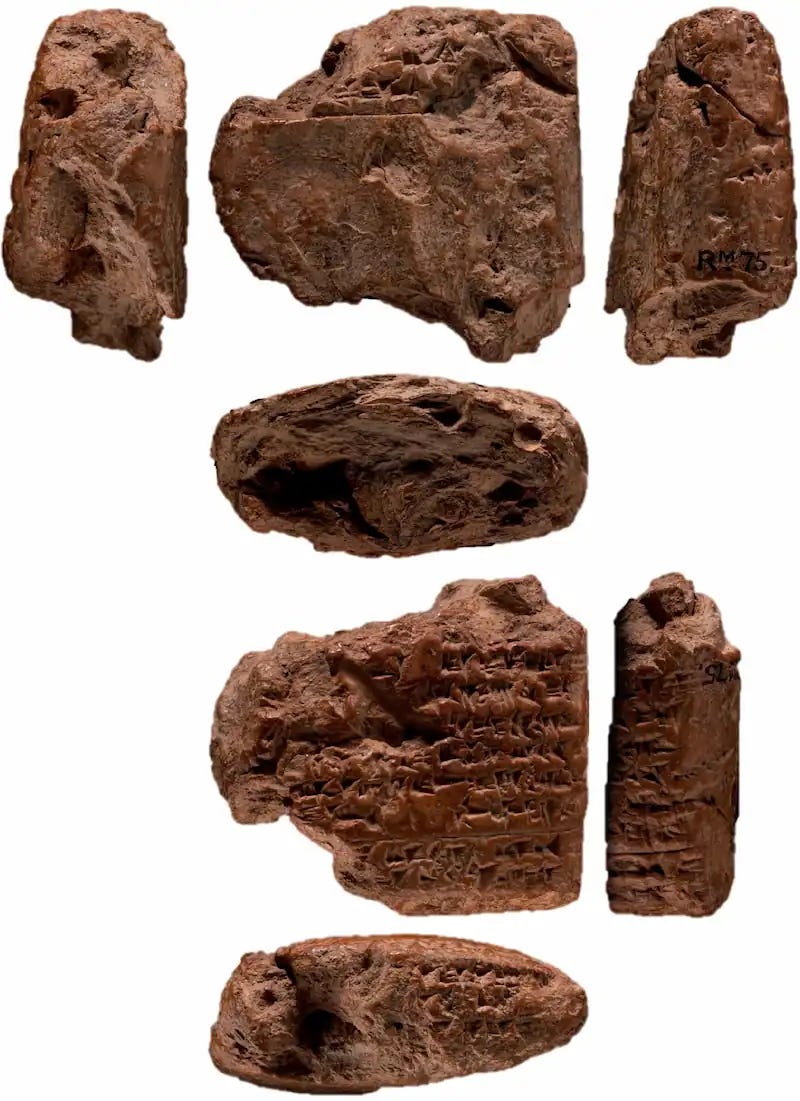
Another view of tablet Rm 75, which mentions the newly identified Assyrian king Tiglath-pileser. Credit: Trustees of the British Museum.
That reading gains support from the Assyrian Eponym Chronicle, a separate cuneiform text recording major events across the empire’s history, which describes a rebellion and insurgency breaking out in the city of Ashur in 763 and 762 BC. Frahm suggests the unknown prince launched his uprising during exactly this unrest, aided by a striking piece of celestial timing, a solar eclipse recorded early in 763 BC, an omen contemporaries would very likely have read as a sign that the reigning king’s time had come to an end. The Eponym Chronicle also records an outbreak of plague in the region a couple of years earlier, in 765 BC, which Frahm believes may have been the underlying trigger for the broader crisis that followed.
Two more kings, uncovered the same way
Applying similar detective work to other poorly understood texts, Frahm and Edmonds identified two further rulers. One is a previously unrecorded Shalmaneser, who reigned around 747 to 745 BC during a period Frahm describes as marked by widespread chaos inside Assyria, disloyal vassals, and incursions by nomadic groups. The other is a new Aššur-uballiṭ, reigning around 913 to 912 BC, whose existence surfaces in a text listing rulers who had restored a silver ritual vessel used for beer offerings dedicated to the god Ashur.
Each of the three kings held power for less than two years. Frahm believes their names were deliberately struck from the historical record, most likely by the very successors who replaced them. In the case of Aššur-uballiṭ, the evidence suggests he was actually his father’s legitimate heir, only to be pushed aside by a rival prince who, as Frahm put it, had no interest in advertising that he had come to the throne under somewhat questionable circumstances.
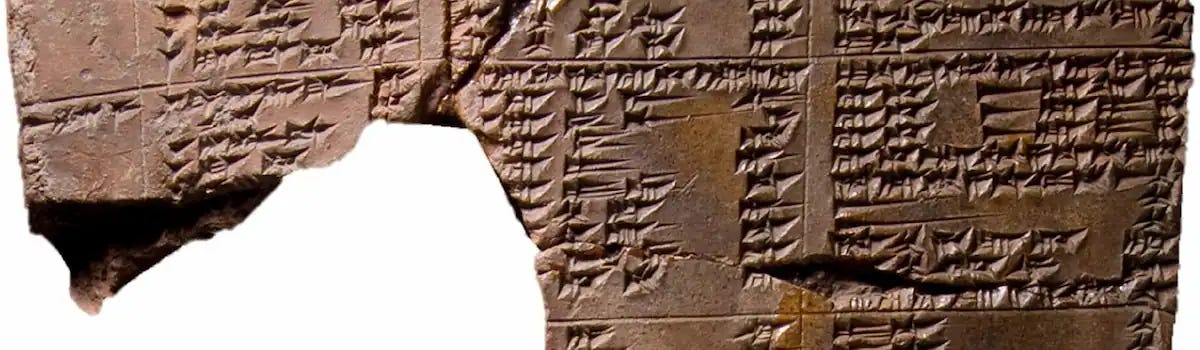
Detail of the reverse of tablet K 51, showing the entry preceding the eclipse of 763 B.C.E. (top) and another located above the eponymate of Aššur-nārārī V. Credit: Trustees of the British Museum.
A messier history than the record admits
The wider implication reaches well beyond three individual names. Frahm argues the Assyrian King List itself presents an idealized version of Assyrian kingship, one that has quietly erased virtually all unrest and instability from the official story. The reality, he and Edmonds suggest, was considerably messier than the tidy succession the list implies, closer to open dynastic rivalry than to any smooth passing of the crown.
That messier picture reshapes how historians should understand Assyria’s rise into an empire. The conventional narrative treats the ascent that culminated under Tiglath-pileser III as a long, largely unstoppable climb beginning in the late tenth century BC, interrupted by only minor setbacks and carried along by a long chain of mostly uncontested father-to-son successions. The new research instead shows that, in the years leading up to Tiglath-pileser III’s actual accession, members of the royal family were actively competing with one another for the throne, even as the kingdom endured both plague and the onset of a period of growing aridity.
Frahm draws out the striking irony in what came next. The combination of pandemic, climate stress, succession crises, a solar eclipse, and the rise of a newly ambitious class of political players did not produce collapse. It produced instead Assyria’s transformation into a predatory empire on a scale the ancient world had not previously seen, a pattern Frahm notes resonates, in some respects, with global events of the present day.
Support Independent Ancient Content. Your support helps me create more archaeology posts, articles, and mini history videos:
Source. Yale News (July 9, 2026). Edmonds, A.J., and Frahm, E. (2026). "Three New Kings of Assyria." Journal of Cuneiform Studies, 78. doi.org/10.1086/741239
Well done & very interesting. A number of yrs ago I had the honor of attending a program presented by Dr. Eden Naby whose specialty was Middle Eastern studies at Harvard. She spoke about the diaspora of the dwindling Assyrian culture. Our host invited me to join the small group for dinner. I regret not staying in touch.
A massive plague occurred at the end of the Bronze Age, when Assyria pulled back into its homeland. So Iron Age Assyrians may have been sensitive to plague outbreaks.