


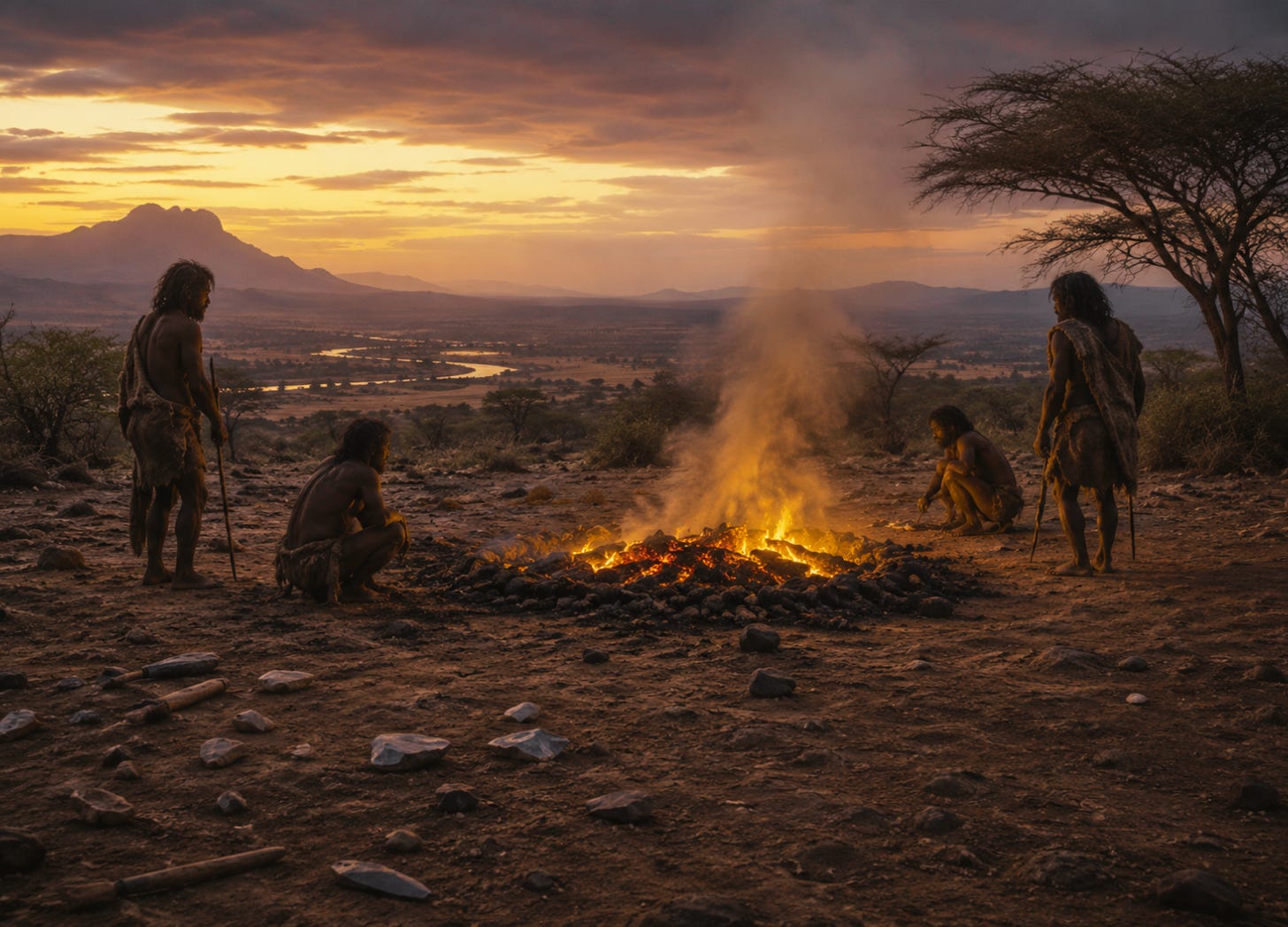
A new study from Ethiopia’s Afar Rift may push the story of human mortuary behavior much deeper into prehistory. Researchers working in the Middle Awash region have identified early Homo sapiens remains dated to roughly 100,000 years ago, including bone fragments that appear to have been exposed to high temperatures. If this burning was intentional, the find could represent the earliest known evidence of human cremation, far older than the previously recognized record.
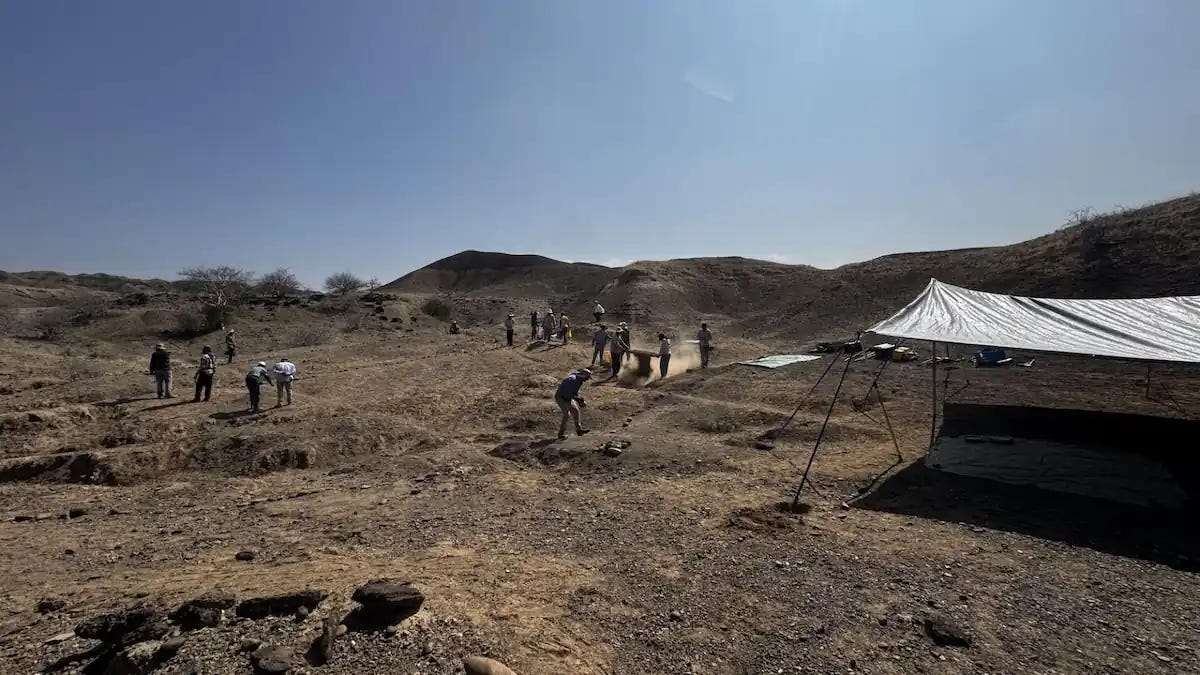
The discovery comes from the Halibee Member of the Dawaitoli Formation, specifically the Faro Daba beds, a Middle Stone Age landscape preserved in the Afar Rift of northeastern Ethiopia. The area is especially important because it offers rare open-air archaeological contexts from a period when early modern humans were already living in Africa but had not yet begun the later major dispersals into Eurasia. The study was published in Proceedings of the National Academy of Sciences under the title Halibee member archaeology: Middle Stone Age environment, technology, and postmortem modifications.
The key evidence involves three partial Homo sapiens skeletons recovered from sediments dated to about 100,000 years ago. Each individual appears to have followed a different postmortem path. One skeleton shows signs of rapid burial, with no clear evidence of carnivore damage or human modification. Another was affected by scavengers, preserving tooth marks and damage consistent with animal activity near the time of death. The third, however, is the most provocative: it consists of a tooth and small bone fragments showing cracking, discoloration, charring, and fragmentation consistent with exposure to intense heat.
That burned individual is where the debate begins. The researchers are careful not to claim certainty. Natural fire, such as a bushfire, remains a possible explanation. But if the burning was deliberate and connected to treatment of the dead, it would change the known timeline of cremation dramatically. The current global benchmark often points to Lake Mungo in Australia, where cremated human remains are generally placed around 40,000 to 42,000 years ago. In Africa, confirmed intentional cremation is much later, with recent work identifying a 9,500-year-old pyre in Malawi as the oldest confirmed intentional cremation on the continent.
This is why the Ethiopian evidence matters so much. It does not simply add another burial to the record. It raises the possibility that symbolic or ritual treatment of the dead may have existed among Homo sapiens far earlier than previously demonstrated. Still, the strongest wording is possible cremation, not confirmed cremation. The scientific value of the find lies precisely in that tension: the bones are old, the heat exposure is real, but the meaning of the burning remains open.
The wider archaeological context strengthens the importance of the site. Researchers documented thousands of Middle Stone Age stone tools across the ancient floodplain. Many were made from local volcanic rocks, especially basalt, suggesting tool production happened directly at the site. A small number were made from obsidian, a volcanic glass that appears to have come from outside the immediate area. This may point to long-distance movement, exchange, or access to raw material sources that are no longer visible today.
The environment was not a barren desert like much of the region appears today. Geological and paleontological evidence indicates a wooded floodplain shaped by seasonal flooding from the ancient Awash River. More than 3,000 animal fossils were studied, including monkeys, rodents, and large mammals. The presence of tree-dwelling monkeys, including ancestors of vervets and black-and-white colobus monkeys, suggests that the landscape offered shade, water, and vegetation.
This seasonal setting likely shaped human behavior. The site seems to have been visited repeatedly for short periods rather than occupied continuously. Early Homo sapiens may have returned when water, animals, plant resources, and workable stone were available. The researchers argue that local hydrology, especially flood cycles, may have influenced human life more directly than broad global climate patterns.
Another reason the discovery is significant is preservation. Open-air Middle Stone Age sites with human fossils, tools, and animal remains in close association are rare. Many early human records come from caves, which preserve material differently and may give a narrower picture of ancient behavior. At Faro Daba, artifacts and fossils appear to have remained largely undisturbed, allowing researchers to examine spatial relationships between bones, tools, sediments, and environmental evidence with unusual clarity.
The burned remains therefore sit inside a much larger story. This was not an isolated bone fragment without context. It was part of a preserved ancient landscape where early Homo sapiens made tools, moved across terrain, encountered animals, used floodplain resources, and left behind traces of life and death. Whether the burned bones represent a deliberate mortuary rite or an accidental natural fire, they still reveal a complex postmortem history in one of the most important regions for human evolution.
For now, the most responsible conclusion is cautious but powerful: Ethiopia’s Afar Rift has produced possible evidence of cremation around 100,000 years ago. If future analysis confirms intentional burning of the dead, the discovery would extend the known history of human cremation by tens of thousands of years. Even if it remains unresolved, the find already challenges simple ideas about early Homo sapiens and shows that death, environment, fire, and memory may have intersected far earlier than we once imagined.