Whatever else it is, the Shroud of Turin has turned out to be an extraordinary genetic time capsule, though not in the way its most devoted admirers might have hoped.
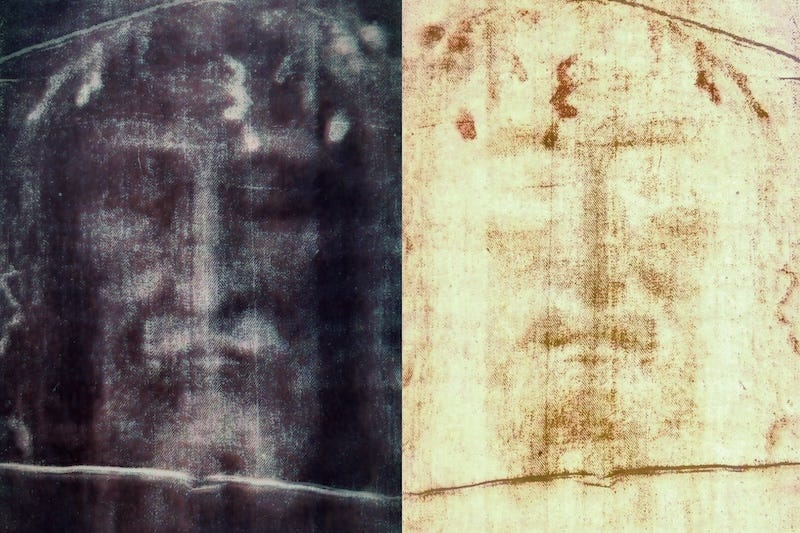
A new metagenomic analysis of the famous linen cloth’s official 1978 sample collection has recovered DNA from carrots, wheat, corn, bananas, peanuts, and a small menagerie of domestic animals including cattle, pigs, chickens, dogs, and cats, alongside human DNA from at least 14 different individuals spanning Europe, the Near East, and India.
The research, led by Gianni Barcaccia of the University of Padua and Alessandro Achilli of the University of Pavia, was published in Scientific Reports. It focuses on the official sample collection gathered on the night of October 8 to 9, 1978, by Pierluigi Baima Bollone, himself a co-author on the new study.
A relic that resists easy answers
The Shroud has been venerated for centuries as the burial cloth said to have wrapped the body of Jesus, and it remains one of the most fiercely contested relics in the world, dividing believers from skeptics over a question no single test has ever definitively settled. Its true origin has never been established. The earliest confirmed record of its existence dates to 1354, when it surfaced in the French town of Lirey, an appearance consistent with the Lirey pilgrim medallion, itself dated to between 1350 and 1418. Radiocarbon dating carried out independently in 1988 by laboratories in Oxford, Tucson, and Zurich placed the fabric’s origin between 1260 and 1390 AD, a medieval date that remains contested by some Shroud researchers to this day.
To learn more about the cloth’s history, researchers went back to organic residues extracted from its surface during that 1978 sampling session and reanalyzed them using modern metagenomic sequencing, a technique capable of identifying every genetic fragment present in a sample and matching it against reference databases of known human, plant, animal, and microbial DNA.
Fourteen people, and a surprising amount of India
On the human side, the team identified DNA from at least 14 different individuals from around the world. One traced almost certainly to the European, Jewish-descended scientist who originally collected the samples in the 1970s, his own mitochondrial lineage, K1a1b1a, turning up directly in the material he had handled. The study also detected a rare genetic signal, lineage H33, associated with the small, Arabic-speaking Druze population of the Near East.
The more striking finding was that nearly 40 percent of the human DNA recovered from the Shroud traces to Indian ancestry. The researchers suggest the most plausible explanation is that the linen itself was woven from flax imported from regions near the Indus Valley, a hypothesis Barcaccia’s team had first floated in earlier research back in 2015. Supporting evidence for that idea includes historical trade links between the Mediterranean and South Asia, references to a term resembling “Hindoyin” in rabbinic texts, and the possibility that the word Shroud itself, derived from the Greek sindon, meaning fine linen, may ultimately connect to Sindh, a region long famed for high-quality textile production.
Peanuts, bananas, and a very strange guest list
Then the findings get considerably stranger. Alongside carrots, wheat, and corn, the analysis turned up a notably strong presence of peanuts, particularly concentrated in one specific sample, alongside banana, pepper, tomato, cucumber, melon, and potato. Weaker traces pointed to almonds, walnuts, sweet orange, fig, pistachio, apple, pear, hazelnut, and grapevine, alongside forage plants like ryegrass, fescue, and clover, and even wild, uncultivated species such as stinging nettle, spruce, and cardoon.
The animal side of the ledger was just as varied. Cattle, pigs, chickens, dogs, cats, horses, and rabbits all left genetic traces on the cloth, joined by a handful of stranger marine contaminants, including Atlantic cod and mullet, alongside a species of Mediterranean red coral historically prized by Romans for jewelry and other symbolic objects.
Exactly how, when, or where each of these traces made contact with the Shroud remains impossible to pin down. One detail does offer a useful clue, though. The carrot DNA recovered matched European varieties that were not cultivated until the fifteenth and sixteenth centuries, and the researchers note that many of the identified species originate in the Americas, suggesting this particular layer of contamination most likely accumulated after the voyages that followed Europe’s encounter with the New World in 1492.
What the DNA can, and cannot, tell us
Study co-author Noemi Procopio described the Shroud as a rich archive of genetic information, built up over centuries of human handling and environmental exposure. While the DNA evidence cannot answer every question about the cloth’s age or authenticity, she said, it does offer genuinely new insight into its biological history, and demonstrates how advances in forensic science can extract fresh information from even the most thoroughly studied historical artifacts.
Barcaccia struck a similarly measured note, saying the pattern of plant and animal contamination is consistent with events occurring in relatively recent historical periods, no earlier than the Late Middle Ages, layered together with the biological exchanges that followed the voyages of discovery to the Americas. The genetic findings, he said, complement the existing forensic, historical, and radiometric evidence already available, offering new molecular insight into how the Shroud has been preserved and contaminated over time, without resolving the deeper questions that have surrounded the relic for centuries.
That caution matters, and outside experts have echoed it since the study’s release. The overwhelming message of the genetic evidence is one of accumulated contamination, from the scientist who first sampled the cloth to the animals, crops, and even sea creatures that brushed against it across hundreds of years of handling, rather than any signal pointing toward the Shroud’s original origin or age. As the researchers themselves acknowledge, the sheer number of people who have come into contact with the cloth over time makes identifying anything resembling its original DNA effectively impossible. What the study does confirm, more concretely, is that two threads sampled from the Shroud’s reliquary carry radiocarbon dates of 1534 and 1694, evidence of historical repairs made to the cloth long after its first recorded appearance.
Support Independent Ancient Content. Your support helps me create more archaeology posts, articles, and mini history videos:
Sources. University of Padua, official press release (July 9, 2026); Scientific American; Bode Living. Barcaccia, G., Rambaldi Migliore, N., Gabelli, G., et al. (2026). “DNA Signatures Preserved in the Official 1978 Sample Collection of the Shroud of Turin.” Scientific Reports 16, 21206. doi.org/10.1038/s41598-026-60684-7


