


At a Bronze Age site on the outskirts of Madrid, a single fragment of horse skull has pushed back the clock on one of the most consequential technologies in human history, the domestication of the horse for riding.
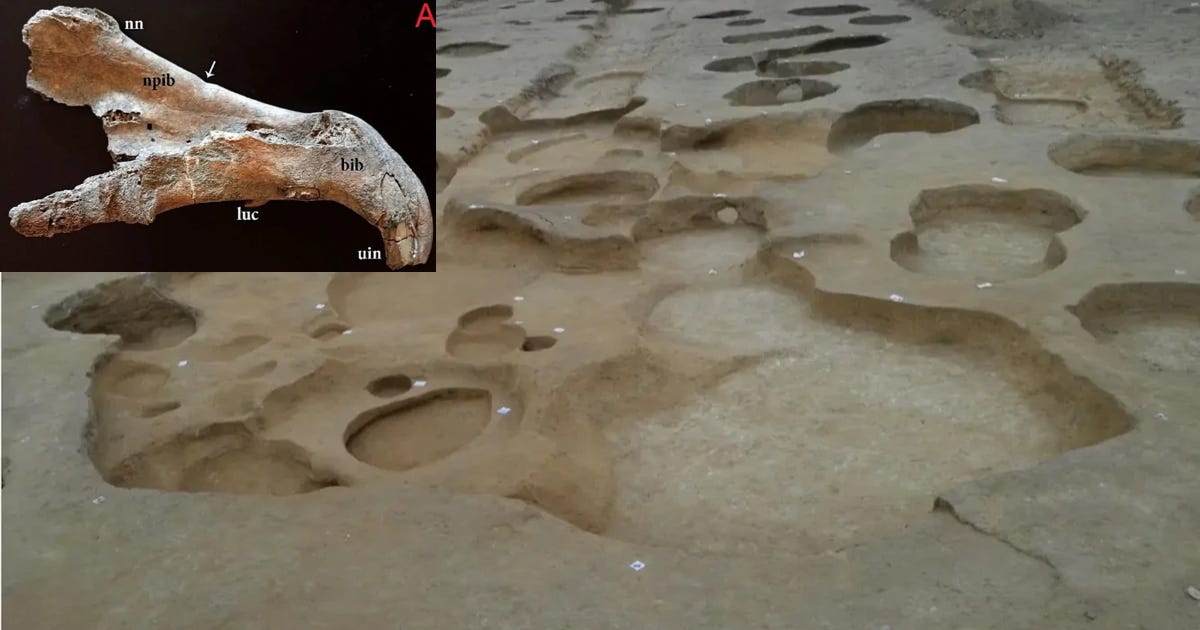
Aerial view of the excavation area. Credit: José Antonio Riquelme-Cantal et al. 2026
Researchers have identified grooves worn into the animal’s nasal bone by the friction of a bridle or noseband, alongside chemical evidence that some of these horses had traveled between climatically distinct regions, together forming the oldest known evidence of ridden and transported horses anywhere on the Iberian Peninsula.
The find comes from the Castillo Reyes site in Pinto, Madrid, and is described in a paper by José Antonio Riquelme Cantal, Juan Manuel Garrido Anguita, Francisco Miró, Jorge Vega y Miguel, Antonio Delgado Huertas, Manuel Novales-Durán, and José Clemente Martín de la Cruz, published in the Journal of Archaeological Science, Reports. The team draws on researchers from the University of Córdoba, Spain’s National Research Council, known as the CSIC, and several other institutions.
A groove written by friction, not by chance
The remains belong to the Cogotas I culture, a Bronze Age tradition that dominated the Iberian interior between roughly 1450 and 1150 BC. Direct radiocarbon dating places the Castillo Reyes horse remains at around 3,300 years ago, squarely within the period Spanish archaeologist Blanco González identified in 2014 as the peak of Cogotas I culture, a chronological fit reinforced further by the site’s ceramic typology and structure, evidence the researchers say rules out any possibility that the remains are a later intrusion or a displaced find from another period.
At the center of the discovery is a rostral skull fragment showing a well-developed groove along the dorsal margin and inner surface of the nasal process of the incisive bone, essentially the upper muzzle area just behind the nostrils. The team used radiography, multidetector computed tomography, and 3D volume rendering to examine the groove in precise detail, finding it positioned 3.92 centimeters from the nasoincisive notch along a total incisor length of 10.19 centimeters. The groove’s shape and location match a well-documented pattern in modern ridden horses, mechanically induced bone remodeling caused by sustained pressure and friction from control devices worn over the nose, the kind of wear a bridle or noseband leaves behind after prolonged, repeated use.
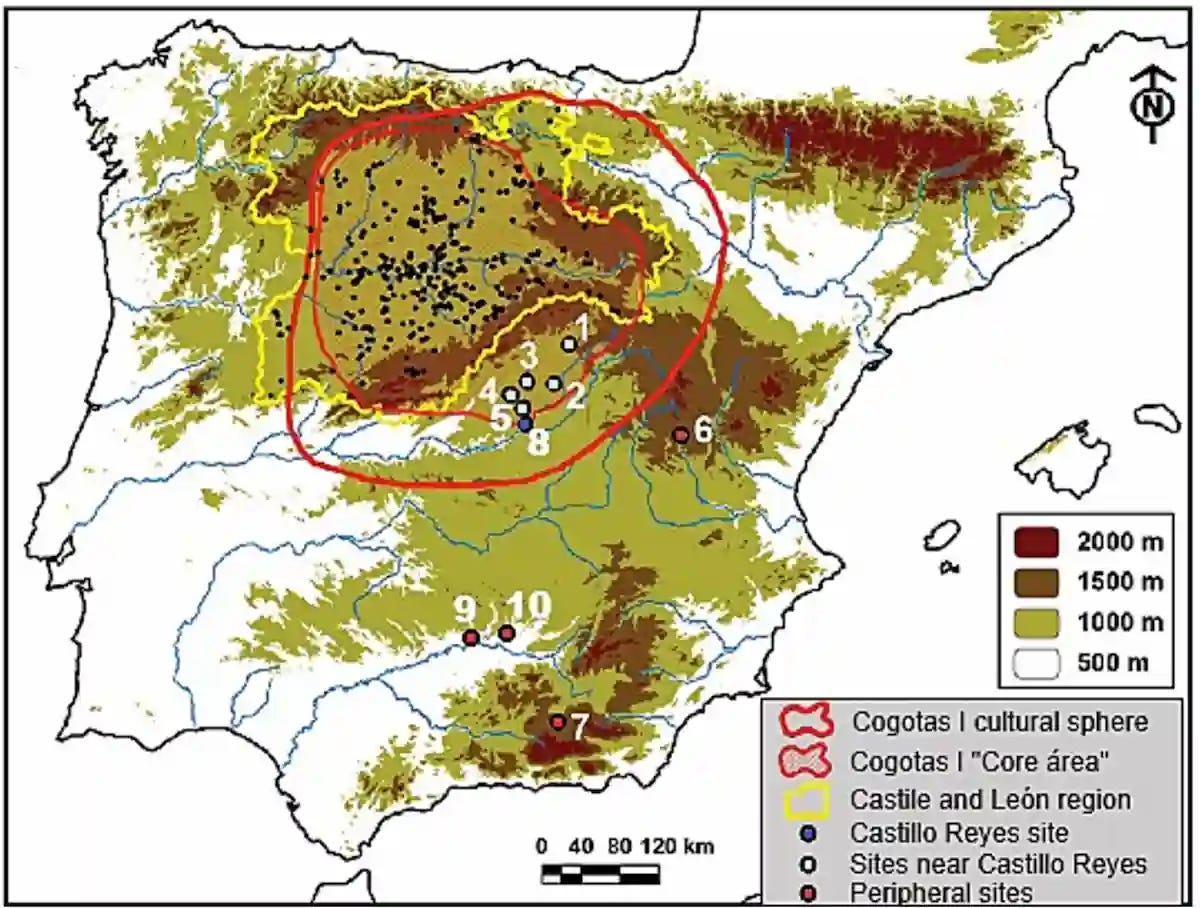
Core area, sphere of influence, and peripheral sites of the Cogotas I cultural horizon across the Iberian Peninsula. Adapted from Blanco González (2014) and José Antonio Riquelme-Cantal et al. (2026).
Teeth that recorded a journey
The skull fragment was not the only evidence the team gathered. To understand how these horses actually lived and moved, the researchers carried out sequential stable isotope analysis on the tooth enamel of several adult horses from the site, sampling at millimeter-scale resolution to build a detailed record of each animal’s changing environment as its teeth formed. In total, the analysis yielded 179 paired measurements of carbon and oxygen isotopes preserved in the enamel.
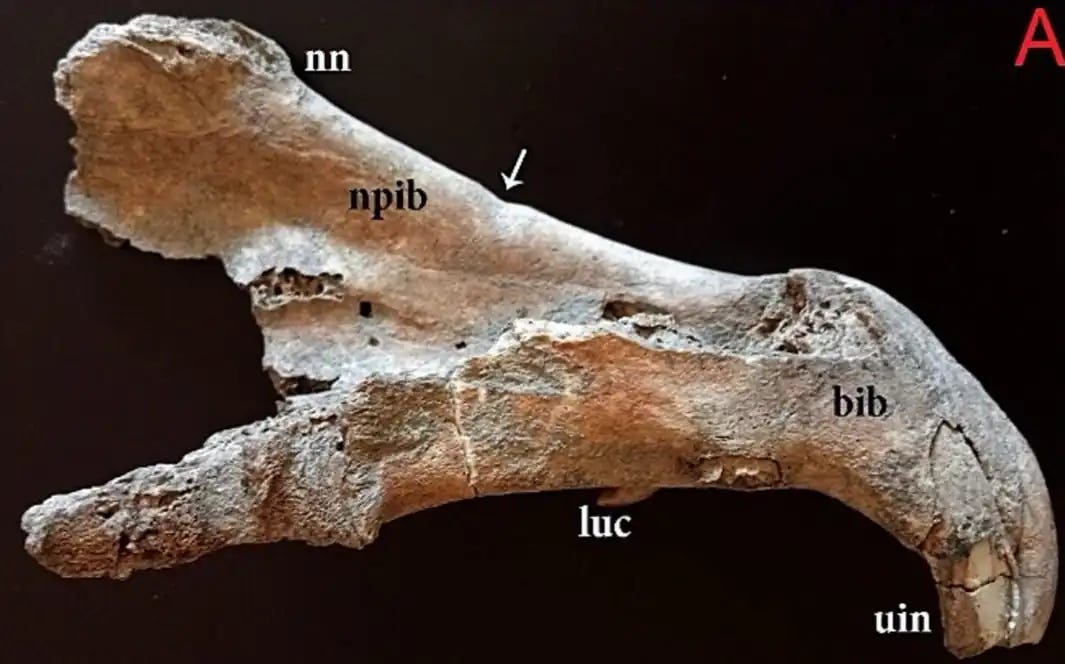
Right lateral view of the rostral skull fragment showing a groove (arrow) on the dorsal margin and medial surface of the left nasal process of the incisive bone. Credit: José Antonio Riquelme-Cantal et al. (2026).
The carbon isotope values pointed to a diet dominated by C3 plants, the photosynthetic pathway typical of temperate-climate vegetation, consistent with grazing in the Iberian interior. The oxygen isotope values told a more varied story. Some horses showed isotopically stable, homogeneous profiles consistent with having lived their whole lives in one local area. Others showed structured shifts within a single tooth that could not be explained by a single, consistent local water source, a signature the researchers interpret as evidence of real mobility, animals that had moved between climatically distinct regions during their lives.
Riding, transport, and a mixed population
Taken together, the cranial evidence and the isotopic data point to the same conclusion from two independent directions. As the study’s authors put it, the combined osteological and isotopic evidence indicates the presence of domesticated horses used for riding or transport at Castillo Reyes, alongside a genuinely mixed population of both locally raised and non-local individuals living and dying at the same Late Bronze Age site.
The researchers frame Castillo Reyes as, for now, the oldest known assemblage anywhere in the Iberian Peninsula to combine all three strands of evidence at once, clear domestication, direct evidence of riding or transport use, and proof of horses moving between regions. For the communities of Spain’s central plateau during the Bronze Age, the find suggests the horse had already become something considerably more significant than a source of meat. It was a working technology of mobility, one that let people and, very possibly, goods and ideas move across considerable distances centuries earlier than previously documented for this part of Europe.
Support Independent Ancient Content. Your support helps me create more archaeology posts, articles, and mini history videos:
Source. Riquelme Cantal, J.A., Garrido Anguita, J.M., Miró, F., Vega y Miguel, J., Delgado Huertas, A., Novales-Durán, M., and Martín de la Cruz, J.C. (2026). “Evidence of Horse Riding in Domestic Horses During the Bronze Age in Iberia.” Journal of Archaeological Science, Reports, 74. doi.org/10.1016/j.jasrep.2026.105913