


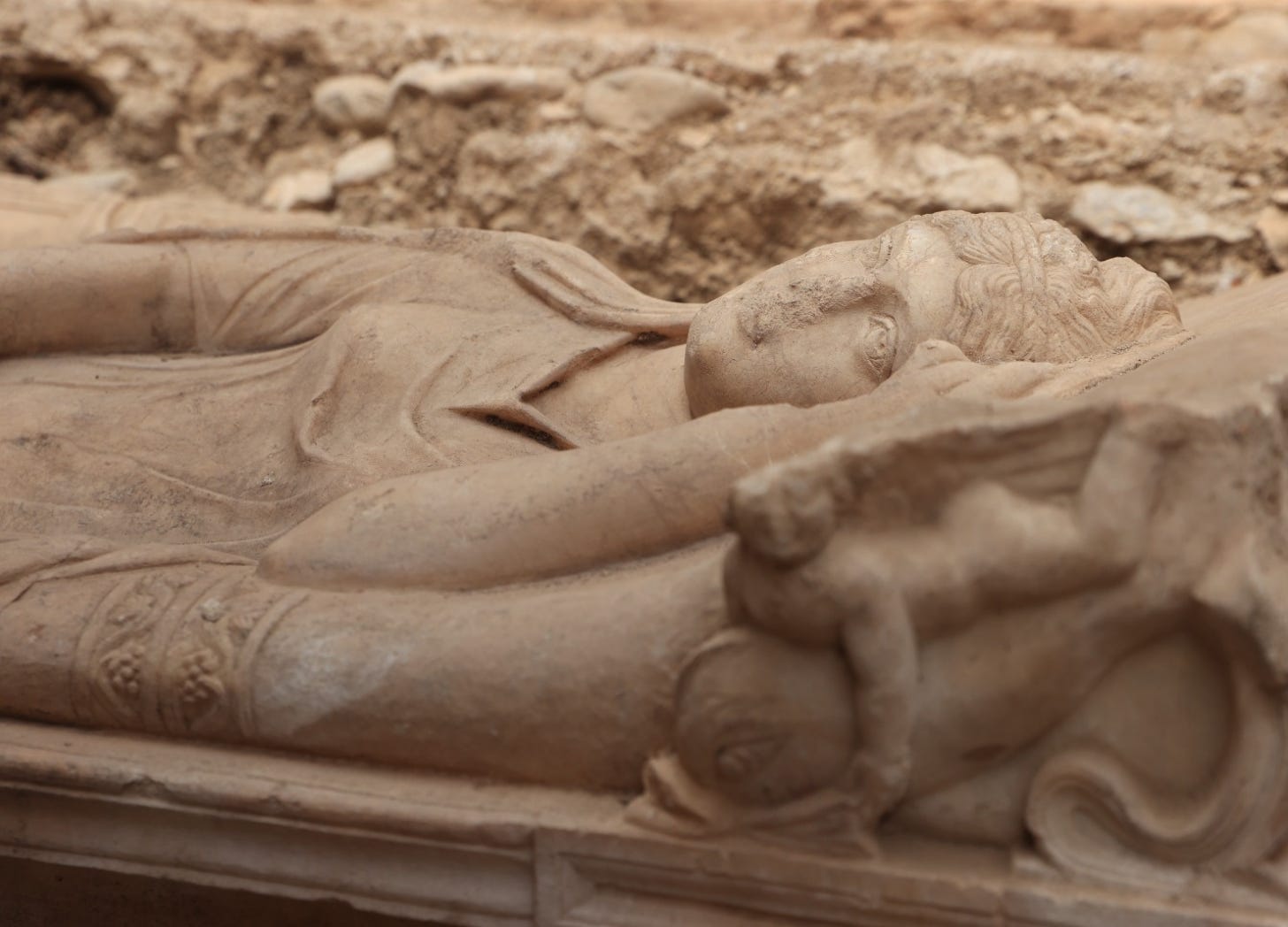
Archaeologists working at the ancient city of Olympos in Antalya’s Kumluca district have uncovered a monumental tomb containing a sarcophagus believed to have belonged to an aristocratic woman. The discovery was made in one of the most important cities of the ancient Lycian world, where excavations continue to reveal material from the Hellenistic, Roman, and Byzantine periods.
The work is being carried out as part of Türkiye’s Ministry of Culture and Tourism’s “Legacy for the Future Project,” which supports archaeological research and conservation at major ancient sites. At Olympos, these excavations have been especially important for understanding the city’s elite families, burial customs, and urban development across different historical periods.
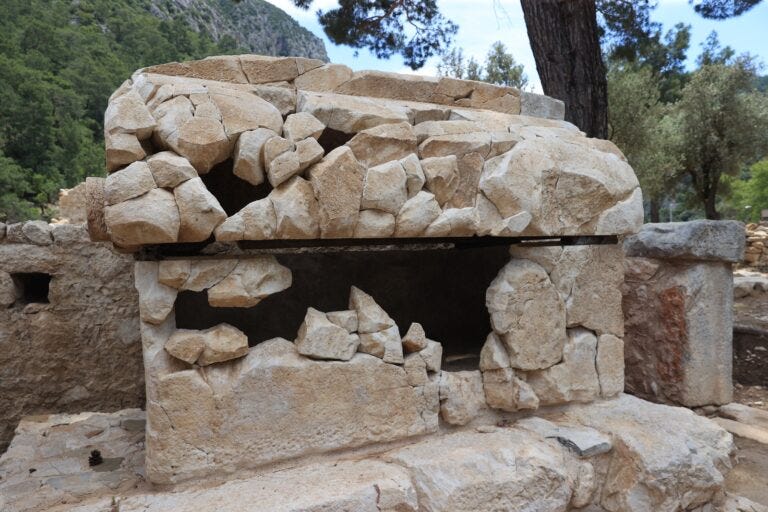
The newly identified tomb was found in the area described as the city’s harbor zone. According to the excavation team, the structure rises to around 10 meters and is covered with vaults, giving it a monumental architectural character. Inside the tomb, archaeologists discovered a decorated sarcophagus connected to a wealthy and aristocratic woman.
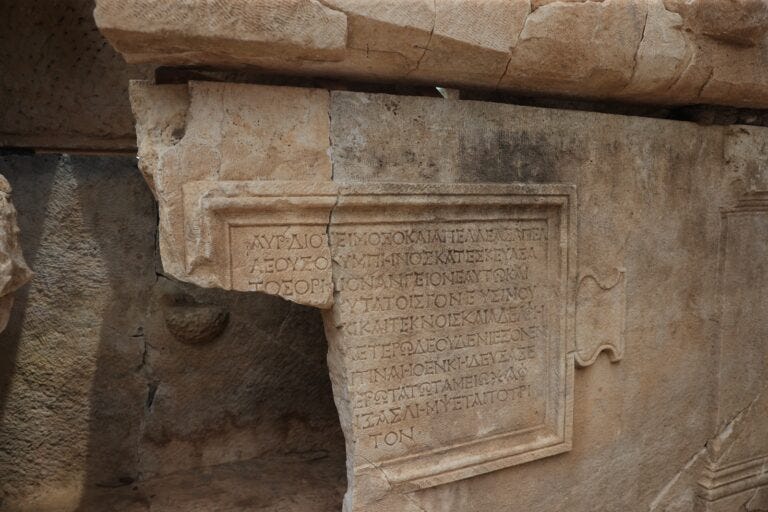
Assoc. Prof. Dr. Gökçen Kurtuluş Öztaşkın, head of excavations at Olympos Ancient City and a faculty member at Pamukkale University, said that two monumental tombs had already been known at the site, but recent work revealed that this structure represents a third example. The team carried out detailed investigations in the area before identifying the tomb and the sarcophagus inside it.
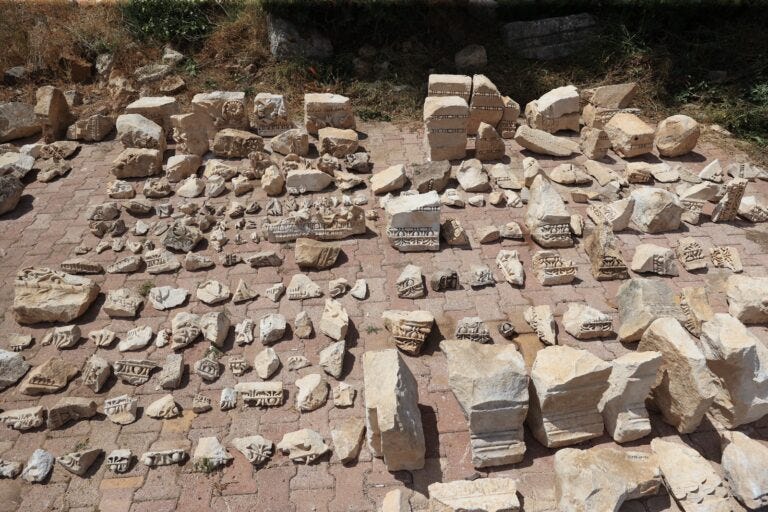
Although the sarcophagus has survived in damaged condition, archaeologists have already begun restoration work. Its lower section was found broken, and around 50 separate fragments are expected to be carefully reassembled. Once the conservation process is complete, the sarcophagus is planned to be opened to visitors.
The decoration on the sarcophagus is particularly important. It includes hunting scenes, along with figures of Nike and Eros, and motifs connected with immortality. In Roman visual culture, hunting imagery often functioned as a symbol of power, wealth, elite identity, and social status. The presence of such scenes suggests that the tomb belonged to one of the prominent families of Olympos.
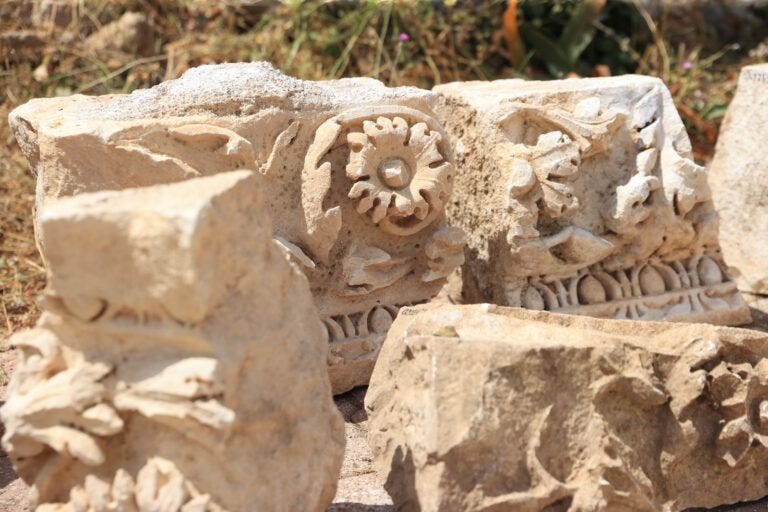
Öztaşkın also noted that the sarcophagus was made from high-quality marble brought from İscehisar in Afyonkarahisar, a region known in antiquity for its marble resources. This detail adds another layer of importance to the discovery, because imported or specially selected marble often reflected the wealth and prestige of the person or family buried inside the tomb.
The restoration process is described as extremely delicate. Because many sarcophagi are found broken into multiple pieces, archaeologists often have to work almost like assembling a complex puzzle. Last year, two other sarcophagi discovered at Olympos were reportedly found in 722 fragments. After careful reconstruction, those pieces were restored and placed on display.
The newly discovered sarcophagus will undergo a similar process. Specialists will clean, match, stabilize, and join the surviving pieces before preparing the artifact for exhibition. The aim is not only to recover the object physically, but also to preserve the historical information it carries for future generations.
The monumental tombs of Olympos offer valuable clues about the city’s upper classes. They show how wealthy residents expressed status, memory, identity, and family prestige through funerary architecture. These tombs were not simple burial places; they were also public statements about power, lineage, and belonging.
For archaeologists, burial traditions reveal much more than death practices. They help reconstruct social life, religious beliefs, artistic preferences, and the relationship between local traditions and wider Roman cultural influence. At Olympos, each tomb adds another fragment to the story of the people who lived, died, and were commemorated in this Lycian city.
The discovery is also expected to enrich the visitor experience at Olympos. As excavations and restorations continue, the ancient city is becoming more readable for modern audiences. The newly uncovered tomb and sarcophagus will give visitors a stronger connection to the people of Olympos and to the city’s layered past.