


Every autumn in the Zagros foothills, families still climb into oak groves to scrape a sticky exudate off the leaves and boil it down into molasses. In the Sinai, Bedouin still gather sweet globules that bleed from tamarisk branches in the cool hours before dawn, a seasonal harvest their grandparents called by the same name used three thousand years earlier for a food that fell from the sky. Manna, it turns out, never stopped being real. What changed was how people explained it.
Few ancient food traditions sit at the intersection of environment, memory, and identity as tightly as manna does. In the classical wilderness narratives, it is not a normal staple grown, stored, and taxed like grain. It appears as an episodic provision, gathered early, rationed daily, and framed as a lesson in dependence and communal discipline. Read with historical method rather than doctrinal expectation, the descriptions also look like something else entirely, a composite memory of real desert phenomena, edible exudates, insect honeydew, windblown lichens, filtered through the literary conventions of sacred history.
A historically grounded account does not require choosing between miracle and nothing at all. It asks a narrower, more answerable question. What do the ancient authors actually say the substance did, what can desert ecologies plausibly produce, and how do communities transform short-lived environmental events into enduring narratives of survival.
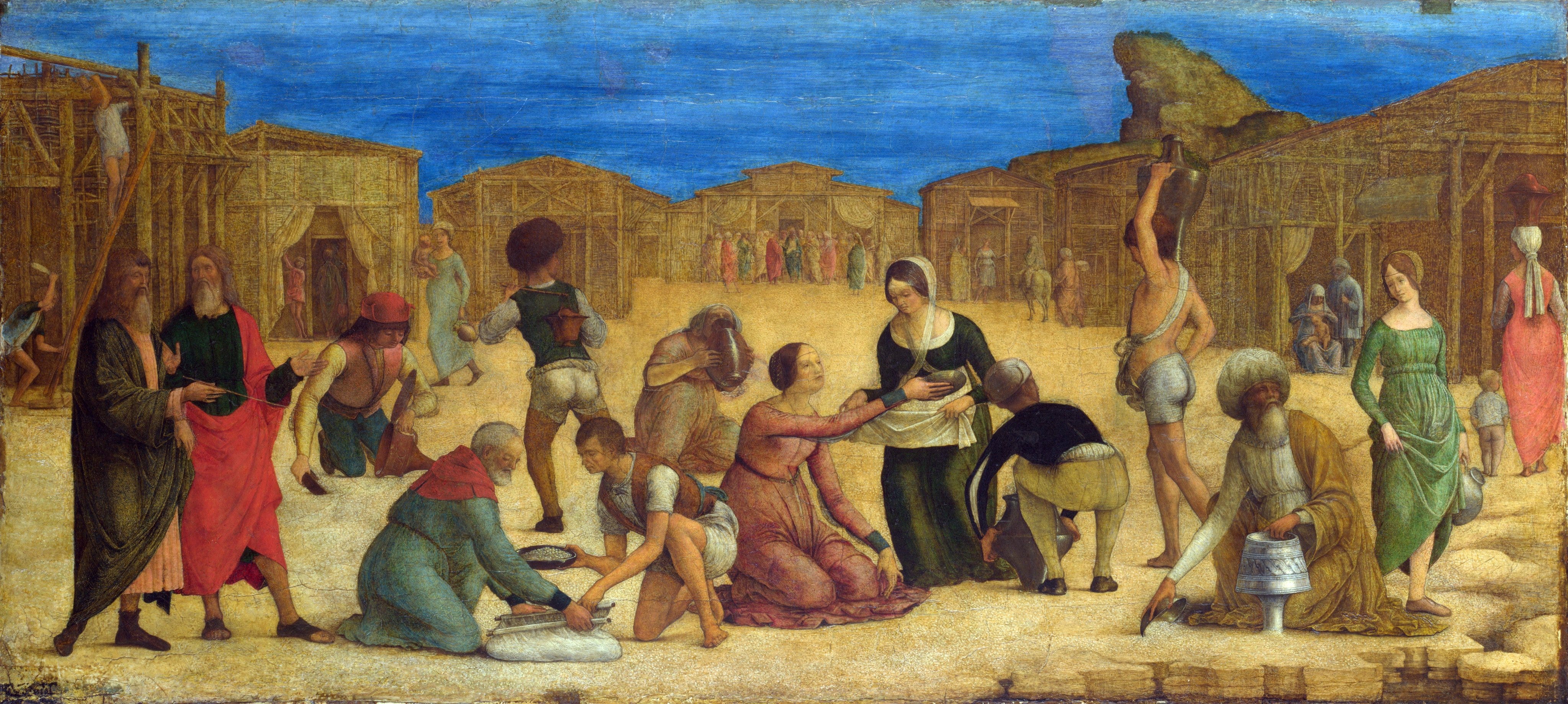
Ercole de' Roberti - The Israelites gathering Manna (National Gallery, London)
What the texts actually describe
Across the relevant traditions, manna is defined less by culinary detail than by behavior. It arrives with night moisture and morning collection, it is small and pale, and it resists hoarding. Exodus 16 places it after the morning dew has lifted, describing thin flakes like frost on the ground, fine enough to prompt the question “what is it,” a line that doubles as wordplay embedded directly into the naming tradition. The same chapter turns spoilage into a narrative mechanism, using the substance’s short shelf life to enforce daily rationing and to punish those who tried to stockpile it. Numbers 11 adds sensory detail the earlier account lacks, comparing the grains to coriander seed and describing preparation by grinding, beating, and baking into cakes with a taste likened to oil-rich fare.
A parallel memory survives in the Qur’an, where manna appears paired with quail as a providential food supply. Historically, that pairing matters more than it might first appear, since it ties an otherwise vague sweet or bread-like substance to a concrete, recognizable ecological event, the seasonal movement of migrating birds, anchoring the story in a real landscape rhythm rather than pure abstraction.
Treated as cultural artifacts that preserve observation inside stylized storytelling, five details across these texts carry the most diagnostic weight. The substance is tied to dew, it is collected early in the day, it takes the form of small pale granules or flakes, it carries sweetness in some traditions, and it spoils quickly once stored. Together, they read less like poetic invention than like a set of field notes on a real, if unfamiliar, seasonal food.
Three candidates from the desert itself
Tamarisk honeydew and the manna scale. The most thoroughly studied natural correlate is the honeydew produced by scale insects living on tamarisk trees. The tamarisk manna scale, Trabutina mannipara, feeds on sap-rich tamarisk branches and excretes the surplus sugar as tiny globules that harden in the cool morning air into a sugar-like crust, still gathered locally today as a seasonal delicacy. The pattern maps cleanly onto the textual dew motif. Honeydew is easiest to collect before the day’s heat softens or scatters it, and insect-derived sugars sour or spoil quickly if not processed soon after gathering. The classic scholarly case for this identification is F. S. Bodenheimer’s 1947 paper “The Manna of Sinai,” which treats the substance as an entomological product tied to specific local tamarisk ecologies. Its strength is not that it proves any particular wilderness narrative happened as told, but that it demonstrates how an unusual, intermittent desert food could plausibly be experienced as gift-like and then narrated in a theological register. It also has a real limitation worth stating plainly, since tamarisk manna is only available for a few months each year and in quantities of a few kilograms per hectare, a modest yield that natural historians have long flagged as far short of what would be needed to sustain a large population for any length of time.
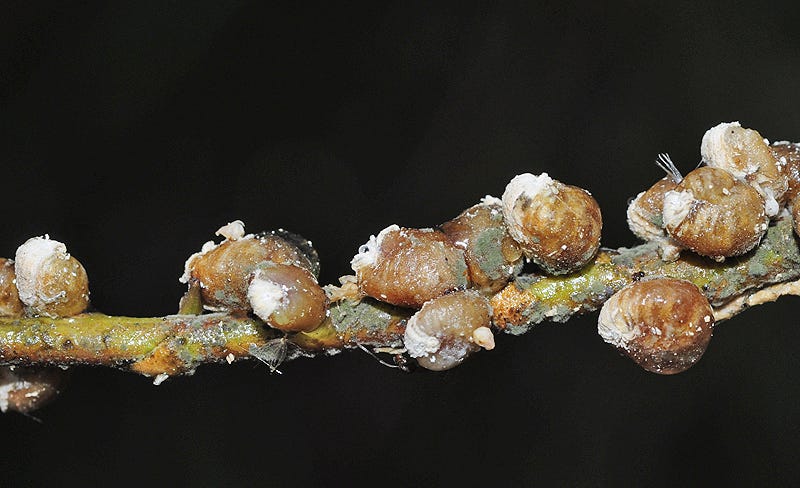
Trabutina mannipara
Manna lichens and the optics of food from the sky. A second candidate is the so-called manna lichen, a vagrant, unrooted organism that wind can dislodge and carry, sometimes depositing it suddenly across open ground after a storm. The Australian National Botanic Gardens documents the phenomenon under the name Diyarbakir’s heavenly bread, linking reports of edible material falling after windstorms to lichens identified as Lecanora esculenta and related species discussed in the specialist literature. The interpretive value here lies less in the food itself than in the optics of its arrival, since a ground-level ecological event, when it follows a storm and appears scattered in irregular patches, is easy for observers to perceive as something descending from above. This pathway also helps explain why manna became a floating category word across Eurasia and the Middle East, applied again and again to rare sweet or edible deposits that were not cultivated in any conventional sense, a pattern traced in detail in Donkin’s historical-geographical survey of manna traditions. The theory carries a genuine weakness, however, and a rigorous account should not paper over it. Lecanora esculenta itself is not documented growing in the Sinai region, which undercuts its direct application to the biblical wilderness narrative specifically, even as it remains a well-attested phenomenon elsewhere in the wider manna tradition.
Oak exudates as a living regional tradition. A third family of candidates comes from oak-derived exudates, produced through insect activity on Quercus species and often crystallizing on leaves or acorns before being collected as a sweetener. Recent biochemical work on Gazo, or oak manna, gathered from Quercus infectoria in Iraqi Kurdistan, confirms it as a genuine natural exudate shaped by insect activity, and its chemistry sets it apart in an informative way. Unlike the manna of Cotoneaster or Fraxinus trees, Gazo contains no mannitol, the sugar alcohol that typically dominates those other regional mannas, pointing to a distinct biochemical pathway even among substances that share a single folk name. Parallel ethnobotanical work from southeastern Anatolia documents Gezo molasses, produced from Quercus brantii acorns, with local communities across seven provinces still practicing the seasonal collection, sorting, and processing methods their ancestors used.
Taken together, these three traditions suggest that manna functions historically as an umbrella term rather than a single substance. A remembered desert food may correspond not to one species or mechanism but to a repertoire of opportunistic foods, tamarisk honeydew in one micro-region and season, oak exudates in another, and occasional wind-borne lichen falls layered on top, all gathered under one enduring name.
Quail, rationing, and the logistics of survival
The quail motif accompanying manna in several traditions is often read as purely symbolic, but it fits a realistic environmental frame as well. Ornithological research documents genuine autumn quail migration across the north Sinai coast, a seasonal pulse of birds moving through a landscape otherwise defined by scarcity. The point is not that any ancient text should be read as a field survey, but that migratory pulses of this kind can produce brief windows of real abundance, the sort of episode a community would remember vividly precisely because it stood out against long stretches of want.
That pairing of sudden abundance with underlying scarcity also explains why manna narratives are so preoccupied with rules of collection, daily portions, limits on hoarding, and strict timing. In subsistence settings, rationing is not an abstract ethical stance. It is survival technology. A food that appears in small quantities, is easiest to gather early, and spoils quickly will generate social tension around accumulation almost automatically. When later narrators encode that tension into story form, spoilage becomes a moralized mechanism, a way of explaining why the substance goes bad specifically when people disobey communal norms. That is a literary strategy, but one built on a genuinely plausible material substrate rather than invented from nothing.
In this light, manna can be read as an interface between ecology and governance. Whatever one concludes about the historicity of any single wilderness episode, scholarship on these traditions increasingly emphasizes that the texts preserve real geographic and environmental knowledge, often indirectly, because the shape of a landscape constrains what kind of provisioning a storyteller can plausibly imagine. Hoffmeier’s work on the wilderness traditions argues along these lines, showing an underlying awareness of Sinai and northeastern Egyptian geography even as the historicity of any specific narrative event remains debated across the field.
Modern re-enchantment and the limits of evidence
In contemporary popular retellings, manna is sometimes rebranded as something far stranger than an ancient desert food, a technologically exotic or alchemical substance marketed under names like ORMEs, or orbitally rearranged monoatomic elements, associated with David Hudson. It is worth being precise here about what actually exists. Patent filings connected to Hudson’s claims are real documents in patent databases, but a patent records an application and a description. It does not constitute validated scientific evidence, and it is not the same thing as a replicated, peer-reviewed consensus. Engineering literature that has examined ORME-style claims places them squarely on the borderland between unconventional hypothesis and pseudoscience, noting a persistent lack of the kind of robust, independently reproduced evidence that would be needed to support the more extraordinary popular assertions.
The pattern is a familiar one across history. Ancient wonder foods are periodically reinterpreted using whatever prestige vocabulary a given era finds most compelling, alchemy in one century, electricity and ether in another, quantum or nano language in the present. Manna’s journey from desert exudate to monoatomic gold is simply the latest iteration of a much older habit of re-dressing mystery in the era’s most fashionable technical costume.
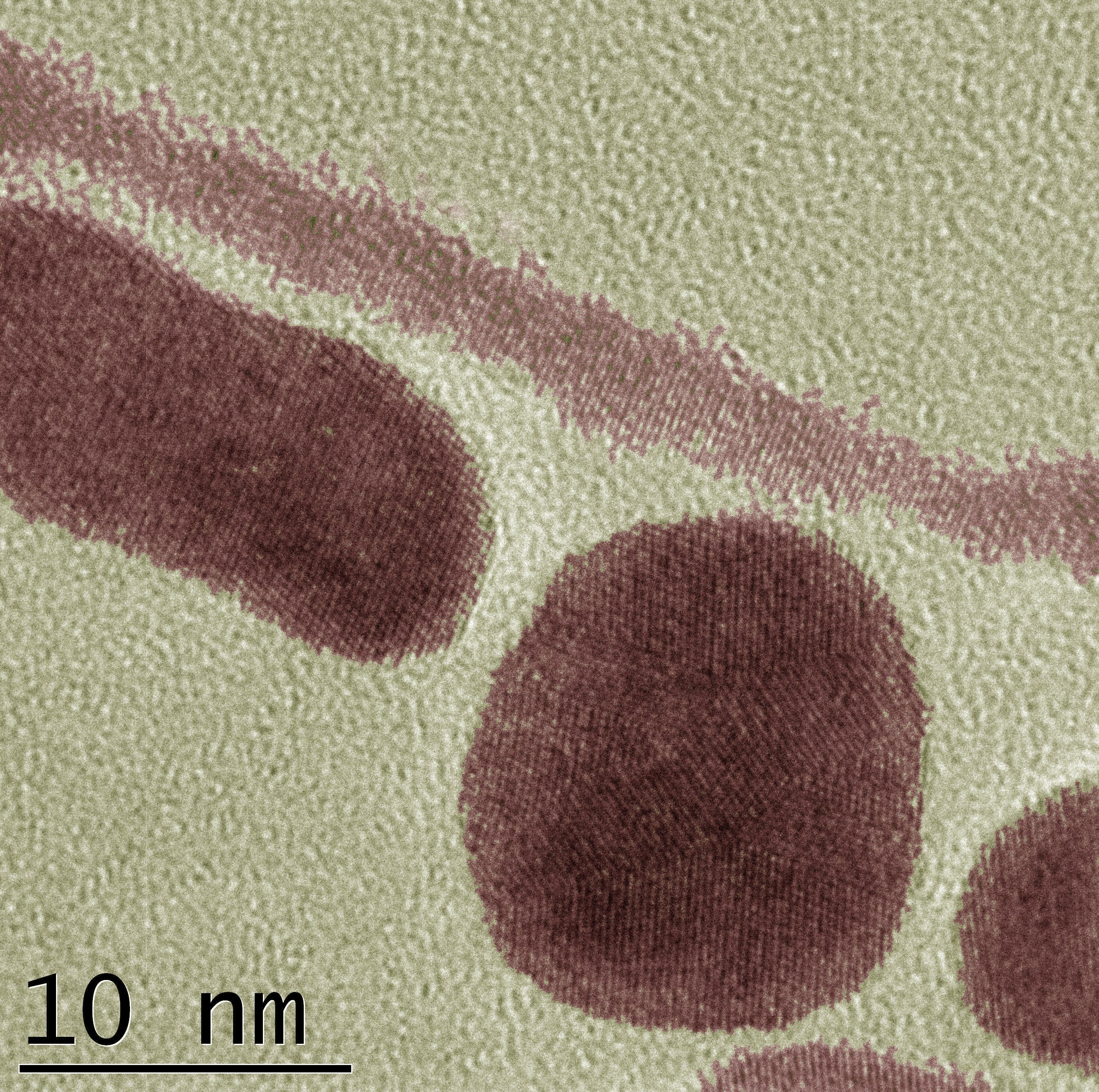
TEM image of gold nanoparticles and nanorods
That habit becomes genuinely dangerous when it slides from metaphor into practice. Some contemporary narratives imply that ingesting or injecting metal-based preparations produces spiritual or cognitive upgrades, a claim with no defensible basis in the ancient manna texts themselves. Separately, and on entirely independent grounds, modern biomedical literature on gold nanoparticles documents real biodistribution, accumulation, and toxicity pathways in the body, shaped by dose, surface chemistry, and route of exposure. Gold in nanoparticle form is not automatically benign simply because the metal itself is inert in jewelry, a distinction worth stating clearly given how casually it gets erased in popular retellings.
What the layered memory actually preserves
The most methodologically disciplined conclusion is also, in the end, the most satisfying one. Ancient manna traditions read best as a layered cultural memory of rare desert foods and episodic abundance events, reshaped through storytelling into lessons about communal order and endurance. There is no single hidden chemical waiting to be decoded, no secret ingredient that unlocks the whole tradition at once. The real secret, if there is one, is simpler and more human. It is the way that groups under pressure convert a precarious, unpredictable ecology into meaning that can survive being told and retold for thousands of years.
References
1. Bodenheimer, F. S. (1947). The Manna of Sinai. The Biblical Archaeologist, 10(1), 2 to 6.
2. Ben-Dov, Y. (1988). Manna scale, Trabutina mannipara (Hemprich and Ehrenberg). Systematic Entomology, 13(4), 387 to 392.
3. Britannica. “Manna (biblical food)” and “Tamarisk manna scale (Trabutina mannipara).”
4. Hoffmeier, J. K. (2005). Ancient Israel in Sinai. The Evidence for the Authenticity of the Wilderness Traditions. Oxford University Press.
5. Niżnik, Ł., et al. (2024). Gold Nanoparticles (AuNPs). Toxicity, Safety and Green Synthesis. A Critical Review. International Journal of Molecular Sciences, 25(7), 4057.
6. Australian National Botanic Gardens. “Diyarbakir’s heavenly bread” and related manna lichen case studies. See also Donkin, R. A. (1980) on the historical geography of manna traditions.
7. Soleimani, A., Shorsh Hamad, D., Khalil Ismael, S., and Muhamad Said, K. (2025). Identification and Quantification of Carbohydrates, Amino Acids, and Protein in Gazo (Oak Manna). Jundishapur Journal of Natural Pharmaceutical Products, 20(4), e164649.
8. Ethnobotanical and chemical studies on Gezo molasses from Quercus brantii Lindl. acorns in Turkey (2021 to 2026 survey period).
9. Zuckerbrot, Y. D., Safriel, U. N., and Paz, U. (1980). Autumn migration of Quail (Coturnix coturnix) at the north coast of the Sinai Peninsula. Ibis.
10. Hudson, D. R. (Patent). Non-metallic, monoatomic forms of transition and noble metal elements (ORMEs).
11. van Deventer, J. S. J. (2013). The precious metals we prefer to ignore. Minerals Engineering.
12. Primary texts. Exodus 16; Numbers 11:7 to 9; Qur’an 2:57 and 7:160.
Being “told and retold for thousands of years” is one of humanity’s great advantages. To be able to accumulate knowledge based on generations of experience and hand them down through our stories is truly manna from heaven.