


In the ash swept out of ancient furnaces at one of the Mediterranean world's most important mining districts, archaeologists have recovered something that almost never survives, the actual shoes worn by the people who worked there.
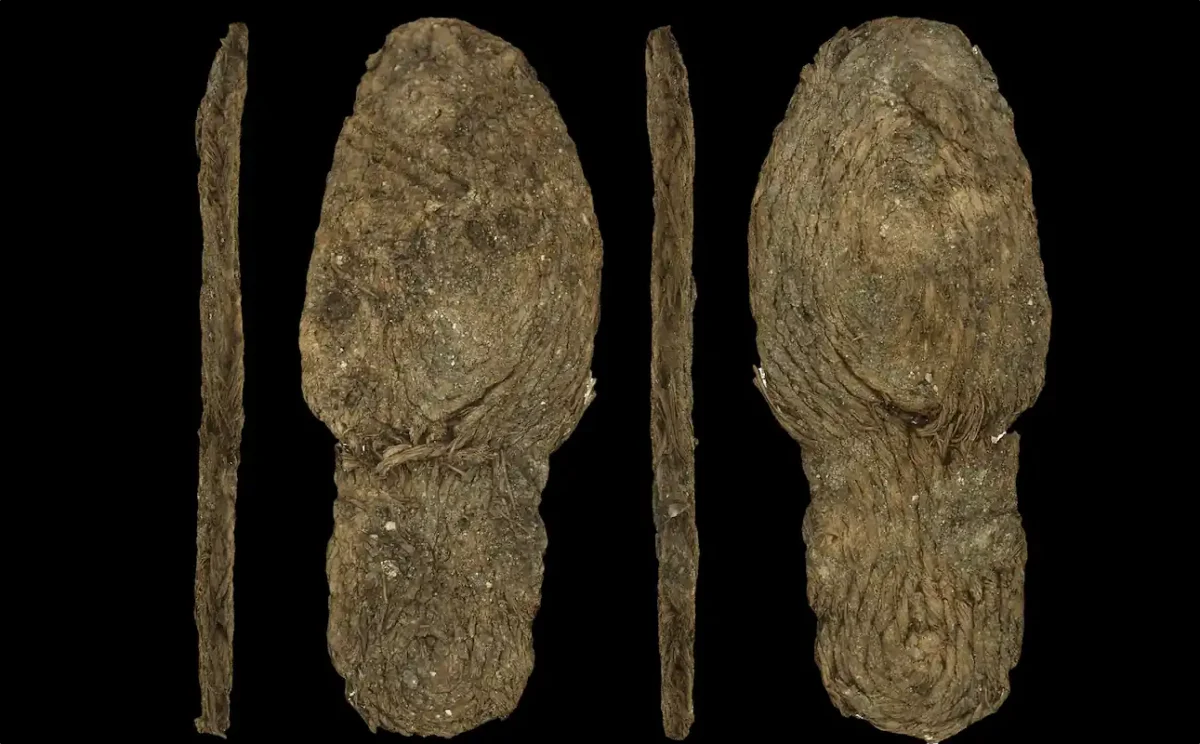
Iron Age esparto footwear unearthed at Riotinto. Credit: University of Granada.
Eight sandal soles woven from esparto grass, buried in the mining settlement of Urium at Riotinto in Huelva province, Spain, span more than four centuries of continuous use, from the Iron Age through the consolidation of Roman rule over the region.
The research comes from a team at the University of Granada, led by Macarena Bustamante-Álvarez, and focuses on material recovered from the Nuevo Filón Norte 1 sector of the historic Riotinto mining district, in the municipality of Minas de Riotinto.
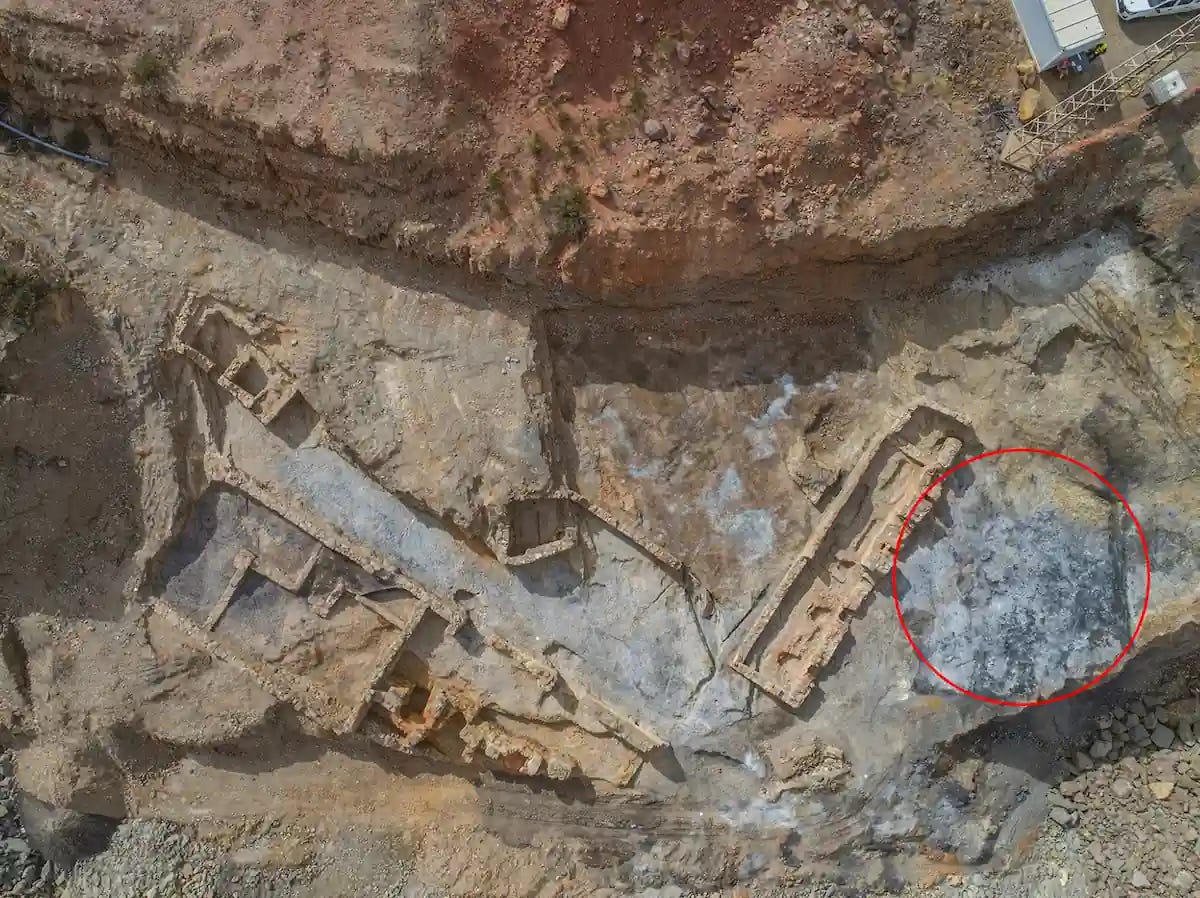
Nuevo Filón Norte 1 at Riotinto, the archaeological site where the discovery was made. Credit: Bustamante-Álvarez, M. et al., 2026.
Preserved by the very fires that once burned there
The sandals were found inside two large accumulations of ash, waste swept out during the cleaning of metallurgical furnaces used to process the district’s ore. That ash turned out to be an unlikely stroke of luck for archaeology. The conditions it created allowed an unusually good survival of organic material, plant fiber objects that almost never make it into the archaeological record at all, giving researchers a rare chance to study artifacts with few real parallels elsewhere.
The soles are made of esparto, identified specifically as Stipa tenacissima, a notably tough and flexible fiber that grows abundantly across the southwestern Iberian Peninsula and has been worked by hand in the region for thousands of years.
Dating a working life, one sole at a time
Radiocarbon dating carried out on three of the eight sandals proved central to the study’s conclusions. The results returned distinct chronological ranges, one sole dated to the first century AD, a second to somewhere between the second and first centuries BC, and the oldest to the fourth or second century BC.
That spread across time is not an incidental detail. The researchers treat it as solid proof that the use of esparto sandals at Urium was neither a one-off occurrence nor confined to a single phase of the settlement’s history, but continued uninterrupted for more than four hundred years, spanning the Iron Age through the full consolidation of Roman control over the region. As the team stresses, that persistence reflects the practical usefulness of this kind of footwear under the harsh conditions of mining labor, and its fit with the needs of a workforce that, across centuries, kept certain technical and cultural habits essentially unchanged.
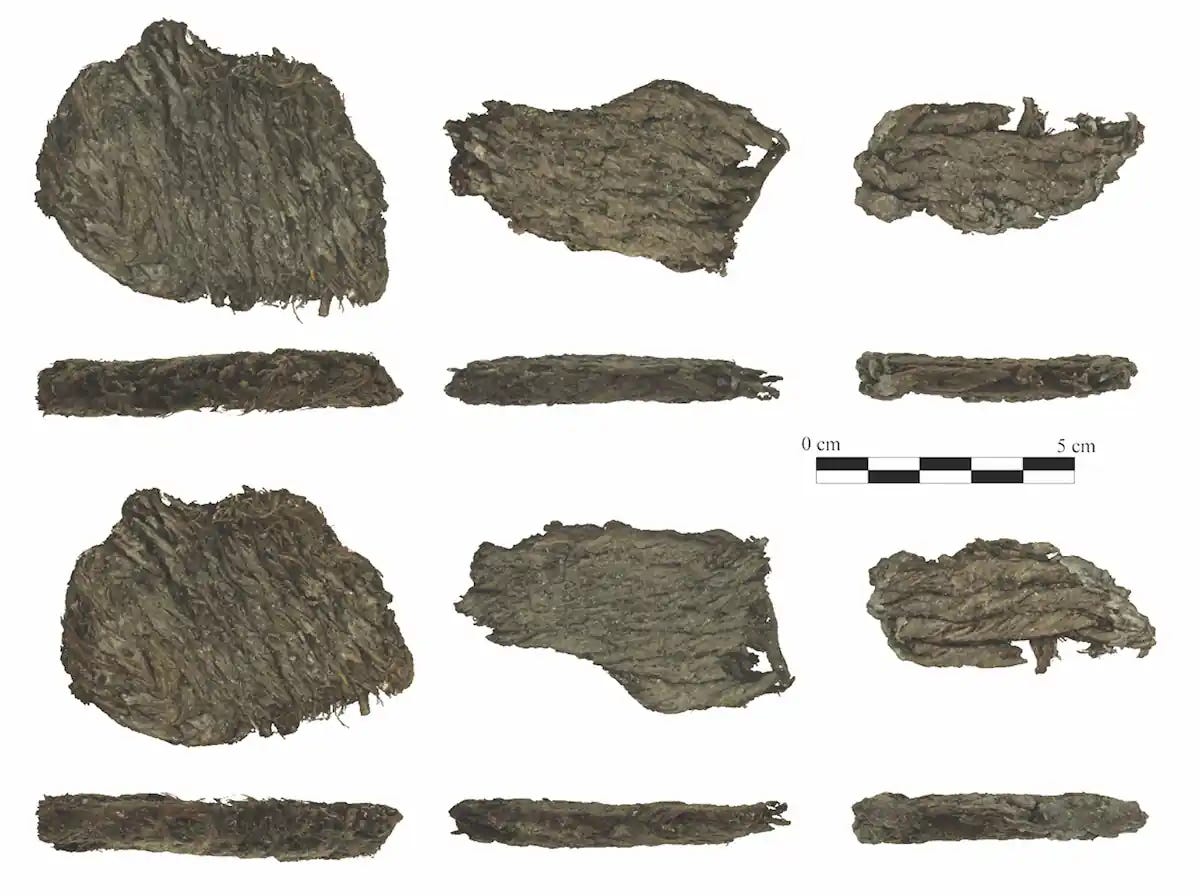
Top, bottom, and side views of the footwear soles. Credit: Bustamante-Álvarez, M. et al., 2026.
Worn until there was nothing left to wear
The physical condition of the soles tells its own story of hard use. The research documented pronounced wear concentrated in the forefoot and heel areas, exactly where a walking or working foot places the most repeated pressure. Most of the sandals are missing their fastening cords entirely, suggesting these were not lost or discarded prematurely but worked until they had genuinely exhausted their useful life before being thrown away with the furnace ash.
The assemblage ranks among the largest collections of Roman-period plant-fiber footwear documented anywhere on the Iberian Peninsula, giving researchers a solid basis for comparison against similar finds from other ancient mining sites across Hispania.
A named shoe from the Latin sources
The researchers connect this footwear to the solea spartae, a type of esparto sole mentioned directly in Latin written sources, understood to have provided both protection and traction for people working in demanding conditions underground or around ore-processing furnaces. Finding physical examples that match a shoe type known previously only from text is, in itself, a notable convergence between the archaeological and the literary record, adding real material substance to a term that had until now existed mainly on the page.
Sources
University of Granada
Bustamante-Álvarez, M., Pajuelo Pando, A., Dorado Alejos, A., & Lobo Torres, M. A. (2026). Nuevos ejemplares de calzado en esparto en contexto minero. Excavaciones del sector “Nuevo Filón Norte 1” en Urium (Riotinto, Huelva). Pyrenae, 57(2), 79–112. https://doi.org/10.1344/Pyrenae2026.vol57num2.4