


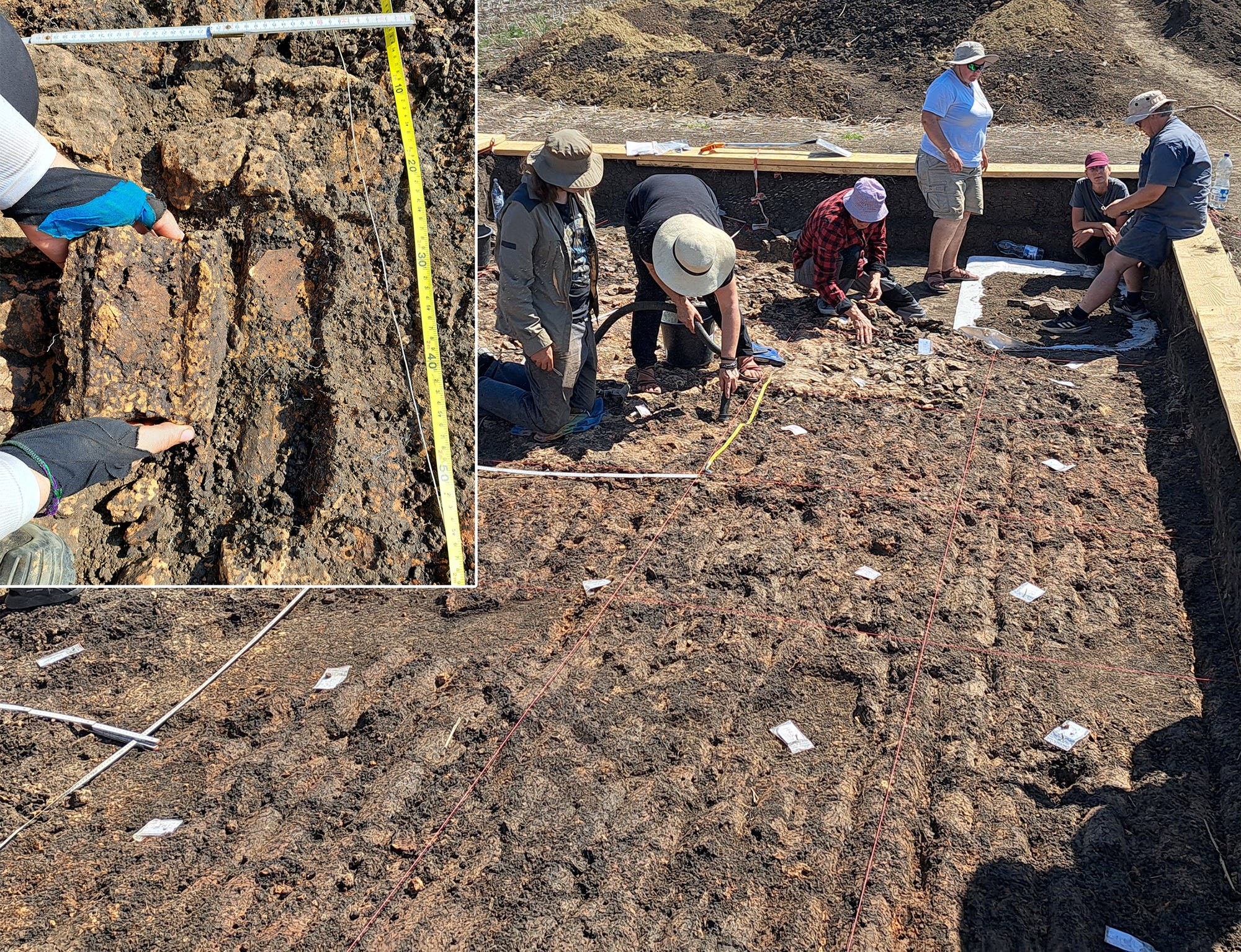
Archaeologists working in northeastern Romania have identified a prehistoric structure so large and unusually placed that it is forcing researchers to rethink how early farming communities in Europe organized themselves. The building was found at Stăuceni-‘Holm’ in Botoșani County, a Cucuteni-Trypillia settlement connected to one of the most remarkable Neolithic cultural zones of southeastern Europe.
The discovery comes from a study published in PLOS ONE by Doris Mischka, Carsten Mischka, Adela Kovács, Constantin Aparaschivei, and Elena Marinova. Their research combined geophysical survey, field collection, and excavation work carried out between 2021 and 2024. According to the survey results, the settlement contained roughly 45 buildings and was enclosed by several ditch and palisade systems.
What makes the find stand out is not simply its age, but its scale. The structure covers about 350 square meters, making it far larger than the ordinary houses at the site. Most nearby buildings measured around 70 to 120 square meters, with a median size of about 91 square meters. The building also occupied a highly visible position near the probable entrance area, a placement that strongly supports its interpretation as a true “mega-structure.”
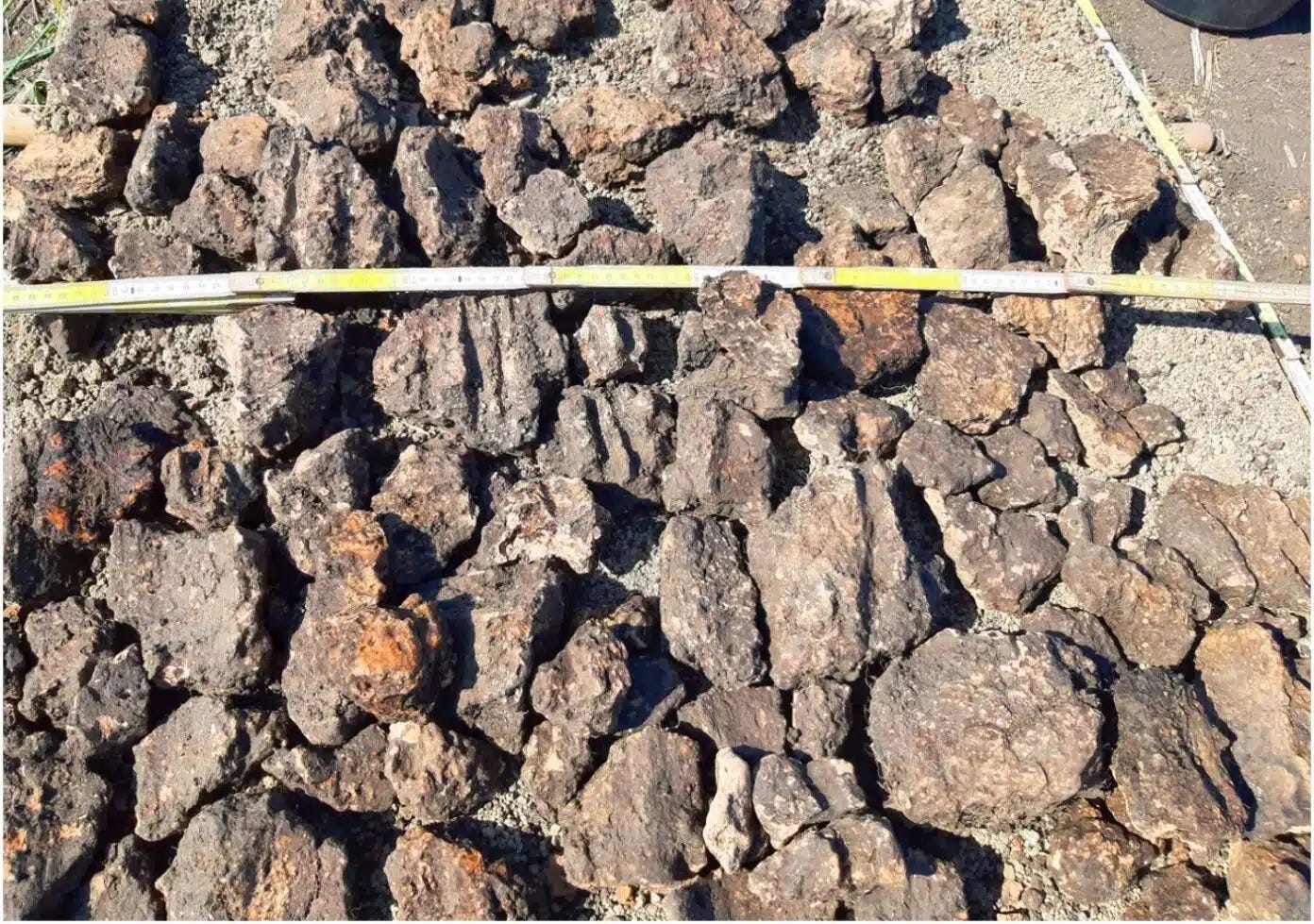
In Cucuteni-Trypillia archaeology, mega-structures are not just oversized houses. Researchers generally define them as rectangular buildings larger than normal dwellings, often placed in open or highly visible parts of a settlement. Some may have had different architectural features or special social functions. Earlier studies had already documented many such structures across sites in Ukraine and Moldova, but only a small number had been excavated in detail.
The Stăuceni-‘Holm building is important because it brings physical excavation evidence to a debate often dominated by magnetometry. Geomagnetic surveys can show hidden plans beneath the soil, but they do not always reveal what those anomalies truly represent. At this site, some interior features suggested by the survey could not be confirmed archaeologically, showing that magnetic readings need excavation before strong conclusions are made.
Excavation revealed a carefully planned construction process. The builders first created a rectangular foundation ditch, then placed posts into pits at regular intervals of about 70 to 90 centimeters. Some of the posts appear to have been stabilized with reused fragments of burnt clay from older buildings. Inside the structure, large central postholes may have supported a roof or helped divide the building’s interior space.
One of the most striking construction details was the floor. The builders placed halved tree trunks flat on the ground, then covered them with a smoothed clay layer. The researchers cannot yet say whether this clay surface was intentionally fired or whether it burned later when the structure was destroyed by fire. Either way, the preserved floor makes this mega-structure especially valuable for understanding Neolithic architecture.
Dating the structure has added another layer of intrigue. Radiocarbon samples taken from archaeobotanical remains between the wooden floor elements placed the building in the 40th or 39th century BC. This creates a tension with traditional pottery-based dating for the Cucuteni A3 phase, which has often been placed earlier. The researchers argue that the samples came from secure contexts and short-lived plant material, making them difficult to dismiss.
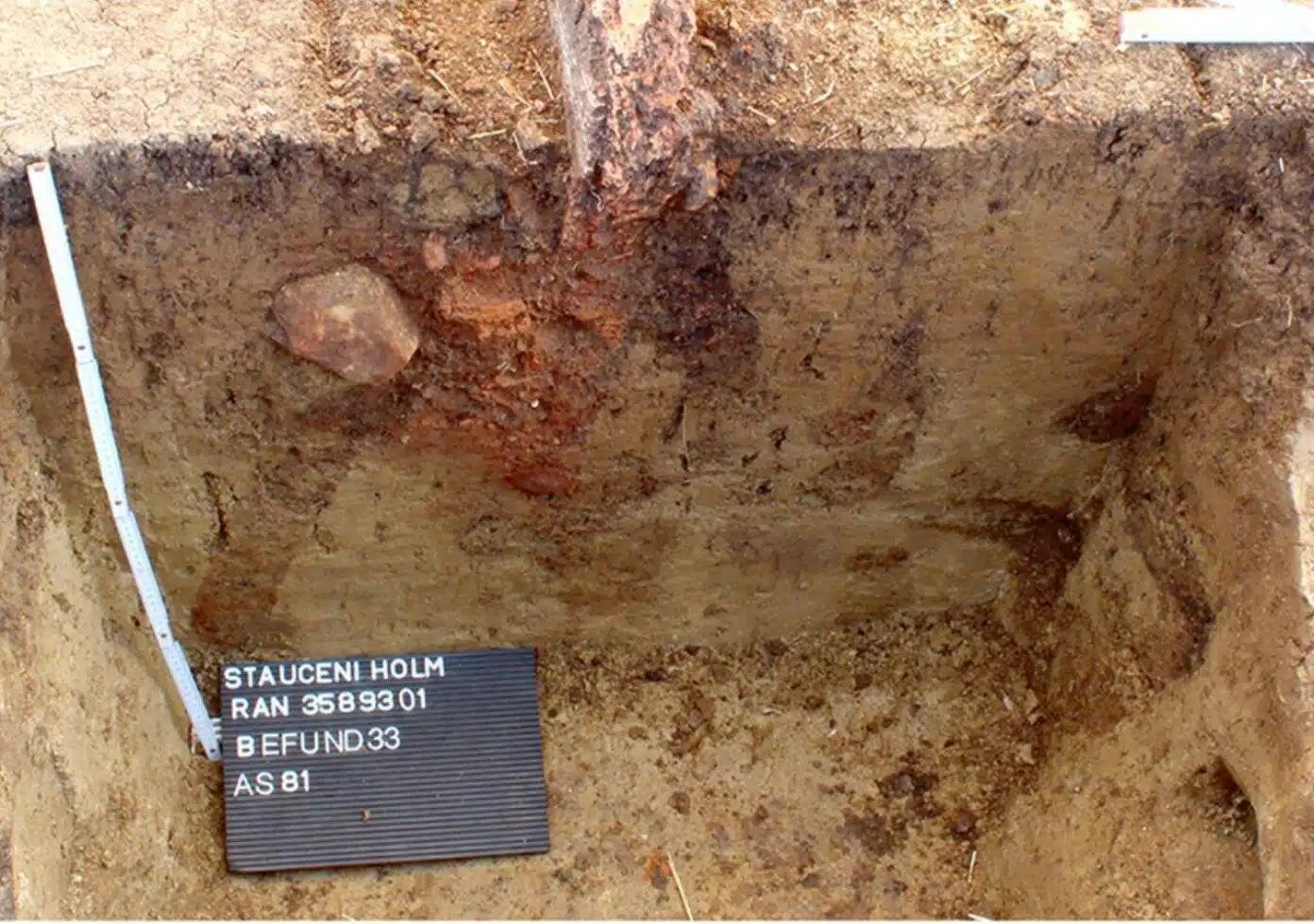
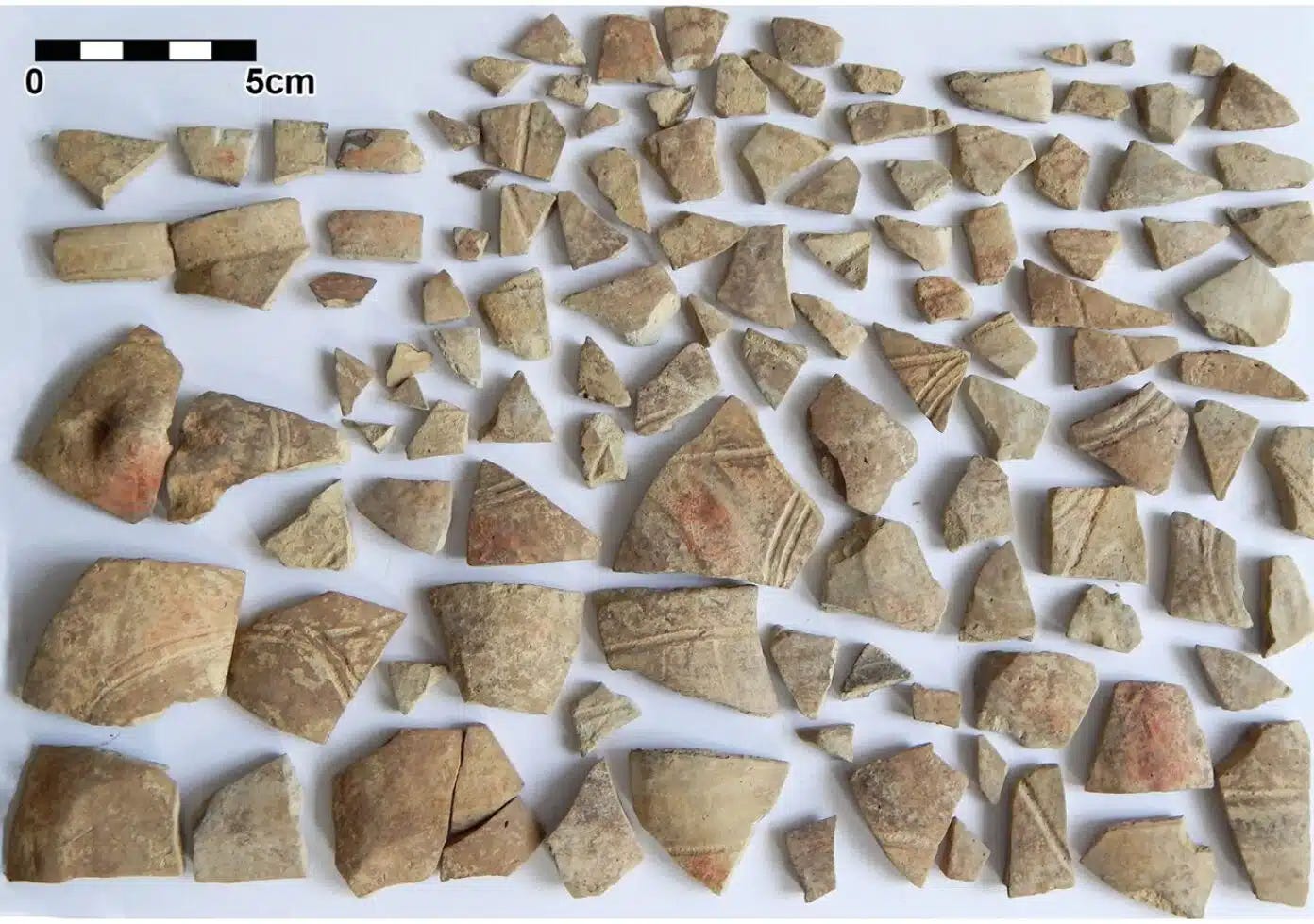
A small ceramic vessel found deep in a posthole also connects the construction event to the pottery tradition at the site. The vessel was recovered more than a meter below ground level in the foundation trench, suggesting it may have been deliberately placed during construction. Such deposits can be important clues, because they tie architecture, ritual behavior, and chronology together in a single archaeological context.
The finds inside the structure were surprisingly limited. Archaeologists recovered pottery fragments, a vessel with a bull-head protome, pieces of ladles, a clay cone, and 87 flint artifacts. Plant remains included cereals, weeds, gathered fruits, and traces of henbane, a plant known for medicinal and psychoactive properties. These finds suggest activity inside the building, but they do not point clearly to one single function.
That uncertainty is exactly what makes the discovery significant. The building does not look like a simple storage facility. The evidence also does not strongly support large-scale communal feasting or a clearly defined cultic function. For now, the researchers leave several possibilities open: it may have been a large house for an important household, a meeting place, a decision-making space, or a building connected to emerging social hierarchy.
This matters because Cucuteni-Trypillia communities have often been described as relatively egalitarian. Their settlements could be large and well organized, yet archaeologists have struggled to identify obvious palaces, ruling elites, administrative buildings, or written records. A structure like the one at Stăuceni-‘Holm complicates that picture. It suggests that even without kings, scripts, or monumental stone architecture, some communities may have developed special buildings for coordination, authority, ritual, or collective identity.
The discovery does not prove that prehistoric Romania had centralized rulers. But it does show that early European farming societies were more architecturally and socially complex than older models allowed. A 6,000-year-old wooden and clay building may not look monumental in the same way as pyramids or temples, but in its own cultural world, it may have been just as powerful a statement.
At Stăuceni-‘Holm, the question is no longer whether people could build large, planned structures this early. The evidence says they could. The deeper question is why they built them, and what kind of society needed such a space.
Good morning! Very interested to learn more about the C-T culture in particular. It will be featured in book 3 of my four-part series The Four Lights. The first novel about farming communities on the Black Sea Coast c. 6500 BC and the second about Lepenski Vir / Herxheim is in progress. More details here. Interested in any collabs including podcasts.
https://stephenthomasauthor.substack.com/p/start-here-an-introduction-to-the?r=1ikvdv&utm_campaign=post&utm_medium=web&showWelcomeOnShare=true