


Archaeologists working at Kurd Qaburstan in the Kurdistan Region of Iraq have uncovered new evidence that may connect the site with the ancient city of Qabra, a major Middle Bronze Age urban center known from Mesopotamian texts.
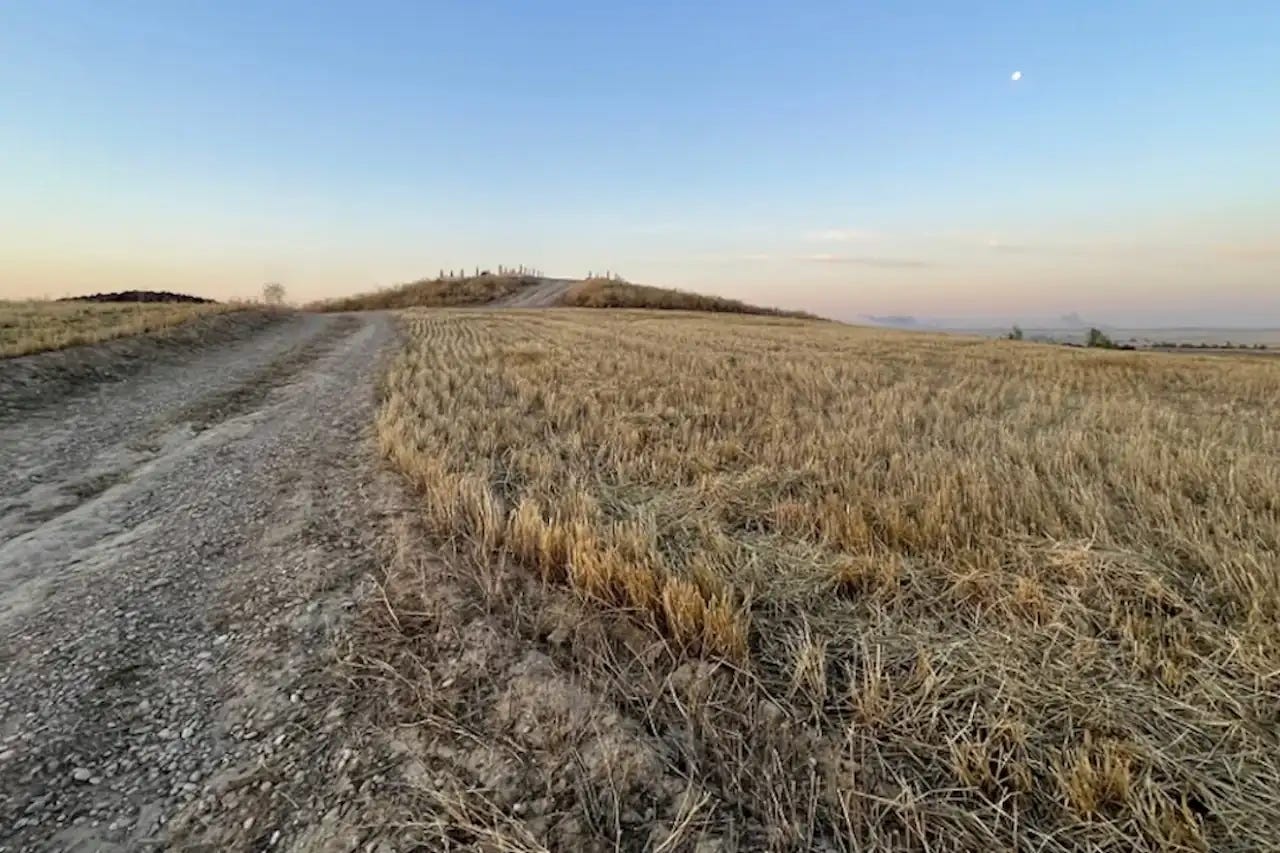
The landscape around the ancient site of Kurd Qaburstan, where UCF-led excavations revealed evidence of siege warfare, administrative records, and urban life from thousands of years ago. Credit: Kurd Qaburstan Project
The discoveries include cuneiform tablets, administrative sealings, destruction layers, human remains, collapsed architecture, burned debris, and large-scale fortifications. Together, these finds offer one of the clearest archaeological pictures yet of siege warfare in northern Mesopotamia around 4,000 years ago.
Kurd Qaburstan lies on the Erbil Plain, near the modern city of Erbil. The site has long been considered one of the most important Bronze Age urban settlements in the region. It is also the largest known site on the Erbil Plain and has increasingly been identified with ancient Qabra, a politically important city-state mentioned in early second millennium BCE records.
The current research is led by Dr. Tiffany Earley-Spadoni of the University of Central Florida through the Kurd Qaburstan Project. The work is supported by the U.S. National Science Foundation and carried out in cooperation with heritage authorities in the Kurdistan Region of Iraq.
The latest discoveries come from fieldwork carried out during the 2024 and 2025 excavation seasons. These campaigns focused on the Lower Town East palace, residential neighborhoods, and the broader urban layout of the city. The goal was not only to identify the site but also to understand how the city functioned before its violent destruction.
One of the most important discoveries was a group of 20 cuneiform tablets recovered from destruction layers inside the Lower Town East palace. These are described as the first substantial group of cuneiform administrative tablets found on the Erbil Plain. The tablets were found together with more than 100 clay sealings, which were used to secure and authenticate containers, doors, documents, and administrative goods.
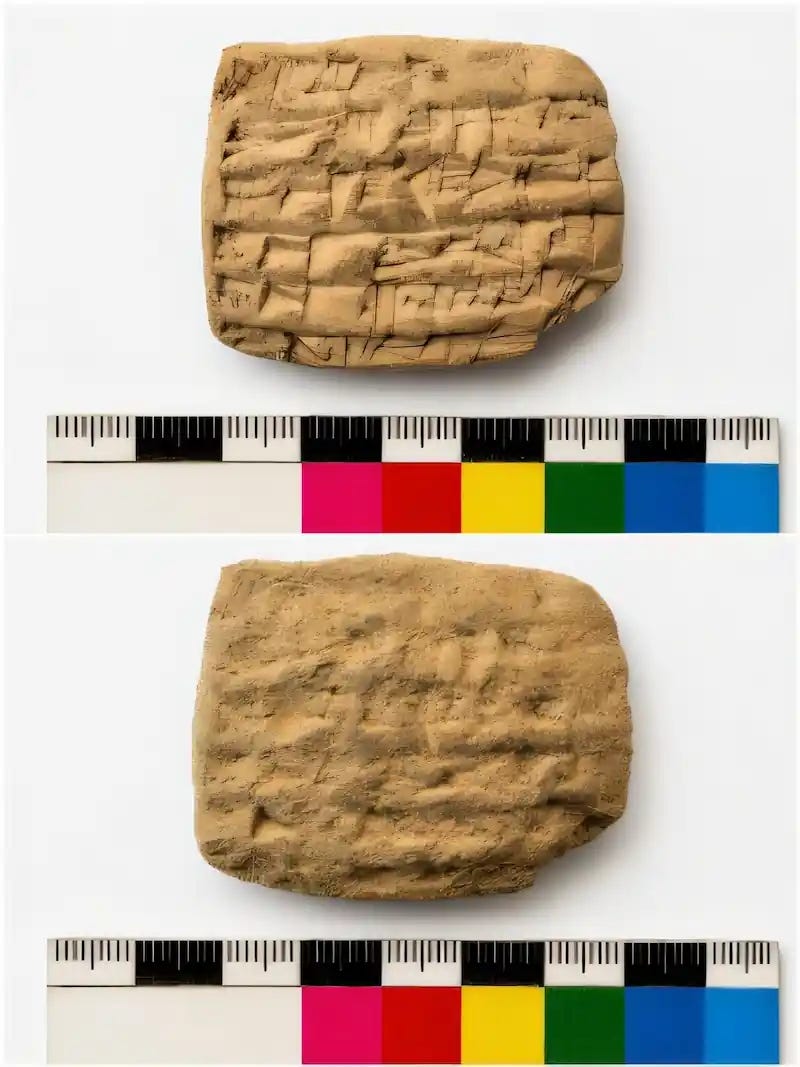
A cuneiform tablet from the Lower Town East palace, shown before and after professional conservation. It belongs to a group of administrative texts uncovered during excavations at Kurd Qaburstan. Credit: Carmen Gütschow/Kurd Qaburstan Project
The tablets are currently being studied by specialists. Many appear to be administrative records connected with palace life and the economy of the city. Some mention commodities such as beer ingredients and copper quantities. One document may be a letter written by a high-ranking official connected with Qabra.
This is especially important because northern Mesopotamian cities are often known mainly through texts written by their rivals or neighbors. The tablets from Kurd Qaburstan may provide rare information from within the city itself. They could reveal names, administrative practices, economic activity, and political links that were previously invisible.
One of the most significant texts was reportedly written by a man named Mutu-Kumri. This name is known from another ancient document from the archives of Mari, where he appears as a senior official of Qabra. If the two references identify the same person, archaeologists may have found a document written by a named historical figure inside the very city where he worked. That kind of connection between a person known from texts and a specific excavated building is rare in Near Eastern archaeology.
The tablets also help connect the archaeological destruction at Kurd Qaburstan with historical events known from written sources. Several of the tablets appear to be dated close together, possibly within days of one another. This timing may match the historical sequence of the fall of Qabra.
Ancient records describe Qabra as a city involved in conflict during the early second millennium BCE. Its siege and conquest were connected with the political struggles of powerful rulers in northern Mesopotamia and surrounding regions. The Victory Stele of Dadusha is one of the key sources that refers to the campaign against Qabra.
Archaeologists now believe that the physical evidence at Kurd Qaburstan may correspond with that historical account. The site preserves destruction layers that appear to reflect a major attack, possibly the siege and conquest of Qabra by Shamshi-Addu.
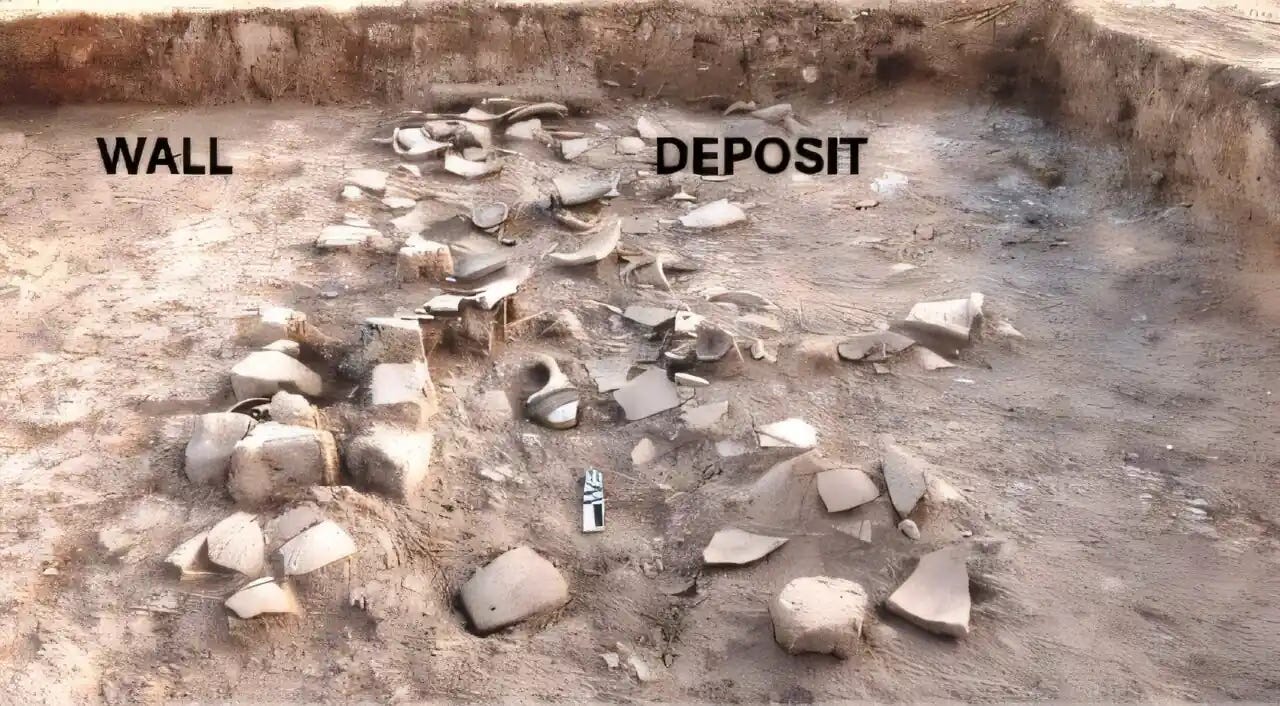
Broken pottery and other debris from a destruction layer were found preserved east of a monumental mudbrick wall in the Lower Town East Palace at Kurd Qaburstan. Credit: Edward Dandrow/Kurd Qaburstan Project
The Lower Town East palace is central to this interpretation. Excavations there revealed evidence of two successive destruction events. These layers included heavy deposits of ash, collapsed mudbrick architecture, rubble, broken pottery, dense artifact concentrations, and human remains that had not received formal burial.
The combination of burned material, architectural collapse, administrative records, and bodies inside the destruction deposits suggests a sudden and violent end. This was not a quiet abandonment of a palace. It appears to have been a catastrophic event that struck both administrative and working areas of the building.
In the palace destruction layers, archaeologists found the remains of 17 individuals. Their remains are being studied by bioarchaeologist Andrea Zurek-Ost of Michigan State University. The people were not buried in normal graves and were not accompanied by funerary objects. Some appear to have been left where they died.
In one southern administrative area, eight adults, probably all men, were found together in a small room. Their bodies overlapped and were mostly lying face down. In another area to the north, interpreted as a possible food-processing and storage zone, the remains included men, women, and children. Some of these individuals showed evidence of years of hard physical labor.
The human remains are one of the strongest indicators of the violence and disorder surrounding the city’s fall. They show that the destruction affected different parts of the palace community, not only soldiers or elites. Palace workers, administrators, laborers, and families may all have been caught in the disaster.
Further scientific analysis is planned. The human remains will undergo ancient DNA and isotopic testing in collaboration with research institutions including Ludwig-Maximilians-University and the Max Planck Institute. These studies may help identify the origins, diets, biological relationships, and possible social backgrounds of the individuals.
The destruction layers also preserved large numbers of ceramic vessels and other artifacts. In an ordinary abandonment, residents might have removed valuable or useful objects before leaving. At Kurd Qaburstan, the concentration of broken vessels and administrative materials suggests a sudden collapse that left parts of the palace frozen in a moment of crisis.
The evidence for siege warfare is strengthened by the city’s fortifications. A magnetometer survey covering more than 80 hectares revealed a major wall system with towers and bastions. One newly identified stretch of wall measured about 165 meters and included towers more than 8 meters wide.
These fortifications are significant because they resemble the defensive structures shown on the Victory Stele of Dadusha. That connection supports the identification of Kurd Qaburstan with ancient Qabra and strengthens the argument that the excavated destruction layers may represent the historically recorded siege.
The magnetometer survey is also important for understanding the scale of the city. By measuring magnetic differences below the surface, archaeologists can detect buried walls, streets, buildings, and other features without excavation. At Kurd Qaburstan, this survey has produced one of the most complete subsurface views of a Mesopotamian city from a single investigation phase.
The results show that Kurd Qaburstan was not a small settlement. It was a large, fortified, organized urban center with palace architecture, residential neighborhoods, streets, drainage systems, food-processing areas, textile production, administrative buildings, and monumental defenses.
Excavations in the northwest residential neighborhoods have added important information about everyday life. Archaeologists found a street surface made with pottery sherds and pebbles, likely to improve drainage and traction. They also found an engineered ceramic drainage system connected to earlier discoveries from 2024.
Nearby domestic spaces contained a large storage vat, a basin, stone weights, and a bone awl. These finds suggest food processing and textile work inside ordinary households. They show that the city’s economy was not limited to the palace. Domestic production also played an important role in urban life.
Earlier work in 2024 had already shown that some non-elite households had varied diets and access to well-made pottery and tools. This challenges the idea that daily life in Middle Bronze Age cities was sharply divided between wealthy elites and poor commoners. Kurd Qaburstan may reveal a more complex social structure.
The high mound of the site has also produced important evidence. A small sounding investigated a large building first detected through geophysical survey in 2024. Middle Bronze Age pottery confirmed the date of the structure, which has a roughly square plan comparable to known palaces of the period. Future excavation may clarify whether this was another major administrative or elite building.
The new evidence changes how researchers understand northern Mesopotamia. For a long time, early urban civilization has often been discussed through famous southern Mesopotamian cities such as Uruk, Ur, and Babylon. Kurd Qaburstan shows that northern cities could also be large, politically important, heavily fortified, and administratively sophisticated.
The city had written records, planned infrastructure, monumental architecture, defensive walls, organized neighborhoods, and economic institutions. This places Qabra within the broader world of powerful Bronze Age city-states rather than treating it as a marginal settlement.
The discovery also shows how archaeology and ancient texts can work together. Written sources record the siege and fall of Qabra, but they were produced from specific political viewpoints. Archaeology provides the physical evidence: burned buildings, collapsed walls, dead bodies, tablets, sealings, vessels, and fortifications. Together, they create a fuller picture of what happened.
However, the work is still ongoing. The tablets are being conserved and deciphered. The human remains require further laboratory analysis. The geophysical survey has revealed many areas that still need excavation. The identification of Kurd Qaburstan as Qabra is now stronger, but future research will continue to test and refine that conclusion.
The preservation of the tablets is a major challenge. Many were air-dried rather than fired, making them fragile after excavation. Conservation work has been supported by ASOR’s Shepard Urgent Action Grant and UCF’s College of Arts and Humanities. Conservation specialist Carmen Gütschow has worked on stabilizing the tablets and making them readable, while also helping train local heritage professionals in Erbil.
The discoveries at Kurd Qaburstan are important because they connect three major themes: urban life, administration, and warfare. The site shows how a Middle Bronze Age city was organized, how its palace economy functioned, and how its destruction unfolded during a major military event.
The evidence also gives a more human view of Bronze Age conflict. The siege of Qabra was not only a political episode recorded by kings. It affected real people inside the city, including workers, administrators, families, and possibly palace staff. Their remains, found in the destruction layers, give the conflict a direct archaeological reality.
Kurd Qaburstan now stands as one of the most important archaeological sites for understanding northern Mesopotamia in the early second millennium BCE. Its tablets may reveal the city’s internal records. Its fortifications may match ancient royal imagery. Its destruction layers may preserve the fall of Qabra. Its streets and houses show that the city was also a lived urban environment, not only a battlefield.
The discovery is therefore not only evidence of a siege. It is evidence of a complex city at the moment of collapse, preserving administration, labor, infrastructure, daily life, and violence in one archaeological record.
Sources:
University of Central Florida, UCF-Led Excavation Reveals Evidence of Life, Conflict in Ancient Mesopotamia, 8 June 2026.
Kurd Qaburstan Project, 2025 Season Fieldwork Summary.
Kurd Qaburstan Project, 2024 Season Fieldwork Summary.
Phys.org, Archaeologists uncover 4,000-year-old evidence of siege warfare in ancient Mesopotamia, 10 June 2026.
ASOR, Shepard Grant Report: Kurd Qaburstan Tablet Conservation, 2025.
La Brújula Verde, Evidence of the Siege of the Ancient City of Qabra in Northern Mesopotamia 4,000 Years Ago During the Bronze Age Discovered, 2026.
Thank you for your article today on Qabra in northern Mesopotamia. If you know, I am interested who is on the cuneiform translation and publishing team. WHY ?
Today, an estimated half a million cuneiform tablets are held in museums across the world, but comparatively few of these are published. The largest collections belong to the British Museum (approximately 130,000 tablets). Between 500,000 and 2 million cuneiform tablets are estimated to have been excavated in modern times, of which only approximately 30,000–100,000 have been read or published.
I published this yesterday to Substack. It may be of interest. 🔥🙏 https://substack.com/@jt913/note/p-201615316?r=19ia12